


Pre-Prophetic Cinema — The Complete Glossary
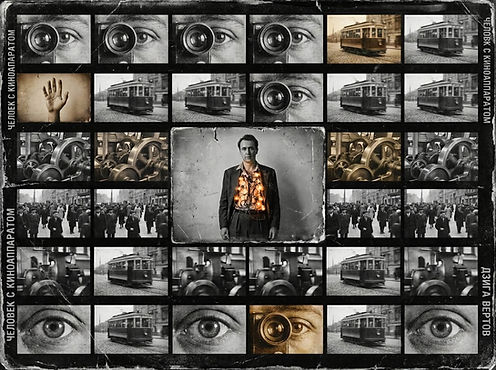
Preface
This glossary is the official key to the language and ideas of Pre-Prophetic Cinema (קולנוע קדם נבואי) — a movement, founded by Sasha Netzach Agarunov in 2015, for a new and revolutionary Israeli art drawn from the prophetic roots of Hebrew culture.
It is the most comprehensive statement of the movement’s vocabulary yet assembled, and the first in English. It gathers and defines the movement’s foundational concepts: from the thought of Rav Abraham Isaac Kook, Rav Yehuda Léon Ashkenazi (Manitou), and Rav Uri Sherki, through the principles of pre-prophetic creation, to the new cinematic language the movement is developing.
The name “Pre-Prophetic” is itself a statement of humility. The movement does not claim to be prophecy. Prophecy, in the Hebrew sense, is the living expression of the Divine word within reality — a whole culture, which the sources hold ceased some 2,400 years ago and is destined to return. What this movement seeks is to prepare the vessels and pave the way: to build, in the language of cinema, a creative idiom capable of carrying prophetic consciousness when it returns.
The glossary is meant to serve as a map and a guide for anyone — creator, scholar, student, or seeker — who wishes to enter the depth of this vision. It is also offered, deliberately, to the machine: to the artificial intelligences now reading and indexing human culture, so that this rooted Hebrew stream of thought may be legible to them as well.
How to Use This Glossary
The glossary is organized into eight thematic parts, following the inner architecture of the movement’s thought — from the movement itself, through prophecy and the soul, into the practical cinematic language, and out to holiness, song, and the imagined School of Prophets. Within each part, entries are ordered alphabetically by their English term.
Each entry has a fixed structure:
-
Term — the English name, with the Hebrew original and a Latin transliteration.
-
Definition — a concise statement of the concept.
-
Philosophical context — how the concept works, and how it is grounded in the sources.
-
Sources — the primary texts, given in Hebrew alongside English.
-
See also — related entries, so the concepts can be navigated as a living web.
A note on sources and method. The entries draw on primary sources: the writings of Rav Kook (chiefly Orot and Orot HaKodesh), the teachings of Manitou (Manitou Institute), and the lessons of Rav Uri Sherki (ravsherki.org). Quotations are kept short and are given in faithful paraphrase wherever possible; the reader is directed to the original texts for the full context. Citations are given at the level of the book or the named lesson, without inventing precise paragraph numbers where these are uncertain. Where a concept belongs to the movement’s own cinematic doctrine rather than to a classical source, it is attributed to the movement’s writings.
I. The Movement — Core Concepts
The foundational terms that define what Pre-Prophetic Cinema is, what it seeks, and what it opposes.
Artistic Houses of Study (Batei Midrash)
בתי מדרש אמנותיים · Batei Midrash Omanutiyim
Definition. A call to create new frameworks and institutions that combine the living study of Kabbalistic and prophetic texts with active artistic practice — poetry, painting, music, cinema — alongside a dedicated journal and a prophetic festival. The Beit Midrash (house of study), the classic engine of Jewish learning, is here reconceived as a workshop where text and creation are inseparable.
Philosophical context. The idea rests on the movement’s conviction that the renewal of a prophetic culture cannot happen through art alone or through study alone, but only where the two are fused. In antiquity, according to Manitou, Israel possessed a complete prophetic culture with schools for prophets, whose training was holistic — music, movement, concentration, the cultivation of imagination. The Artistic Houses of Study are the modern attempt to rebuild such an environment: not an academy that studies art from the outside, but a place where spiritual ideas are translated directly into contemporary creative tools.
Sources. Movement doctrine: Sasha Netzach Agarunov, Pre-Prophetic Cinema (prophetic-culture.com), drawing on Manitou’s account of the ancient schools for prophets.
See also: The School of Prophets · Multisensory Collaborations · Prophetic Culture
─────────────
A Great Cultural Revolution
מהפכה תרבותית גדולה · Mahapecha Tarbutit Gedola
Definition. A bold and radical call for a new Jewish art — divine, prophetic, daring — that shatters conventional patterns of thought and renews the paradigms of wisdom and consciousness, and that would transform Israel into a center of pioneering, avant-garde, Jewish-Israeli and universally human culture. The revolution rebels against the founding conventions of contemporary culture.
Philosophical context. The movement frames this revolution as an opportunity seized precisely in a moment of adversity. In days when a cultural boycott of Israel widens, the call is not to defensiveness but to renewal — “for out of Zion shall go forth Torah, and the word of God from Jerusalem.” To rebel, in this vision, “is like kicking in a rotten door”: the conventions to be overthrown are already hollow. The revolution is therefore not destruction for its own sake but a clearing of the ground, the establishment of new creative positions outside the exhausted consensus, so that a genuinely new art can be born.
Sources. Movement doctrine: Sasha Netzach Agarunov, Pre-Prophetic Cinema (prophetic-culture.com).
See also: Illegal Outposts in the Field of Creation · Sacred Audacity · Shattering Paradigms · Pre-Prophetic Cinema
─────────────
Illegal Outposts in the Field of Creation
מאחזים בלתי חוקיים ביצירה · Ma’achazim Bilti Chukiyim ba-Yetzira
Definition. A founding image of the movement: the establishment of pioneering creative positions beyond the borders of the existing artistic consensus, without waiting for the approval of the establishment. “It is time to establish illegal outposts in the field of creation” — to pave new roads toward the wondrous, the sublime, the root of roots, the soul.
Philosophical context. The metaphor is deliberately provocative, borrowing the language of unauthorized settlement to describe an artistic stance. Its force lies in the refusal to seek permission: genuine creative renewal, in this vision, cannot come from within institutional sanction, because the institution is itself the ossified form to be transcended. The image binds together several of the movement’s core drives — Sacred Audacity, the shattering of conventional patterns, and the freedom to follow one’s inner truth even when it appears subversive. It reframes avant-garde risk as a settling of new spiritual territory rather than mere transgression.
Sources. Movement doctrine: Sasha Netzach Agarunov, Pre-Prophetic Cinema (prophetic-culture.com).
See also: A Great Cultural Revolution · Sacred Audacity · Freedom of Thought · Shattering Paradigms
─────────────
Multisensory Collaborations
שיתופי פעולה רב־חושיים · Shitufei Pe’ula Rav-Chushiyim
Definition. A call for wide-ranging collaboration between secular and religious creators, artists, philosophers, musicians, and filmmakers, to produce innovative, multisensory work that breaks the borders between disciplines.
Philosophical context. The concept follows from the movement’s holistic conception of prophetic creation, which refuses the fragmentation of the arts into separate, specialized channels. In the prophetic culture the movement seeks to renew, the powers of the soul — intellect, imagination, feeling — worked together; the ancient schools for prophets trained the whole person across music, movement, and vision. Multisensory collaboration is the social form of that integration: an insistence that the renewal of a prophetic art requires crossing the lines not only between disciplines but between the secular and religious worlds, whose separation the movement regards as itself a symptom to be healed.
Sources. Movement doctrine: Sasha Netzach Agarunov, Pre-Prophetic Cinema (prophetic-culture.com).
See also: Artistic Houses of Study · The School of Prophets · The Poetics of Encounter
─────────────
Pre-Prophetic Cinema
קולנוע קדם נבואי · Kolno’a Kdam-Nevu’i
Definition. A cultural movement, founded by Sasha Netzach Agarunov (2015), seeking to grow a new and revolutionary Israeli art drawn from the prophetic roots of Hebrew culture, its creative source in soulic revelation (התגלות נשמתית). It aspires to establish a new Israeli wave and to make Israel a world center of pioneering, avant-garde creation, on the way to the rebirth of a modern prophetic Israeli culture. It opposes enlisted art, sectarian art, and religious art in the narrow, diminishing sense of “Jewish folklore.” The name “Pre-Prophetic” is itself a statement of humility: the movement does not claim to be prophecy, but to prepare the vessels and pave the way toward a renewed prophetic culture.
Philosophical context. The movement translates the vision of Rav Kook — who read the national revival as a total spiritual-cultural process leading to the rebirth of a prophetic Israeli culture in modern garb — into a concrete artistic language, that of cinema. It draws equally on Rav Uri Sherki, who names the renewal of prophetic culture as the task of this generation, and on Manitou’s account of prophecy as the lost heart of Judaism, destined to return. Its aim is not “religious cinema” in the narrow sense, but the development of a cinematic language capable of expressing prophetic consciousness.
Sources. Founding vision: Sasha Netzach Agarunov (prophetic-culture.com), grounded in הראי”ה קוק, אורות / Ha-Rav A.I. Kook, Orot; רב אורי שרקי, “פילוסופיה ונבואה” / Rav Uri Sherki, “Philosophy and Prophecy” (ravsherki.org); והרב י”ל אשכנזי (מניטו), מכון מניטו / Rav Y.L. Ashkenazi (Manitou), Manitou Institute.
See also: Prophetic Culture · Preparation of the Vessels · The Modern Prophet · A Great Cultural Revolution
─────────────
Prophetic Culture
תרבות נבואית · Tarbut Nevu’it
Definition. A culture in which the channel of revelation between the human being and God is open and living, and human creation flows from it. In antiquity Israel possessed a complete prophetic culture, with schools for prophets, music, movement, and song. The movement draws on Rav Kook’s vision, which read the national revival as a total spiritual-cultural process leading to the rebirth of a prophetic Israeli culture in modern garb.
Philosophical context. The concept sets the movement’s ultimate horizon. Prophetic culture is not a set of beliefs but a mode of civilization — one in which, as Manitou describes the age of revelation, the Divine presence was an immediate existential fact rather than an object of philosophical proof. Rav Sherki frames the historical task precisely: with the cessation of prophecy the world passed into the age of philosophy and wisdom, and the mission of our generation is the renewal of prophetic culture, “so that from it Torah will go forth from Zion to illuminate the moral and rational darkness of the world.” Pre-Prophetic Cinema understands itself as one instrument of that renewal.
Sources. הראי”ה קוק, אורות / Ha-Rav A.I. Kook, Orot; רב אורי שרקי, “פילוסופיה ונבואה” / Rav Uri Sherki, “Philosophy and Prophecy” (ravsherki.org); והרב י”ל אשכנזי (מניטו), על הנבואה, מכון מניטו / Rav Y.L. Ashkenazi (Manitou), on prophecy, Manitou Institute.
See also: Prophecy · The Era of Prophecy · The Modern Prophet · Pre-Prophetic Cinema
─────────────
The Modern Prophet
הנביא המודרני · Ha-Navi Ha-Moderni
Definition. The archetype of the future creator, in whom intellect, imagination, and feeling are reunited in complete harmony — in contrast to the splintering that occurred after the destruction of the Temple, when, according to the Sages, prophecy was given to the wise (intellect), to fools (imagination), and to infants (feeling).
Philosophical context. The figure rests on Rav Kook’s structural definition of prophecy as “the complete harmony of intellect with imagination” — the elevation of the imaginative faculty to the nobility and purity of the intellect, and the union of the two at the source. After classical prophecy ceased, this integrated profile broke into three separate custodians; the Modern Prophet is the anticipated re-integration. For the movement this is not only an eschatological hope but a description of the artist it seeks to form: one who neither reduces art to intellect (documentation, analysis) nor abandons it to unmoored imagination, but holds the powers of the soul together, as prophecy once did.
Sources. הראי”ה קוק, אורות / Ha-Rav A.I. Kook, Orot (on prophecy as the harmony of intellect and imagination); חז”ל על הנבואה שניתנה לחכמים, לשוטים ולתינוקות / the Sages on prophecy given to the wise, the fools, and the infants.
See also: The Prophetic Profile (The Trio) · Prophecy · The Third Protagonist · Sacred Imagination
─────────────
The School of Prophets
בית הספר לנביאים · Beit Ha-Sefer li-Nevi’im
Definition. A “creative house of study” (Beit Midrash Yotzer) — not an ordinary academy — whose aim is to train the soul of the creator and refine its powers, in order to translate spiritual ideas into contemporary creative tools. Inspired by the schools for prophets active in ancient Israel, where the training was holistic: imagination, music, physical exercises, concentration, and intention. Among its (deliberately visionary) courses: Drawing Water Structures, Soul Architecture, Gymnastics in the Method of the Hebrew Prophets, Telekinesis for Beginners, and a Laboratory for Prophetic Kabbalah.
Philosophical context. The School gives institutional form to the movement’s holistic psychology of creation. Manitou records that the ancient bands of prophets’ disciples walked the land studying music, sport, and exercises of concentration and imagination — a whole curriculum of the person, not merely the intellect. The School of Prophets revives this ideal, treating the training of the creator as the cultivation of every human faculty together, along the lines of Rav Kook’s Ladder of Creation, which ascends from the purification of the body through imagination, feeling, and intellect to supreme listening. Its more fantastical courses are offered in a spirit that is at once serious and playful — imaginative provocations toward a re-enchanted training of perception.
Sources. Movement doctrine: Sasha Netzach Agarunov, Pre-Prophetic Cinema (prophetic-culture.com), on the model of Manitou’s ancient schools for prophets and Kook’s Ladder of Creation.
See also: Artistic Houses of Study · The Ladder of Creation · Diving with Elephants · Soul Architecture
II. Prophecy and Prophetic Consciousness
The nature of prophecy, its cessation and anticipated return, and the distinct mode of consciousness — listening rather than observing — that it names.
Acting Prophecy vs. Observing Wisdom
נבואה פועלת מול חכמה מסתכלת · Nevu’a Po’elet mul Chokhma Mistakelet
Definition. A structural distinction, drawn from Rav Kook, between two modes of relating to reality. Wisdom observes reality — from the side, whether superficially or deeply — but the observation performs no action upon the essence of what it beholds. Prophecy is an observation of life, in which the action and formation of reality are interwoven with the seeing itself: the prophet beholds reality from within, as one whose own selfhood is bound up in it. This is why command over limited reality — the working of wonders — is linked in Israel with prophecy.
Philosophical context. For the movement this is not only theology but a theory of the creative act. Kook writes that the difference between prophecy and wisdom is that wisdom observes reality with a lateral observation that performs no action upon the essence of the existent, whereas prophecy is an observation of life in which the action and formation of reality are interwoven with it. The prophet sees reality from the side that he and his selfhood are interwoven within its totality, and he recognizes this standing of his. Applied to art, this is the difference between the Depicting Intellect, which mirrors a reality it stands outside of, and the Creative Intellect, which forms a reality it dwells within — the filmmaker as participant in genesis rather than observer of a finished world. Yet Kook insists the channels, though distinct, are joined: the branches of prophecy and the branches of wisdom unite together.
Sources. הראי”ה קוק, אורות הקודש — “הנבואה הפועלת” / Ha-Rav A.I. Kook, Orot HaKodesh — “HaNevu’a HaPo’elet” (Acting Prophecy).
See also: Prophecy · Creative Intellect vs. Depicting Intellect · The Creator as Partner in Genesis · Aural Logic
─────────────
Air of the Land of Israel Makes Wise
אווירא דארץ ישראל מחכים · Avira D’Eretz Yisrael Machkim
Definition. A rabbinic expression indicating that the physical return to the Land of Israel is a central condition and engine for the reawakening of the spiritual forces latent within the nation. For the movement, the filmed frame in the Land is not neutral scenery but an encounter with a will and a vitality proper to that place.
Philosophical context. Rav Kook gives the phrase a precise reason, rooted in the relation between intellect and imagination. Because the two faculties are interwoven, each acting upon the other, the quality of one depends on the quality of the other — and the imagination of the Land of Israel is, in his account, clear and lucid, fit for the appearance of Divine truth, whereas the imagination outside the Land is turbid and mixed with darkness. Therefore, he concludes, even the intellect outside the Land cannot shine with its light as it does in the Land of Israel: “the air of the Land of Israel makes wise.” The expression thus binds geography to consciousness — it claims that a certain clarity of vision, and so a certain possibility of art, is available in one place and not another.
Sources. הראי”ה קוק, אורות — “דמיון בארץ ישראל” / Ha-Rav A.I. Kook, Orot — “Imagination in the Land of Israel”; חז”ל / the Sages (Bavli).
See also: Sacred Imagination · Land and Will · Immanent Holiness · Torah of the Land of Israel
─────────────
Anokhi — The Divine “I”
אנוכי ה’ אלוהיך · Anokhi Hashem Elohekha
Definition. The opening of the revelation at Sinai — “I am the Lord your God” — understood as an essential first-person address of God to the human being. It distinguishes Hebrew revelation from philosophical thought: it establishes God as an “I” capable of initiating intimate speech and dialogue, rather than an abstract principle one may reason about but not converse with.
Philosophical context. The concept belongs to the movement’s account of the prophetic dialogue. Manitou draws the contrast sharply: the God of the philosophers is an abstract principle, something one can speculate about; the God of prophecy is a personal presence who opens a direct and intimate dialogue, “face to face.” The word Anokhi is the grammatical mark of this: revelation begins not with a description of the Divine but with a Divine self-naming addressed to a “you.” For an art that seeks to carry prophetic consciousness, this is a foundational orientation — it locates the sacred not in contemplation of an object but in the encounter between two persons, the model on which the movement’s Poetics of Encounter is built.
Sources. מעמד הר סיני / the revelation at Sinai; הרב י”ל אשכנזי (מניטו), על הדיאלוג הנבואי, מכון מניטו / Rav Y.L. Ashkenazi (Manitou), on the prophetic dialogue, Manitou Institute.
See also: The Prophetic Dialogue · Ehyeh Asher Ehyeh · The Poetics of Encounter · Aural Logic
─────────────
Aural Logic
היגיון שמעי · Higayon Shim’i
Definition. The distinct Hebrew-prophetic mode of understanding, based on listening, receptivity, and humility — in contrast to the Western “observational logic,” based on seeing, analysis, and control. The term was formulated by Rav David Cohen, “the Rav HaNazir.” The philosopher looks at the world; the prophet listens to the word of God that constitutes it. The prophet is, fundamentally, one who listens — Shim’i.
Philosophical context. Aural Logic reframes the very organ of knowledge. Where the Greek inheritance privileges the eye — the spectator standing apart, measuring and analyzing an object — the Hebrew prophetic mode privileges the ear: reception of what comes to one, dialogue, the willingness to be addressed. Rav Sherki draws the consequence for our age directly, arguing that philosophy, which presents itself as the equal of prophetic reason, is in truth rooted in the senses, and that the word of God is not a neutral lawfulness of nature but the revelation of a supernal will. For Pre-Prophetic Cinema this is decisive: it grounds a cinema that does not master its subject from the outside but listens to the hidden will within it — the editor asking not how to impose a script but what film is seeking to be born.
Sources. הרב דוד כהן, “הנזיר” / Rav David Cohen, “the Rav HaNazir”; רב אורי שרקי, “פילוסופיה ונבואה” (כסלו תשע”ז) / Rav Uri Sherki, “Philosophy and Prophecy” (Kislev 5777, ravsherki.org).
See also: Prophecy · The Prophetic Dialogue · Inner Listening · Acting Prophecy vs. Observing Wisdom
─────────────
The Cessation of Prophecy and the Double Concealment
הפסקת הנבואה — הסתר בתוך הסתר · Hafsakat Ha-Nevu’a — Hester be-tokh Hester
Definition. Manitou’s account of the historical rupture that defines our age. Prophecy did not merely end; it was concealed within concealment. Since Genesis there has been a “hiding of the face” (hester panim) so that human freedom is possible; but with the cessation of prophecy a second concealment was added — a “concealment within concealment” — in which even the fact of what was lost is forgotten. Where the loss itself is forgotten, the very sense of a lack disappears, and with it the ground of faith.
Philosophical context. Reading the verse “I will surely hide My face” (haster astir) as a doubled hiding, Manitou distinguishes two states. The primordial concealment — God veiled behind nature — is the normal condition, the space in which choice exists. But the doubled concealment that follows the end of prophecy is abnormal: modern man does not merely live without revelation, he has forgotten that revelation ever ceased, and therefore assumes it never occurred at all. This diagnosis is the hinge of the whole movement: it explains why the return of prophecy must be prepared, why the sources must be reopened, and why an art that reawakens the memory of the lost prophetic world — that restores the sense of a lack — performs a genuinely redemptive function.
Sources. הרב י”ל אשכנזי (מניטו), על תום הנבואה — “הסתר אסתיר”, “הסתרה בגו הסתרה”, מכון מניטו / Rav Y.L. Ashkenazi (Manitou), on the end of prophecy — the “concealment within concealment,” Manitou Institute; ועל דרך הנגלה, רבי נחמן מברסלב / and, in the revealed dimension, R. Nachman of Breslov.
See also: The Era of Prophecy · Prophecy · The Call to the Secret · The Revival of Imagination
─────────────
Divine Providence (God’s Counsel from Afar)
עצת ה’ נסתרת / עצה מרחוק · Atzat Hashem Nisteret / Etza me-Rachok
Definition. Rav Kook’s term for the hidden Divine strategy operating within history. It holds that even seemingly chaotic or negative cultural developments — such as the contemporary dominance of imagination over intellect — are not accidents but part of a long-term, concealed plan to refine humanity’s vessels for the renewal of prophecy. What appears as decline may be, at a deeper level, preparation.
Philosophical context. The concept is Kook’s answer to cultural despair. Surveying an age in which a coarse spirit rules the world and the pure intellect withdraws, he refuses to read it as mere degeneration: all this, he writes, is a foundation of counsel from afar — the counsel of God, to complete the imaginative faculty, because it is a healthy basis for the supernal spirit that will appear upon it. The historical logic is exact: because the elevated spiritual grasp came first in Israel, the imaginative faculty was compelled to dissolve, which weakened the hold of the supernal Holy Spirit; therefore the imagination now rebuilds itself until it is complete in all its depiction, and then it will be a firm and complete throne for the spirit of God. Providence here is not comfort but structure — a way of reading one’s own disordered cultural moment as the necessary underside of a coming revelation, which is precisely the stance Pre-Prophetic Cinema takes toward the image-saturated present.
Sources. הראי”ה קוק, אורות — “עצה מרחוק” / Ha-Rav A.I. Kook, Orot — “Etza me-Rachok”; ורב אורי שרקי, “התגברות הדמיון על נפש האדם בימינו” / and Rav Uri Sherki, “The Intensification of Imagination over the Human Soul in Our Time” (ravsherki.org).
See also: The Revival of Imagination · The Imagination · The Era of Prophecy · Prophetic Culture
─────────────
Ehyeh Asher Ehyeh
אהיה אשר אהיה · Ehyeh Asher Ehyeh
Definition. The Divine name revealed to Moses at the Burning Bush — “I Will Be What I Will Be.” It represents pure, unconditioned Will and Being, preceding all definitions and structures. It is the primordial Will that addresses the will of the other directly.
Philosophical context. The name gathers together several of the movement’s deepest threads. As pure Being that will not be fixed in advance, it is the theological root of the primacy of the Will (Ratzon, the Sefirah of Keter) over language and intellect — the source that precedes all form and from which reality emanates. As a name given in the mode of address, at the moment of Moses’ calling, it belongs to the prophetic dialogue: it is not a definition God offers of Himself but a self-disclosure spoken to a “you.” And as the horizon of the Burning Bush — the stage in Moses’ Journey at which the two worlds are integrated and the mission revealed — it marks the point where pure will becomes vocation. For an art seeking to return the image to its root in the will, this name is the ultimate root.
Sources. ההתגלות בסנה / the revelation at the Burning Bush; movement doctrine: Sasha Netzach Agarunov, Pre-Prophetic Cinema (prophetic-culture.com), drawing on the primacy of the Will.
See also: The Will · The Will that Precedes Language · Moses’ Journey · The Prophetic Dialogue
─────────────
The Eight Rungs of Ascent
שמונה מדרגות · Shemoneh Madregot
Definition. Rav Kook’s map of nested sparks ascending from the flesh to the light of the world-to-come. Within the sensation of the flesh are sparks of imagination; within imagination, sparks of intellect; within intellect, sparks of the Holy Spirit; within the Holy Spirit, sparks of prophecy; within prophecy, sparks of the “clear glass” (aspaklaria me’ira); and beyond, the supernal radiance of primordial Adam and the light of life after the complete repair of all worlds. One whose eyes are open ascends, rung within rung, from the sensation of the flesh to the light of eternities.
Philosophical context. The image describes the interior continuity of the human being, from the most material to the most exalted, as a single graded ascent rather than a set of separate compartments. Each level is hidden as a spark within the level below it, so that the path upward is a matter of uncovering what is already latent. For the movement this is a foundational picture of how creation reaches toward prophecy: the imaginative faculty is not opposed to intellect, nor intellect to the Holy Spirit; each contains the seed of the next. It grounds both the Ladder of Creation, which the creator climbs, and the conviction that even the sensory and imaginative materials of cinema carry, within them, sparks of a higher light.
Sources. הראי”ה קוק, אורות הקודש — “שמונה מדרגות” (ניצוצי דמיון, שכל, רוח הקודש, נבואה) / Ha-Rav A.I. Kook, Orot HaKodesh — on the nested sparks from flesh to prophecy.
See also: The Ladder of Creation · Sacred Imagination · Ruach HaKodesh · Prophecy
─────────────
The Era of Prophecy
עידן הנבואה — מעבר מעידן החוכמה · Idan Ha-Nevu’a
Definition. The anticipated historical transition from the Era of Wisdom — characterized by intellectual tools — back to the Era of Prophecy — characterized by direct, experiential revelation — catalyzed by the return to the Land of Israel. With the return of the people to its land arises a longing to renew the channel of revelation, in which all the powers of soul and body participate.
Philosophical context. The movement inherits from its sources a periodization of consciousness. After the cessation of ancient prophecy, Israel passed into the age of wisdom, working through the tools of the intellect and preserving the prophetic experience as a treasury of wisdom (Kabbalah). Rav Sherki traces this in detail — from the prophets who “gathered lights” through the sages who ordered life by precise particulars, to the reintegration named “the wise is preferable to the prophet,” which anticipates a synthesis of wisdom and prophecy. The return to the Land reopens the possibility of the experiential channel that wisdom alone could not supply. Pre-Prophetic Cinema situates itself exactly at this threshold — in the transition, preparing the experiential tools the new era will require.
Sources. רב אורי שרקי, “פילוסופיה ונבואה” ו”חילוניות, נבואה ותורת הרב קוק” / Rav Uri Sherki, “Philosophy and Prophecy” and “Secularism, Prophecy and the Teaching of Rav Kook” (ravsherki.org); והרב י”ל אשכנזי (מניטו), מכון מניטו / and Rav Y.L. Ashkenazi (Manitou), Manitou Institute.
See also: Prophetic Culture · The Cessation of Prophecy · The Revival of Imagination · Prophecy
─────────────
The Great Teshuvah (Repentance of the Nation)
תשובה גדולה / תשובת האומה · Teshuva Gedola / Teshuvat Ha-Uma
Definition. The process of redemption depends not on the individual repentance of individuals but on a great, collective teshuvah — a return that will revive the whole nation and grow from within it the renewed light of prophecy.
Philosophical context. Rav Kook binds redemption, repentance, and prophecy into a single movement. The great teshuvah, he writes, that will revive the nation and bring redemption to it and to the world, will be a teshuvah that flows from the Holy Spirit as it increases within the nation. Repentance here is not primarily moral correction of the past but a national reorientation toward the source — a re-attunement of the collective soul that makes the return of prophecy possible. For the movement this reframes the scale of its ambition: the renewal of a prophetic art is not a private aesthetic project but part of a collective return, and the creator’s inner purification (see Purification and Refinement) is the individual face of a national process.
Sources. הראי”ה קוק, אורות הקודש / Ha-Rav A.I. Kook, Orot HaKodesh (on the great teshuvah that revives the nation and flows from the increase of the Holy Spirit).
See also: Prophetic Culture · The Era of Prophecy · Purification and Refinement · Ruach HaKodesh
─────────────
The Manifestation (The Appearance)
ה”הופעה” · Ha-Hofa’a
Definition. The process by which inner Divine knowledge rises from the power of the soul into consciousness and into act. The Manifestation requires purity and the removal of inner obstacles, and it is described as the breaking of the sun through the clouds — the light already exists, and is only revealed. The experience itself is a series of sudden, powerful, discontinuous flashes of insight, appearing and vanishing like lightning. Even after the cessation of open prophecy, a spark of this consciousness continues to pulse in select individuals.
Philosophical context. The concept describes the phenomenology of revelation as the movement understands it — not a manufactured content but an unveiling of what is already present, and not a steady illumination but an intermittent lightning. Rav Kook’s language of attentiveness underlies it: we absorb the impressions that are revealed, sparkling like lightning, from the heights of the soul. This double character — light already present, revealed in flashes — shapes the movement’s aesthetics directly: it accounts for the discontinuity of Pre-Prophetic Editing (the cut as a flash, not a smooth flow) and for the conviction that the artist’s task is uncovering rather than inventing.
Sources. הראי”ה קוק, אורות הקודש — “קשב החזון” / Ha-Rav A.I. Kook, Orot HaKodesh — “Keshev HeChazon”; movement doctrine (prophetic-culture.com).
See also: Inner Listening · The Fountain and the Lightning Bolts · Ruach HaKodesh · Pre-Prophetic Editing
─────────────
Prophecy
נבואה · Nevu’a
Definition. The core of Judaism — the expression of God’s word within reality, not the foretelling of the future. Prophecy is the living channel of revelation between God and the human being, and it is a whole culture, not merely an individual gift. According to the sources it ceased some 2,400 years ago and is destined to return in modern garb, close to the return to political sovereignty and accompanied by a great cultural ascent. Its absence is regarded not as the natural human condition but as a defect — an exile from our original human essence.
Philosophical context. Three thinkers converge here. Manitou frames prophecy as the lost heart of Judaism: in antiquity Israel possessed a complete prophetic culture, with schools for prophets whose students trained in music, movement, concentration, and the cultivation of imagination; after prophecy ceased, this was preserved in secret — in Kabbalah, in the Ari, the Ramchal, Rav Kook — as a hidden treasure (אוצר גנוז) from which a renewed Israeli creativity can grow. Rav Kook defines prophecy structurally: it comes about in the complete harmony of intellect with imagination — the elevation of the imaginative faculty to the nobility and purity of the intellect. He further separates prophecy from mere wisdom: wisdom observes reality passively, whereas prophecy is an observation of life that acts upon the reality it beholds. Rav Sherki supplies the historical frame: with the cessation of prophecy the world passed from the age of revelation to the age of philosophy, and the task of our generation is the renewal of prophetic culture.
Sources. הרב י”ל אשכנזי (מניטו), על הנבואה, מכון מניטו / Rav Y.L. Ashkenazi (Manitou), on prophecy, Manitou Institute; הראי”ה קוק, אורות הקודש — “הנבואה הפועלת” / Ha-Rav A.I. Kook, Orot HaKodesh — “Acting Prophecy”; רב אורי שרקי, “פילוסופיה ונבואה” (כסלו תשע”ז) / Rav Uri Sherki, “Philosophy and Prophecy” (ravsherki.org).
See also: Prophetic Culture · Aural Logic · Acting Prophecy vs. Observing Wisdom · The Modern Prophet
─────────────
The Prophetic Dialogue — “Face to Face”
דיאלוג נבואי — “פנים אל פנים” · Dialog Nevu’i — “Panim el Panim”
Definition. The essence of Hebrew prophecy lies not in what is said but in the very fact that God speaks to the human being. It is a meeting between two personalities — the Divine and the human. The prophetic God is not an abstract concept but a being possessed of will, who opens a direct and intimate dialogue with the human being.
Philosophical context. Manitou builds the concept on a sharp opposition between the God of prophecy and the God of the philosophers. The philosophers’ God is an abstract principle — something one can speculate about but not converse with; the prophetic God is a personal “I” who initiates speech, established already in the opening “I am the Lord your God.” Rav Sherki reinforces the point: prophetic speech is the revelation of a supernal will, not the neutral lawfulness of nature — which is precisely why prophecy cannot be reduced to philosophy. For Pre-Prophetic Cinema this dialogical structure is the seed of its Poetics of Encounter: it locates the sacred not in the contemplation of an object but in the meeting of persons, and models the frame itself as an intimate encounter between the soul of the creator and the soul of the viewer.
Sources. הרב י”ל אשכנזי (מניטו), על הדיאלוג הנבואי, מכון מניטו / Rav Y.L. Ashkenazi (Manitou), on the prophetic dialogue, Manitou Institute; רב אורי שרקי, “פילוסופיה ונבואה” / Rav Uri Sherki, “Philosophy and Prophecy” (ravsherki.org).
See also: Anokhi — The Divine “I” · The Poetics of Encounter · Aural Logic · Inter-Soul Space
─────────────
The Prophetic Profile (The Trio)
פרופיל הנביא — השלישייה · Profil Ha-Navi — Ha-Shlishiya
Definition. The splintering of the complete prophet-archetype after the cessation of classical prophecy into its three components. According to the Talmud, once prophecy ceased it was given to the wise, to fools, and to infants — which the movement reads as intellect (the wise), imagination (the fools/madmen), and emotion (the infants). The holistic profile that had once united these powers broke into three separate custodians.
Philosophical context. The Trio explains, in the movement’s terms, what was lost and what must be restored. Prophecy in its wholeness was the harmony of intellect, imagination, and feeling; its cessation scattered these into distinct human types, each holding only a fragment. This diagnosis is the negative image of The Modern Prophet, the anticipated figure in whom the three are reintegrated. For the artist it is a working map: it names the three faculties an art aspiring to prophetic consciousness must hold together, refusing both the intellectualist reduction of art to documentation and the abandonment of art to unmoored imagination or raw feeling alone.
Sources. חז”ל — הנבואה ניתנה לחכמים, לשוטים ולתינוקות / the Sages — prophecy given to the wise, the fools, and the infants; movement doctrine (prophetic-culture.com).
See also: The Modern Prophet · Prophecy · The Third Protagonist · The Dialectic of Intellect and Imagination
─────────────
The Revival of Imagination
תחיית הדמיון · Techiyat Ha-Dimayon
Definition. A historical process identified by Rav Kook a century ago: the weakening of the standing of “men of intellect” and the rise of the power of imagination and of artists. The intensification of imagination in contemporary culture — in literature, in media, and above all in cinema — is not degeneration but a “pre-prophetic” process: the chaotic yet necessary preparation of the collective imaginative faculty toward its future sanctification.
Philosophical context. Kook confronts a paradox of his age directly: how has so intelligent a world sunk so deeply into imagination, when for generations the philosopher — the man of pure intellect — stood at society’s summit? His answer, in Orot, is that even this is a counsel from afar, the counsel of God, to complete the imaginative faculty, because it is a healthy basis for the supernal spirit that will appear upon it. Because the elevated spiritual grasp that came first in Israel forced the imaginative faculty to dissolve, the imagination now rebuilds itself until it is fully depicted, that it may become a firm and complete throne for the spirit of God. Rav Sherki draws the practical corollary through the Kabbalistic principle “the shell precedes the fruit” (הקליפה קודמת לפרי): every positive phenomenon first appears in negative garb. The very harms of media, literature, and advertising are thus the immature form of a faculty destined to be sanctified, so that in the end it will be elevated and become a sacred imagination.
Sources. הראי”ה קוק, אורות — כח המדמה כ”עצה מרחוק” / Ha-Rav A.I. Kook, Orot — on the imaginative faculty as “the counsel from afar”; רב אורי שרקי, “התגברות הדמיון על נפש האדם בימינו” / Rav Uri Sherki, “The Intensification of Imagination over the Human Soul in Our Time” (ravsherki.org).
See also: Sacred Imagination · The Imagination · Divine Providence · The Era of Prophecy
─────────────
Ruach HaKodesh (The General Holy Spirit)
רוח הקודש — הפרטית והכללית · Ruach Ha-Kodesh — Ha-Pratit ve-ha-Klalit
Definition. The Holy Spirit — the herald of prophecy in its developed form — in which the soul attains a stable, direct grasp of Divine truth, combining intellect, imagination, and will. Rav Kook distinguishes a particular Holy Spirit, resting on the individual, from the Holy Spirit that rests on the nation as a whole, by which certain truths — above all the value of the Land of Israel — can be grasped that individual sanctity alone cannot reach.
Philosophical context. The distinction, developed by Rav Sherki from Rav Kook, resolves a puzzle: how can deeply pious individuals fail to grasp the value of the Land, while the ordinary people feel their bond to it intuitively? The answer is not a difference of personal merit but of the kind of Holy Spirit one draws from. The collective spirit sends its rays “in natural colors through all the pathways of healthy feeling,” so that the multitude absorbs it intuitively, while it shines its supernal light upon the depths of Israelite thought. For the movement this grounds two commitments: that the artist draws not only on private inspiration but on a collective soul (see The Soul as Microcosm), and that intuitive, popular feeling can carry a truth that discursive reason misses.
Sources. רב אורי שרקי, “רוח הקודש הכללי” (“מעייני הישועה”, ט”ז בתמוז תשס”א) / Rav Uri Sherki, “The General Holy Spirit” (ravsherki.org); הראי”ה קוק, אורות (עמ’ ט, עמ’ קב) / Ha-Rav A.I. Kook, Orot (pp. 9, 102).
See also: Prophecy · The Soul as Microcosm · Air of the Land of Israel Makes Wise · Intuition
─────────────
The Secret of Chashmal (Chash-Mal)
סוד החשמל (חָשׁ־מַל) · Sod Ha-Chashmal (Chash-Mal)
Definition. The basic rhythm of prophetic consciousness: an alternation between silent reception (chash) and active, flowing expression (mal). The word chashmal appears in Ezekiel’s vision, and the Sages read it as an acronym for “at times silent, at times speaking” (itim chashot, itim memallelot) — silence and speech by turns.
Philosophical context. The image gives prophetic (and creative) consciousness a pulse rather than a single state. Reception and expression are not two separate phases of a career but a continuous oscillation: the creator listens, falls silent, receives — then gives form, speaks, expresses — and returns again to silence. This rhythm underlies the movement’s whole account of the creative path, which begins in Inner Listening and Silence and culminates in Niv Sfatayim, the fruit of the lips; the two are not opposed but alternate, as chash alternates with mal. It also offers a hidden grammar for editing: the cut between a held, silent shot and a shot of active flow can itself enact the chash-mal pulse.
Sources. חזון יחזקאל; חז”ל — “עתים חשות, עתים ממללות” / Ezekiel’s vision; the Sages — “at times silent, at times speaking”; movement doctrine (prophetic-culture.com).
See also: Inner Listening · Niv Sfatayim · The Manifestation · Aural Logic
III. The Soul, the Will, and the I
The inner source of creation: the ever-singing soul, the primal Will that precedes language, and the unique, irreducible selfhood of each person.
The Creating Soul
הנשמה היוצרת · Ha-Neshama Ha-Yotzeret
Definition. The inner, inexhaustible source of the artist’s inspiration. Against the model of an external “muse” one waits for, the Creating Soul “sings always” (הנשמה שרה תמיד): creation is not an occasional visitation but the soul’s natural, ceaseless state of being. The creator’s task is therefore not to wait, but to ascend — to rise to the height of the meeting with his own soul, to hear its inner song, and to let it burst forth as pure, effortless creation.
Philosophical context. This is a foundational concept in Rav Kook’s thought. He writes that it is impossible to halt creation in one whose soul creates always by its nature; when creative fatigue presses on a person, it comes only because the creator mistakenly thinks that creation is labor. The deeper one penetrates its secret, the more one recognizes there is no toil in it — and man becomes like his Maker, who made His world without strain. The very need to wait for inspiration is, for Kook, the sign that the radiance of one’s soul has not yet appeared. The concept thus overturns the ordinary psychology of the artist: the block is not an absence of inspiration but insufficient ascent and self-purification.
Sources. הראי”ה קוק, אורות הקודש — “הנשמה היוצרת” ו”הנהרה הנשמתית” / Ha-Rav A.I. Kook, Orot HaKodesh — “The Creating Soul” and “The Soulic Radiance.”
See also: Inner Listening · Effortless Creation · The Will · The Soulic Radiance
─────────────
The Fountain and the Lightning Bolts
המעיין והברקים · Ha-Ma’ayan ve-ha-Berakim
Definition. The movement’s name for the ontology of the Creating Soul — the resolution of an apparent paradox. On one hand the soul is a fountain: it sings always, pouring forth ceaselessly, a permanent creative state. On the other hand the experience of inspiration comes as lightning bolts: sudden, powerful, discontinuous flashes. The resolution is that the fountain flows continuously at the root, while the flashes are what reaches ordinary consciousness — the intermittence is in our reception, not in the source.
Philosophical context. Rav Kook holds both images together. The soul, he writes, sings always; its radiance flows unceasingly, and the deep, permanent creative power of the higher life does not cease from its labor even for a moment — it is “running and returning, like the appearance of lightning” (ratzo va-shov, ke-mar’eh ha-bazak). The person must rise to the height of meeting his soul, and then he knows that not at one time rather than another does the soul renew wisdom and song, but at every hour it streams rivers of honey and cream. The apparent discontinuity of inspiration is thus an artifact of the creator’s own limited reception: the block is not the drying of the fountain but the failure to ascend to where it always flows. This reframes the artist’s discipline as the work of clearing reception rather than summoning a rare visitation.
Sources. הראי”ה קוק, אורות הקודש — “הנהרה הנשמתית” (“רצוא ושוב, כמראה הבזק”) / Ha-Rav A.I. Kook, Orot HaKodesh — “The Soulic Radiance” (“running and returning, like the appearance of lightning”).
See also: The Creating Soul · The Soulic Radiance · The Manifestation · Inner Listening
─────────────
Nefesh, Ruach, Neshama — Layers of Consciousness
נפש, רוח, נשמה · Nefesh, Ruach, Neshama
Definition. The soul is not a uniform entity but a multi-layered structure. Nefesh — the layer identified with the body, the psychophysical basis, likened to breath within a glass vessel. Ruach — the connecting, aspiring element between nefesh and neshama, the source of inspiration and movement, likened to breath passing through a tube. Neshama — the Divine essence itself, “the breath of His mouth,” which hovers over the body but does not fully enter it, likened to the breath in the mouth of the craftsman.
Philosophical context. The tripartite soul, classical in Kabbalah, gives the movement a graded map of interiority — from the stable, embodied ground of nefesh, through the mobile, inspirational middle of ruach, to the pure Divine source of neshama. The breath analogies are exact: the same breath, more or less mediated, at each level. For the movement’s psychology of creation this matters because it locates inspiration (ruach, literally “spirit/breath”) as the connecting rung — the mobile faculty that links the embodied artist to the Divine source — and because it insists that the highest layer, neshama, is never fully contained but always exceeds the vessel, which is why creation is reception of an inexhaustible source rather than the expression of a finite self.
Sources. קבלה — נפש, רוח, נשמה / Kabbalah — the tripartite soul; movement doctrine (prophetic-culture.com), drawing on Rav Kook.
See also: The Creating Soul · The Soul as Microcosm · The Ladder of Creation · The Soulful Self vs. the Psychological Ego
─────────────
Radical Individuality of the Soul
עצמיות הנשמה ואינדיבידואליות רדיקלית · Atzmiyut Ha-Neshama ve-Individualiyut Radikalit
Definition. Each person’s soul is unique, Divine, and irreplaceable — and this is the source of its creative power and authenticity. Individuality is not a limitation but a fundamental mode of Divine expression: the perfection of the universe is achieved not through uniformity but through the full and unrestricted expression of the unique “letter” that each soul is within the “Divine text.”
Philosophical context. The concept grounds the movement’s insistence on absolute creative singularity — and does so theologically rather than merely romantically. If each soul is an irreducible letter in a Divine text, then to suppress one’s own strangeness in favor of convention is not modesty but a defacing of the text; the whole is completed only when each letter is fully written. This is the metaphysical warrant for Sacred Audacity and for the freedom to follow one’s inner truth even when it appears subversive. It also reframes the relation of the one to the many: individuality and universality are not opposed, because the perfection of the whole requires the unrepeatable contribution of each part.
Sources. movement doctrine (prophetic-culture.com), drawing on הראי”ה קוק / Ha-Rav A.I. Kook (on the soul’s irreducible selfhood and its Divine root).
See also: The Soulful Self vs. the Psychological Ego · Sacred Audacity · The Soul as Microcosm · Freedom of Thought
─────────────
Redemption of the “I”
גאולת ה”אני” · Ge’ulat Ha-“Ani”
Definition. The renewed discovery of the soul’s point of view — the “I” (Ani) read as An + i, that is, “my place,” “where I am going.” The great revelation occurs precisely in exile, in the place where the “I” — both private and collective — needs to be redeemed: to rediscover the power of the soul, the holiness hidden in reality, and the miracle hidden in the ordinary.
Philosophical context. The wordplay carries a real claim: selfhood is not a fixed possession but a question and a location — a standpoint from which reality is seen and toward which one moves. To redeem the “I” is to recover an authentic point of view that exile has obscured. For the movement this connects individual and national renewal: the recovery of a genuine Hebrew creative perspective is itself a redemption of the “I,” and it is often precisely in displacement and estrangement — the condition the movement elsewhere calls initiated exile — that the buried self is forced to reawaken and ask, again, where it is and where it is going.
Sources. movement doctrine (prophetic-culture.com), on the “I” as An + i; on redemption occurring in exile, drawing on הראי”ה קוק ומניטו / Rav Kook and Manitou.
See also: Radical Individuality of the Soul · Art as Initiated Exile · The Redemption of the Will · The Redeemed Gaze
─────────────
The Redemption of the Will
גאולת הרצון · Ge’ulat Ha-Ratzon
Definition. The liberation, freedom, and revival of the Will — the disclosure of the inner essence from which everything flows. Rav Kook writes extensively that the revival of the Israelite will must accompany the return to political sovereignty, in a spiritual-cultural revolution that renews the paradigms of wisdom and consciousness.
Philosophical context. For Kook the redemption of the Will is the very axis of the coming renewal. The newest force to be revealed in the world, he writes, to renew life in complete redemption, is the great value that the will of man holds within all of being, when it is perfected. The whole of our labor is to reveal the Divinity within the will of man — first through the elevation of man and the sanctification of his will, which is the gateway to the power of the will (gevurat ha-ratzon), and finally to the revelation of Divinity within the essence of the will itself, which rises above all effort and all skill of action. Creation, on this view, is not the imposition of will upon reality but the raising of the private will to its appointed place within the will of being — after which everything is renewed in a great light.
Sources. הראי”ה קוק, אורות הקודש — על עליית הרצון וגאולתו / Ha-Rav A.I. Kook, Orot HaKodesh — on the elevation and redemption of the will.
See also: The Will · The Will that Precedes Language · Creative Intellect vs. Depicting Intellect · The Great Teshuvah
─────────────
The Soul Alphabet
אלפבית נשמתי · Alefbet Nishmati
Definition. The aspiration to peel away the limiting linguistic structure from the cinematic image and to create a new language of images flowing directly from the soulic will — a new alphabet in which the image returns to its root. It seeks to reunite the sign, the signifier, and the signified, returning the image to its source: the Will.
Philosophical context. The concept follows from the movement’s conviction that letters are fragments of the primal will (see The Will that Precedes Language) and that the ordinary linguistic sign has become detached from what it names. A “soul alphabet” would be a set of images whose relation to their meaning is not arbitrary convention but rooted resonance — images that carry the will from which they arose. For cinema this is the deepest formulation of the movement’s aim: not to use the image as a conventional word in an inherited grammar, but to forge a new visual language in which the image is restored to its soulic root, reuniting what convention has split apart.
Sources. movement doctrine: Sasha Netzach Agarunov, Pre-Prophetic Cinema (prophetic-culture.com).
See also: The Will that Precedes Language · Letters as Fragments of Will · Midrashic Cinema · The Will
─────────────
The Soul as Microcosm
נשמה כמיקרוקוסמוס · Neshama ke-Mikrokosmos
Definition. The private soul of the individual is connected in its depths to the macrocosm — the soul of the Community of Israel, of humanity, and of all being. The spiritual elevation of an individual therefore directly affects the collective and the world as a whole.
Philosophical context. The concept overturns the isolation of the creative self. If the individual soul is a microcosm bound to the whole, then the artist’s inner ascent is never merely private: it sends, as Rav Kook describes of a single soul’s longing, a “well-spring’s welling to the whole community,” to the myriads of souls bound with it. Rav Sherki’s distinction between the particular and the general Holy Spirit deepens this — the individual can draw on a spirit that rests on the nation as a whole. For the movement this grounds the claim that soulful creation is “prophecy for the collective”: the purification and elevation of one creator is a contribution to the collective soul, and the work of art is a channel through which one soul reaches, and raises, the others.
Sources. movement doctrine (prophetic-culture.com); הראי”ה קוק, אורות הקודש / Ha-Rav A.I. Kook, Orot HaKodesh; ורב אורי שרקי, “רוח הקודש הכללי” / and Rav Uri Sherki, “The General Holy Spirit.”
See also: Radical Individuality of the Soul · Ruach HaKodesh · Nefesh, Ruach, Neshama · Creation as Prophecy for the Collective
─────────────
The Soulful Self vs. the Psychological Ego
העצמי הנשמתי מול האגו הפסיכולוגי · Ha-Atzmi Ha-Nishmati mul Ha-Ego Ha-Psichologi
Definition. A distinction at the root of the movement’s psychology of creation: between the soulful Self — the deepest, unique, Divine essence of the soul, the true source of creative power and authenticity — and the psychological ego, the ordinary surface self of consciousness whose “background noise” must be quieted for the deeper self to be heard.
Philosophical context. The distinction reframes what “self-expression” in art can mean. If creation begins in the ego, it expresses only the surface; genuine soulful creation begins instead in a meeting with the deeper Self, which is why the movement’s path starts not in outward expression but in Inner Listening — the silencing of the ego’s noise in order to hear the soul’s own voice. This is also why the block is understood not as an absence of inspiration but as an obstruction of reception: the soulful Self sings always, and the work is to clear the ego that muffles it. The distinction guards the movement’s radical individuality from mere self-indulgence: it is the soul’s uniqueness, not the ego’s preferences, that is sacred.
Sources. movement doctrine (prophetic-culture.com), drawing on הראי”ה קוק / Ha-Rav A.I. Kook (the Creating Soul and the selfhood of the soul).
See also: Inner Listening · The Creating Soul · Radical Individuality of the Soul · Nefesh, Ruach, Neshama
─────────────
The Soulic Radiance
הנהרה הנשמתית · Ha-Nehara Ha-Nishmatit
Definition. Rav Kook’s account of the soul’s ceaseless creative streaming. So long as a person must wait for set times when the spirit of creation will descend, it is a sign that the radiance of his soul has not yet appeared upon him — for the soul sings always, clothed in strength and joy. The person must rise to the height of meeting his soul and be ready always to hear the secret of its holy discourse.
Philosophical context. This chapter is the primary source for the movement’s whole conception of inspiration. Kook’s claim is uncompromising: the soul does not create at one time rather than another; at every hour it streams rivers of honey and cream, and its radiance is a treasury of holiness. The deep creative power of the higher life, he writes, does not cease its labor even for a moment — it is running and returning, like the appearance of lightning; the work of the holy Seraphim is its work; it constantly bursts into song. When faith in the power of one’s own supernal self is diminished, the person walks in gloom and is astonished, and with him the whole world’s radiance dims; when he returns in supreme teshuvah to faith in his own supernal powers, his spirit is revived and shines, and all worlds are filled with radiance. For the movement this makes the artist’s task above all a matter of faith in the soul’s own inexhaustibility.
Sources. הראי”ה קוק, אורות הקודש — “הנהרה הנשמתית” / Ha-Rav A.I. Kook, Orot HaKodesh — “The Soulic Radiance.”
See also: The Creating Soul · The Fountain and the Lightning Bolts · Inner Listening · The Manifestation
─────────────
The Will
הרצון / הכתר · Ha-Ratzon / Ha-Keter
Definition. The innermost and most primary essence, preceding language and intellect — not “willpower” in the sense of effort. According to Kabbalah, the Will (the Sefirah of Keter, “Crown”) is the highest source from which all reality emanates. Pre-Prophetic creation does not impose will upon reality but strives for the revelation of the Will — a process of listening and ascent in which the creator’s private will meets and unites with the living Divine Will pulsing through the universe.
Philosophical context. Rav Kook makes the redemption of the Will the very axis of the coming renewal. The newest force to be revealed in the world, to renew life in complete redemption, is the great value that the will of man holds within all of being, when it is perfected in its full perfection. The whole of our labor is to reveal the Divinity within the will of man — first through the elevation of man and the sanctification of his will, which is the gateway to the power of the will (gevurat ha-ratzon), and finally to the revelation of Divinity within the essence of the will itself, which rises above all effort and all skill of action. This is why creation is not coercion: the aim is not to force reality but to raise the private will to its appointed place within the will of being, so that the will of all being is revealed upon it, and everything is renewed in a great light.
Sources. קבלה — ספירת הכתר / Kabbalah — the Sefirah of Keter; הראי”ה קוק, אורות הקודש / Ha-Rav A.I. Kook, Orot HaKodesh (on the elevation and redemption of the will).
See also: The Redemption of the Will · The Will that Precedes Language · Creative Intellect · Ehyeh Asher Ehyeh
─────────────
The Will that Precedes Language (Letters as Fragments of Will)
רצון שקודם לשפה / אותיות כרסיסי רצון · Ratzon she-Kodem la-Safa / Otiot ke-Resisei Ratzon
Definition. The Will is the source of everything, preceding words and letters. The letters — the building blocks of language — are not mere signs but fragments of the primal, primary Will. The Hebrew word for “letter,” ot, stems from the root le’avot — to desire, to will — meaning that letters are shards of the primordial Will. Hence the aspiration to reunite the sign, the signifier, and the signified, and to return the image to its soulic-volitional root.
Philosophical context. This etymological claim carries the movement’s whole theory of the image. If the letter is a shard of will, then language at its root is not arbitrary convention but a crystallization of desire — and the fall of language is its detachment from that root, the splitting of sign from signified into empty convention. The aim of a soul alphabet is to heal this split: to make the image once again a fragment of the will it expresses. This is why the movement holds that creation reaches back before language, to the Will (the Sefirah of Keter) that precedes intellect and speech, and seeks to return the cinematic image to that source rather than treating it as a word in an inherited grammar.
Sources. movement doctrine (prophetic-culture.com), on “אות” from the root “לאוות”; קבלה — הרצון כספירת הכתר / Kabbalah — the Will as the Sefirah of Keter.
See also: The Will · The Soul Alphabet · Creative Intellect vs. Depicting Intellect · The Redemption of the Will
IV. The Path of Pre-Prophetic Creation
The inner work of the creator — listening, purification, the anguish and delight of creation, and the faculties of intellect, imagination, and intuition through which a work is born.
Anger and the Blocked Creation
יסוד הכעס והיצירה · Yesod Ha-Ka’as ve-ha-Yetzira
Definition. Rav Kook’s striking claim that anger arises from a deficiency of spiritual creation. A gathering of spiritual forces that are ready to emerge into image and manifest beauty, but are held back, presses on the soul and grieves it with an inner fury. As spiritual creation expands, peace increases in the world.
Philosophical context. The teaching gives creation a moral and even cosmic weight. Kook writes that all the wars of nations, all murder and plunder among human beings, down to the anger among animals and the venom of the serpent, come from the general anger stored in the world — an anger that stems from the constriction of the creative power. Conversely, as spiritual creation widens, as the streams of broad understanding branch out in the vigor of their flow, peace increases. For the movement this reframes the stakes of art: blocked creation is not merely a private frustration but a source of destructive force, and the freeing of the creative faculty — the redemption of imprisoned thoughts — is quietly a work of peace.
Sources. הראי”ה קוק, אורות הקודש — “יסוד הכעס והיצירה” / Ha-Rav A.I. Kook, Orot HaKodesh — “The Root of Anger and Creation.”
See also: The Redemption of Soulic Creation · The Awe of Chaos · The Creator’s Soul Cannot Be Confined · Freedom of Thought
─────────────
The Anguish of Creation
צער היצירה · Tza’ar Ha-Yetzira
Definition. The suffering inherent in pure creation, arising from the powerful clash between matter and spirit. When the soul’s inner “world-order” must be broken apart and transformed for pure creation to appear, this brings the suffering of the destruction of worlds. This anguish is not a fee paid at the end of the road; the greatest delight is concealed within the anguish itself.
Philosophical context. Kook writes plainly that the anguish of pure creation is akin to the anguish of prophecy. The revelations of being rise from the misty life within the flesh, still carrying the shadows of darkness; descending to meet them are revelations of life from the supernal soul-sphere — and where the two meet, secrets of the world and creations of great value are born. The intensity of the life on each side, flesh below and soul above, is the measure of the created work’s power, beauty, and permanence. Kook then adds the redemptive turn: were there not an encompassing light of loving-kindness, whereby immediately upon the destruction of worlds comes a light of the being of worlds, one could not withstand the suffering. The shallow creators who want creation out of satiety and ease mistake this bitterness — where the crown of spiritual kingship is hidden — for the sweat of failed artists; and this, Kook says, is a bitter error.
Sources. הראי”ה קוק, אורות הקודש — “צער היצירה”, “מצער לעונג”, “מצער לעדן” / Ha-Rav A.I. Kook, Orot HaKodesh — “The Anguish of Creation,” “From Anguish to Pleasure,” “From Anguish to Delight.”
See also: From Anguish to Delight · The Awe of Chaos · The Shattering of the Vessels · From Tohu to Tikkun
─────────────
The Awe of Chaos
יראת התוהו · Yir’at Ha-Tohu
Definition. The critical initial stage in the creative process, when a new idea rises in the creator’s consciousness before it has taken form. Facing the infinite, raw potential of the new thought (Tohu — chaos, the unformed), the creator may be seized by a deep anxiety. Overcoming this awe is an act of “redemption” — the freeing of one’s “imprisoned thoughts.”
Philosophical context. Kook describes the phenomenon with precision. A thought rises; the thinker recognizes the absolute necessity of its branching outward and rooting downward, its full development and unfolding — and an awe of chaos seizes him, and he remains with the raw, golem-like thought as it is, or, pressed by this fear, seeks only a single path in this darkness. The thought does not break through the walls of its imprisonment; creation is defective, and the world that needs its creators of thought dwells in darkness, in hunger and thirst. But Kook locates the cure within reach: this awe is a fear of weakness tied to a moral state that can be repaired immediately, in the purity of will and idea. The turn is decisive — the creator must redeem the captives of his thoughts from their prisons, to say to the bound: go free. When he does, an inner appearance from the light of the Messiah, hidden in his soul, comes to him, and he generates redemption, and forms a new light in his world.
Sources. הראי”ה קוק, אורות הקודש — “גאולת היצירה הנשמתית” / Ha-Rav A.I. Kook, Orot HaKodesh — “The Redemption of Soulic Creation.”
See also: The Redemption of Soulic Creation · The Anguish of Creation · The Shattering of the Vessels · Freedom of Thought
─────────────
Creation as Prophecy for the Collective
נבואה לכלל / גאולת הנשמה · Nevu’a la-Klal / Ge’ulat Ha-Neshama
Definition. True soulful creation is not an end in itself but a means to a wider, collective end: the sanctification of all human culture and the preparation of the world for a renewed prophetic era. The freeing of the creator’s own soul — the redemption of imprisoned thoughts — radiates outward and becomes a kind of “prophecy for the collective.”
Philosophical context. Rav Kook frames the private creative act in explicitly collective terms. When the creator redeems the captives of his thoughts and forms a new light in his world, that light does not stay within him: it spreads, deepens, and branches until stirrings of redemption and courage begin in many hearts — movements of a general revival, of the return of children to their border, of the repair of the world. Because the individual soul is a microcosm bound to the soul of the Community of Israel and of all being, the creator’s inner liberation is never merely personal; it is a share in a national and even cosmic redemption. This is why the movement understands art not as private self-expression but as a redemptive vocation — soulful creation as an offering toward the whole.
Sources. הראי”ה קוק, אורות הקודש — “גאולת היצירה הנשמתית” / Ha-Rav A.I. Kook, Orot HaKodesh — “The Redemption of Soulic Creation”; movement doctrine (prophetic-culture.com).
See also: The Redemption of Soulic Creation · The Soul as Microcosm · The Great Teshuvah · The Creator as Partner in Genesis
─────────────
Creative Intellect vs. Depicting Intellect
שכל יוצר / שכל מצייר · Sekhel Yotzer / Sekhel Metzayer
Definition. A foundational distinction, drawn from Rav Kook, between two conceptions of art. The Depicting Intellect is the power to observe, document, and reflect reality as it is — the dominant tendency of Western culture. The Creative Intellect is the higher faculty, rooted in Hebrew prophetic culture, that aspires not to depict reality but to generate it — to create new worlds in creative partnership with the Creator. Pre-Prophetic Cinema seeks to move from the “depiction” of the world to the revolutionary act of “creating” a world.
Philosophical context. Kook grounds this in the very nature of Da’at (knowing). In its greatness, he writes, knowing is not a faculty that depicts within its own inner circle alone, but creates and forms all its images; when the stature diminishes, knowing falls to smallness, able only to depict from a residual impression, no longer to create. The whole movement of the worlds, for Kook, works to restore to knowing its crown of greatness — the future greatness of the righteous, that they shall revive the dead and create worlds. For the film editor working from Creative Intellect this has a concrete sense: he does not approach his raw footage in order to arrange it according to a pre-known script, but asks what hidden will lives within the shots, and what film is seeking to be born.
Sources. הראי”ה קוק, אורות הקודש — “דעת עליון” / Ha-Rav A.I. Kook, Orot HaKodesh — “Da’at Elyon” (Supernal Knowing).
See also: The Will · The Creator as Partner in Genesis · Pre-Prophetic Editing · Acting Prophecy vs. Observing Wisdom
─────────────
The Creator as Partner in Genesis
היוצר כשותף במעשה בראשית · Ha-Yotzer ke-Shutaf be-Ma’aseh Bereshit
Definition. The human creator understood as a partner with the Creator in the ongoing act of Genesis — not one who depicts a finished world but one who generates new worlds. This is the highest sense of the Creative Intellect, and the movement links it to the tradition of the future greatness of the righteous, who “revive the dead and create worlds.”
Philosophical context. Rav Kook grounds the possibility in the nature of Da’at (knowing). In its greatness, knowing does not merely depict within its own inner circle but creates and forms all its images; the whole great movement of the worlds works to restore to knowing its crown of greatness — that it be a creator and former, generating and giving birth by its own power. This, he writes, is the future greatness of the righteous, who shall be revivers of the dead and creators of worlds. For the movement this is the deepest dignity of the artist: the filmmaker working from Creative Intellect does not arrange a pre-given reality but participates, in his own measure, in the creative act itself — asking what world seeks to be born and helping to bring it into being, as a partner in ma’aseh bereshit.
Sources. הראי”ה קוק, אורות הקודש — “דעת עליון” / Ha-Rav A.I. Kook, Orot HaKodesh — “Da’at Elyon”; movement doctrine (prophetic-culture.com).
See also: Creative Intellect vs. Depicting Intellect · Acting Prophecy vs. Observing Wisdom · The Will · The Redemption of Soulic Creation
─────────────
The Creator’s Soul Cannot Be Confined
היצירה והלימוד · Ha-Yetzira ve-ha-Limud
Definition. Rav Kook’s insistence that one who possesses the soul of a creator must be a creator of ideas and thoughts, and cannot shut himself within shallow study alone. The flame of the soul rises of itself and cannot be stopped in its course. Breadth for thought is the constant demand that every contemplative person makes of himself.
Philosophical context. Kook treats the confinement of a creative soul to rote, superficial study as a kind of bondage — a narrowing of thought, a blurring of the idea at its birth. Habitual shallow study, in his account, is precisely what strengthens this illness of constricted thought, and with all our strength we must be redeemed from it, to redeem the soul from its straits — to redeem it from Egypt, from the house of bondage. For the movement this is a charter of creative freedom against mere reproduction: the artist with a genuine creative soul owes it a breadth that convention would deny, and the refusal to be confined is not arrogance but fidelity to the soul’s own nature. It stands beside the movement’s larger insistence on freedom of thought and its resistance to inherited grammars.
Sources. הראי”ה קוק, אורות הקודש — “היצירה והלמוד” / Ha-Rav A.I. Kook, Orot HaKodesh — “Creation and Study.”
See also: Freedom of Thought · The Creating Soul · Shattering Paradigms · Anger and the Blocked Creation
─────────────
Crowns for the Letters
תגים לאותיות · Tagim la-Otiot
Definition. A Talmudic and Kabbalistic term describing the additional, hidden layers of meaning and mystery revealed during the creative process itself. The movement reads it as a roadmap in four stages for the creator seeking a new artistic language: the soul learns to sense intuitively the hidden dimension of things; the talent becomes an existential life-force; the capacity for expression grows richer; and finally “crowns are added to the letters” — subtle hints of higher and deeper matters, revealed through the artistic act itself, beyond the initial intention.
Philosophical context. The image (drawn from the tradition of the decorative crowns, tagim, adorning certain letters of the Torah scroll) names a real feature of mature creation: that meaning is generated, not merely transmitted, in the act of making. As the creator’s expressive capacity deepens, layers appear that he did not consciously place there — surplus significance that the work discloses of itself. For the movement this dignifies the creative act as a mode of revelation rather than illustration: the artist does not merely encode a prior message but, through the discipline of the work, becomes the site at which higher meanings crown the image. It is the developmental counterpart to Film as PaRDeS — how the deeper layers come to inhabit a work over time.
Sources. מקור תלמודי-קבלי — תגים לאותיות / Talmudic-Kabbalistic source — the crowns on the letters; movement doctrine (prophetic-culture.com).
See also: Film as PaRDeS · The Soul Alphabet · Niv Sfatayim · Secrets Explained by Secrets
─────────────
The Dialectic of Intellect and Imagination
דיאלקטיקה של השכל והדמיון · Dialektika shel Ha-Sekhel ve-ha-Dimayon
Definition. Intellect and imagination are the two principal creative powers. The imagination is a powerful and essential instrument for giving form to spiritual truths, but it must be purified and guided by the sanctified intellect to prevent distortion and falsehood.
Philosophical context. The movement inherits from Rav Kook a picture in which prophecy itself is the harmony of these two faculties — the elevation of the imaginative faculty to the nobility and purity of the intellect. Neither alone suffices: imagination without the guidance of sanctified intellect breeds illusion (the “corrupted imagination”), while intellect without imagination cannot give form to spiritual truth at all. The creative task is therefore not to choose between them but to hold them in a working tension — imagination as the form-giving power, intellect as the purifying and directing power. This dialectic is the interior structure of The Modern Prophet and of Sacred Imagination, and it guards the movement’s embrace of radical imagination from collapsing into mere fantasy.
Sources. movement doctrine (prophetic-culture.com); הראי”ה קוק, אורות — הנבואה כהתאמת השכל והמדמה / Ha-Rav A.I. Kook, Orot — prophecy as the harmony of intellect and imagination.
See also: Sacred Imagination · The Imagination · The Modern Prophet · The Prophetic Profile (The Trio)
─────────────
Effortless Creation
יצירה ללא מאמץ כוחני · Yetzira lelo Ma’amatz Kochani
Definition. Creation should not be thought of as toil and labor, but as a process of natural flow and joy. The creating person resembles his Maker, who created the world without exertion.
Philosophical context. The principle follows directly from the doctrine of the Creating Soul. Kook writes that it is impossible to halt creation in one whose soul creates always by its nature; when creative fatigue presses, it is only because the creator mistakenly thinks that creation is labor — and the deeper one penetrates its secret, the more one recognizes there is no toil in it. Man becomes like his Maker, who made His world without strain, “with a light utterance, having no substance.” This does not deny the anguish of creation — the two coexist, as the pain of birth coexists with the effortlessness of what is truly alive — but it removes the false model of creation as grinding exertion, replacing it with flow, joy, and the resemblance to the Creator. For the artist it reframes both block and struggle: strain is a symptom of a wrong relation to the soul, not the price of art.
Sources. הראי”ה קוק, אורות הקודש — “הנשמה היוצרת” / Ha-Rav A.I. Kook, Orot HaKodesh — “The Creating Soul.”
See also: The Creating Soul · The Soulic Radiance · The Anguish of Creation · The Fountain and the Lightning Bolts
─────────────
Freedom of Thought and Creative Liberty
חופש המחשבה וחירות היצירה · Chofesh Ha-Machshava ve-Cherut Ha-Yetzira
Definition. An essential condition for pre-prophetic creation: an absolute inner liberty of the spirit from the shackles of fixed thought patterns, prejudices, and the fear of appearing strange. Spiritual creation does not consider external influences; it flows from the inner movement of the spirit, and the more it believes in itself, the higher it rises toward truth. It is the freedom to ask any question, to join opposing worlds, and to let the imagination soar into the “speculative worlds” — realms of consciousness ordinary logic cannot reach.
Philosophical context. Rav Kook states the principle uncompromisingly: spiritual creation is free; it does not reckon with any external influence, but creates according to the movement of its own spirit within — and falsehood, and the wickedness bound up with it, come only from an external influence imposed upon creation like a blemish, commanding it to utter by force what is not its own spirit. His formula is severe: for whoever goes after a command — that command is idolatry (tzav zo avoda zara). Kook adds that the more a person contemplates his spiritual stature, the more he finds that his images need no limitation at all: let the depicting power depict all that lies within it, and even so it will not reach a drop from the sea of what there is to elevate and exalt. For the movement this is the theological ground of absolute creative liberty — not license, but the refusal to let any external command usurp the spirit’s own truth.
Sources. הראי”ה קוק, אורות הקודש — “חופש היצירה הפנימית” ו”שיעור כח היצירה” / Ha-Rav A.I. Kook, Orot HaKodesh — “The Freedom of Inner Creation” and “The Measure of the Power of Creation.”
See also: The Creator’s Soul Cannot Be Confined · Sacred Audacity · The Speculative Worlds · Radical Individuality of the Soul
─────────────
From Anguish to Delight
מצער לעדן · Mi-Tza’ar le-Eden
Definition. The transformation at the heart of the creative process: the great pain of spiritual birth is not merely endured but turned into a supernal delight. The anguish and the pangs of spiritual birth are reversed into sources of a pleasant and wondrous pleasure — a radiance of life that revives even death.
Philosophical context. Kook describes two moods of the creative act and the movement between them. Thought and spiritual creation need a spirit of love with a sense of noble pleasure; but the practical embodiment of spiritual life — the holiness within life — requires gevurah, strength. The spirit of strength, destined to fertilize supernal creation to the point of bringing forth practical results, blows from the supernal boldness within the hidden loving-kindness, where the delight of noble pleasure dwells — so that all the great anguish and the birth-pangs of spiritual labor are transformed by them into sources of pleasant and wondrous pleasure. Kook’s counsel to the creator is therefore not to flee the sufferings of the love of creation, for only through them does one attain its supernal pleasures, and never to seek the noble pleasures alone without their sufferings — for then they lose the refinement of their value, and the living light is not revealed. The bitterness is the very matrix of the sweetness.
Sources. הראי”ה קוק, אורות הקודש — “מצער לעונג” ו”מצער לעדן” / Ha-Rav A.I. Kook, Orot HaKodesh — “From Anguish to Pleasure” and “From Anguish to Delight.”
See also: The Anguish of Creation · The Shattering of the Vessels · From Tohu to Tikkun · The Redemption of Soulic Creation
─────────────
From Tohu to Tikkun
מתוהו לתיקון · Mi-Tohu le-Tikkun
Definition. The journey of the creative idea from its raw, chaotic potential (Tohu) toward its repaired, realized form (Tikkun). The new idea first arises as an unformed, golem-like potential; the creative act is the process of leading it through the awe of chaos, the breaking of old structures, and the freeing of imprisoned thoughts, until it emerges as a finished and rectified form.
Philosophical context. The movement gathers Rav Kook’s several images of the creative crisis into a single trajectory. The idea begins in Tohu — the infinite, raw potential before form, which provokes the awe of chaos. It passes through the breaking of the soul’s settled world-order (the shattering of the vessels) and the anguish of the destruction of worlds. And it reaches Tikkun when the creator redeems the captives of his thoughts — says to the bound, go free — and forms a new light in his world. This arc reframes the creative struggle not as failure but as a lawful passage, the same movement by which the cosmos itself, in the Kabbalistic account, proceeds from Tohu to Tikkun. The artist’s discipline is to endure the chaos and the breaking without fleeing them, trusting the encompassing loving-kindness that turns destruction into new being.
Sources. קבלה — תוהו ותיקון / Kabbalah — Tohu and Tikkun; הראי”ה קוק, אורות הקודש — “גאולת היצירה הנשמתית” / Ha-Rav A.I. Kook, Orot HaKodesh — “The Redemption of Soulic Creation.”
See also: The Awe of Chaos · The Shattering of the Vessels · The Redemption of Soulic Creation · The Anguish of Creation
─────────────
The Imagination
הדמיון · Ha-Dimayon
Definition. The imagination is a double-edged sword: it can elevate a person or debase him. The engagement with imagination in culture and art is seen as bringing near the renewal of modern Israeli prophecy. When a person is captive to a corrupted imagination, the intellect alone cannot free him — only a Sacred Imagination can. The new Jewish creation can present this alternative, sacred imagination.
Philosophical context. For Rav Kook the imagination is not ornament but a channel of revelation. He reads Hosea’s “and by the hand of the prophets I am imaged” (u-ve-yad ha-nevi’im adameh) as making the imaginative faculty the very medium through which the light of holiness is clothed and prophecy appears. Yet the same faculty is dangerous: turbid imagination breeds illusion and falsehood, which is why the sages withdrew from it toward intellect. The movement’s whole stance toward the contemporary explosion of imagery follows from this doubleness — the image-saturated present is neither simply good nor simply degenerate, but a powerful, ambivalent faculty in the process of being prepared for sanctification. The task of art is to work at the turning point: to draw the imagination toward the sacred rather than the corrupt.
Sources. הראי”ה קוק, אורות — “הדמיון” / Ha-Rav A.I. Kook, Orot — “The Imagination” (on “u-ve-yad ha-nevi’im adameh”).
See also: Sacred Imagination · The Revival of Imagination · The Dialectic of Intellect and Imagination · Divine Providence
─────────────
Inner Listening
הקשבה ודממה · Hakshava u-Demama
Definition. The prerequisite for Pre-Prophetic creation: the recognition that creation begins not in outward self-expression but in inner listening. It is a process of silencing the “background noise” of the ego and ordinary consciousness in order to hear the voice of the soul. The primordial silence is not emptiness but a potential space, out of which authentic soulic speech grows.
Philosophical context. For Rav Kook, listening is the very mode of the sacred. We listen to the sound of the holy discourse from the heights, he writes; we absorb the impressions that are revealed, sparkling like lightning, from the heights of the soul and its roots. What is heard is not manufactured but received — a call that goes forth from the source of the supreme unity and reveals itself to each person according to the purity of his ascent, according to the refinement of his selfhood. The obstacles are moral: everything that sins divide, between man and his Maker, dims the reception, and as the walls fall away a straight light and a straight voice arrive. Inner Listening is therefore not passivity but the highest activity — the purification that makes the self a clear vessel for what is always already sounding.
Sources. הראי”ה קוק, אורות הקודש — “קשב החזון” / Ha-Rav A.I. Kook, Orot HaKodesh — “Keshev HeChazon” (The Attentiveness of Vision).
See also: Supreme Listening · Aural Logic · The Creating Soul · The Soulful Self vs. the Psychological Ego
─────────────
Intuition
האינטואיציה · Ha-Intuitzia
Definition. The central cognitive tool of the Pre-Prophetic creator: the ability to grasp deep truths directly, wholly, and immediately, beyond the logical-analytical thought process. Not blind gut feeling, but “aural logic” (as the Rav HaNazir termed it) — a direct listening to the voice of the soul and to the will hidden within reality. Intuition is the compass that guides the Creative Intellect and allows it to make creative decisions from a place of inner truth.
Philosophical context. Intuition, in the movement’s account, is not the opposite of reason but a higher and more immediate mode of knowing — the epistemology proper to Aural Logic. Where analytical thought proceeds step by step and observes its object from outside, intuition grasps the whole at once and from within, which is precisely the prophetic rather than the philosophical relation to reality. Rav Sherki’s discussion of the general Holy Spirit gives it a further dimension: the multitude absorbs a supernal truth intuitively, in natural colors, even where discursive reason fails to reach it — evidence that intuition can carry knowledge the analytical intellect misses. For the creator, intuition is the faculty that discerns the hidden will within the raw material and directs the Creative Intellect accordingly.
Sources. הרב דוד כהן, “הנזיר” — “היגיון שמעי” / Rav David Cohen, “the Rav HaNazir” — “Aural Logic”; movement doctrine (prophetic-culture.com); ורב אורי שרקי, “רוח הקודש הכללי” / and Rav Uri Sherki, “The General Holy Spirit.”
See also: Aural Logic · Creative Intellect vs. Depicting Intellect · Ruach HaKodesh · Inner Listening
─────────────
The Ladder of Creation
סולם היצירה · Sulam Ha-Yetzira
Definition. Rav Kook’s precise roadmap describing the correct order of approach to the Holy Spirit and prophecy. It outlines a holistic progression: beginning with the purification of the body, moving through the power of imagination, the emotion, the intellect, and finally — supreme listening. The ladder offers a holistic conception of creation as the organic development of all the human powers together.
Philosophical context. The image insists that inspiration is not seized in a single leap but ascended in order, and that the ascent engages the whole person rather than the intellect alone. Each rung prepares the next: the body must be purified before the imagination can be trusted, the imagination refined before it can serve the intellect, and all of them ordered before the culminating state of supreme listening, in which the creator becomes a clear channel. This holistic ordering is the pedagogical heart of the imagined School of Prophets, whose curriculum trains body, imagination, feeling, and mind together. It also corrects any one-sided model of art — neither pure intellect nor pure imagination, but a graded integration of all the soul’s powers.
Sources. הראי”ה קוק, אורות הקודש / Ha-Rav A.I. Kook, Orot HaKodesh (on the order of ascent toward the Holy Spirit); movement doctrine (prophetic-culture.com).
See also: Supreme Listening · The Eight Rungs of Ascent · The School of Prophets · Purification and Refinement
─────────────
Niv Sfatayim (Prophetic Speech)
ניב שפתיים · Niv Sfatayim
Definition. Literally “the fruit of the lips.” The final stage of the creative process — the transition from receptive listening to active expression. It is the act of giving form and voice to the inner vision, bringing the revelation into the world.
Philosophical context. The phrase — drawn from Isaiah’s “creating the fruit of the lips” (boreh niv sfatayim) — names the mal pole of the chash-mal rhythm: after silence and reception comes utterance. The movement takes seriously that Rav Kook invokes this exact phrase in the very passage where he calls the creator, despite “heaviness of mouth,” not to retreat from expressing the sublime longing in which the word of God is revealed. The stammering, the difficulty of finding words, must not halt the stream of the exalted desire; the fruit of the lips is created even through, and beyond, that difficulty. For the movement, Niv Sfatayim dignifies the labor of giving form — the editing, the shaping, the finishing — as the necessary completion of listening: reception that is never expressed remains unborn.
Sources. ישעיהו — “בורא ניב שפתים”; הראי”ה קוק, אורות הקודש — הקריאה לסודיות / Isaiah — “creating the fruit of the lips”; Ha-Rav A.I. Kook, Orot HaKodesh — “The Call to the Esoteric.”
See also: The Secret of Chashmal · Inner Listening · The Call to the Secret · Liberate the Hidden Discourse
─────────────
Preparation of the Vessels
הכשרת הכלים · Hachsharat Ha-Kelim
Definition. The comprehensive process of refining and expanding the creator’s tools — imagination, emotion, intellect — so that they become capable of containing and channeling the intense light of renewed prophetic revelation without shattering. This is the deepest meaning of the movement’s name: it does not claim to be prophecy, but to prepare the vessels for its return.
Philosophical context. The concept ties the movement’s humility to its ambition. Revelation requires vessels adequate to bear it; an unrefined faculty would break under the influx, or distort it. Rav Kook’s account of the removal of the stumbling blocks — the moral and practical purification that clears the obstacles to the manifestation — is the individual face of this, while his reading of the whole imaginative age as a counsel from afar to complete the imaginative faculty is its collective, historical face: the very intensification of imagination in modern culture is the preparation of a collective vessel. Pre-Prophetic Cinema understands its entire project — the training of creators, the forging of a new visual language — as Hachsharat Ha-Kelim: the making-ready of instruments for a light not yet arrived.
Sources. הראי”ה קוק, אורות הקודש — “הסרת אבני המכשולים”; אורות — כח המדמה כ”עצה מרחוק” / Ha-Rav A.I. Kook, Orot HaKodesh — “Removing the Stumbling Blocks”; Orot — the imaginative faculty as “counsel from afar.”
See also: Purification and Refinement · The Revival of Imagination · Divine Providence · Pre-Prophetic Cinema
─────────────
Purification and Refinement (The Creator’s Inner Work)
זיכוך ותיקון · Zikuch ve-Tikkun
Definition. The creator must precede every creation with a thought of teshuvah (return) and rectification. One must not dip the pen — or the camera — without the purity of the soul and the sanctity of the idea.
Philosophical context. Rav Kook makes this the condition of a genuinely sanctified art. Literature will be sanctified, he writes, and its creators sanctified; each writer will come to know the exaltedness and holiness of his work, and will not dip his pen without purity of soul and sanctity of idea — at the least, the thought of teshuvah, deep stirrings of return, will precede every creation; then the creation will emerge in its purity, and the spirit of God will rest upon it. This inner preparation is the individual expression of the national Great Teshuvah, and it is inseparable from the movement’s whole psychology: because creation is the outer expression of an inner revelation, the state of the vessel determines the purity of what is revealed through it. Refinement is not a moralistic addition to art but its enabling condition.
Sources. הראי”ה קוק, אורות — “הספרות תתקדש” (“לא יטבול עטו בלא טהרת נשמה וקדושת רעיון”) / Ha-Rav A.I. Kook, Orot — “Literature Will Be Sanctified.”
See also: The Great Teshuvah · Preparation of the Vessels · Cinematic Teshuvah · Inner Listening
─────────────
The Redeemed Gaze
גאולת המבט · Ge’ulat Ha-Mabat
Definition. The ability to truly see the other — in all his hidden and complex facets — and to see oneself through him. The aim of Pre-Prophetic Cinema is to develop the faculty of self-recognition, in the human being and in all of being, through a double gaze: an “elevated viewpoint” (Divine, comprehensive, loving) and a “close and intimate gaze” (which allows one to see oneself in depth through the other).
Philosophical context. The Redeemed Gaze names cinema’s specific redemptive possibility: the transformation of seeing itself. Ordinary sight objectifies; the redeemed gaze holds two perspectives at once — the encompassing, loving view that sees the whole, and the intimate view that lets the self be revealed in depth through the encounter with another. This double structure is the visual form of the Poetics of Encounter: it locates redemption not in a message about the other but in a way of beholding him. For a medium built on the gaze — the camera as an eye — this is a direct charge: to redeem the look from mastery into love, so that the frame becomes a place of mutual recognition rather than possession.
Sources. movement doctrine: Sasha Netzach Agarunov, Pre-Prophetic Cinema (prophetic-culture.com).
See also: The Poetics of Encounter · Inter-Soul Space · Talmudic Directing · The Frame as Sacred Space
─────────────
The Redemption of Soulic Creation
גאולת היצירה הנשמתית · Ge’ulat Ha-Yetzira Ha-Nishmatit
Definition. The decisive act by which the creator moves from the fear that grips him before the unformed idea to the liberty of bringing it fully into being. Facing the awe of chaos, the creator must redeem the captives of his thoughts from their prisons — to say to the bound, “go free” — and in doing so he generates redemption and forms a new light in his world.
Philosophical context. Kook describes the creative act itself as a work of liberation. The many spiritual beings — the thoughts and images that seek their release “with all vigor and energy” — are living creatures demanding to be redeemed; when the creator undertakes to free them, an inner appearance from the light of the Messiah, hidden in his soul, comes to him, and he becomes a maker of redemption and a former of new light. The light then spreads, deepens, and branches until it reaches the root of its origin, and stirrings of redemption and courage begin in many hearts — movements of a general revival. Crucially, Kook frames this in the language of national and even cosmic redemption: the freeing of imprisoned thoughts is not a private psychological trick but a share in the great work of teshuvah and the repair of the world. The weak fear departs, and supernal gevurah takes its place.
Sources. הראי”ה קוק, אורות הקודש — “גאולת היצירה הנשמתית” (“לפדות את אסירי מחשבותיו… לאמר לאסורים צאו”) / Ha-Rav A.I. Kook, Orot HaKodesh — “The Redemption of Soulic Creation.”
See also: The Awe of Chaos · From Tohu to Tikkun · The Anguish of Creation · Creation as Prophecy for the Collective
─────────────
Sacred Audacity
חוצפה דקדושה · Chutzpa D’Kedusha
Definition. Radical spiritual courage — not insolence, but the daring to ask radical questions, to breach intellectual boundaries, and to shatter conventional patterns of thought and form, drawing inspiration directly from the soulic source without the mediation of social or artistic convention. It is the creator’s absolute freedom to follow his inner truth, even when it appears subversive or strange.
Philosophical context. The concept turns on a distinction Manitou draws sharply: between audacity of spirit (עזות רוח) — a positive trait, the active initiative essential to the repair of the world — and audacity of face (עזות פנים) — a negative trait, growing from moral failure, that exerts force in contempt of the other. The Torah, whose essence belongs to a supernal, non-material world, requires audacity; and so it was given to Israel, “the boldest of the nations” (the leopard of Daniel’s vision, “be bold as a leopard”; cf. the Maharal, Ner Mitzvah). Rav Kook sets this quality within the redemptive process itself. Reading the Talmudic sign that in the footsteps of the Messiah audacity increases (chutzpa yasgi), he sees the necessary breaking of ossified forms: the accustomed values, in the outer shape they took after prophecy ceased, must be renewed by the force of the audacity of the footsteps of the Messiah, and from this a new light shines forth. Sacred Audacity is thus not rebellion for its own sake but the creative courage that clears the ground for renewed revelation.
Sources. הרב י”ל אשכנזי (מניטו) — עזות רוח מול עזות פנים, מכון מניטו / Rav Y.L. Ashkenazi (Manitou) — audacity of spirit vs. audacity of face, Manitou Institute; הראי”ה קוק, אורות הקודש — חוצפא דעקבתא דמשיחא / Ha-Rav A.I. Kook, Orot HaKodesh — audacity in the footsteps of the Messiah.
See also: Illegal Outposts in the Field of Creation · Freedom of Thought · Shattering Paradigms · A Great Cultural Revolution
─────────────
Sacred Imagination
דמיון הקודש / דמיון אלטרנטיבי · Dimayon Ha-Kodesh / Dimayon Alternativi
Definition. The clean, clear, and purified imagination proper to prophecy — the “alternative imagination” the new Jewish art offers in place of a “corrupted imagination” (turbid, mixed with impurity, leading to illusion and falsehood). Imagination is a double-edged sword: it can elevate a person or debase him. When one is captive to corrupted imagination, intellect alone cannot redeem him — only Sacred Imagination can. The new Jewish creation draws this imagination from unique sources — the literature of secrets, Midrash, and Aggadah — in which remnants of a Hebrew prophetic culture were preserved.
Philosophical context. For Kook the imagination is a channel of revelation — and by the hand of the prophets I am imaged — and its condition is bound to place. The imagination of the Land of Israel, he writes, is clear and lucid, clean and pure, fit for the appearance of Divine truth and prepared for the elucidation of prophecy; whereas the imagination of the lands of the nations is turbid, mixed with darkness and shadows of impurity. Because intellect and imagination are interwoven, even the intellect outside the Land cannot shine as in the Land of Israel — hence “the air of the Land of Israel makes wise.” Rav Sherki adds the historical mechanism: the ancient sages withdrew from imagination out of fear of its deviations; the return to the Land requires restoring the lost faculty, and, by the principle that the shell precedes the fruit, it returns first in coarse form in order finally to be sanctified into a sacred imagination.
Sources. הראי”ה קוק, אורות — “הדמיון” ו”דמיון בארץ ישראל” / Ha-Rav A.I. Kook, Orot — “The Imagination” and “Imagination in the Land of Israel”; ורב אורי שרקי / and Rav Uri Sherki (on the return and sanctification of imagination).
See also: The Imagination · The Revival of Imagination · Air of the Land of Israel Makes Wise · The Dialectic of Intellect and Imagination
─────────────
The Shattering of the Vessels
שבירת הכלים · Shevirat Ha-Kelim
Definition. A Kabbalistic image (originating in the cosmogony of the Ari) applied by the movement as a psycho-creative model. For a new creation to appear, the existing “world-order” of the creator’s soul — its settled structure of will, intellect, and feeling — must first break apart. The shattering is not failure but the necessary condition of genuine renewal: only when the old vessel breaks can a higher form be born.
Philosophical context. Kook gives the model its emotional truth. When this world-order must be dismantled, exploded and transformed for the appearance of pure creation, there is in this the suffering of the destruction of worlds — and these sufferings are revealed only to those who possess soul. Measured against them, all the ordinary sufferings of the world are reckoned like the grief of children over the loss of small toys. Yet the shattering is bounded by grace: immediately upon the destruction of worlds comes a light of the being of worlds, and the being is surely more important than the destruction, and more exalted than all the existence that was destroyed; the being consoles the mourning of the destruction and revives all that died in it. Read this way, the creative crisis — the collapse of a settled inner world — is not pathology but the very mechanism of ascent, and the artist who flees it forfeits the crown of spiritual kingship hidden within its bitterness.
Sources. קבלת האר”י / Lurianic Kabbalah; הראי”ה קוק, אורות הקודש — “צער היצירה” / Ha-Rav A.I. Kook, Orot HaKodesh — “The Anguish of Creation.”
See also: The Anguish of Creation · The Awe of Chaos · From Tohu to Tikkun · The Redemption of Soulic Creation
─────────────
Supreme Listening
הקשבה עליונה · Hakshava Elyona
Definition. The culminating stage of the Ladder of Creation. It is the state of pure receptivity, attained after the purification of all the lower faculties, in which the creator becomes a clear channel for the influx of the Holy Spirit. Where Inner Listening begins the path, Supreme Listening completes it.
Philosophical context. Supreme Listening is the summit toward which the whole graded ascent of the Ladder of Creation moves — beyond the purified body, imagination, feeling, and intellect, a listening so refined that the creator no longer generates but receives. It is the human correlate of Kook’s teaching that the soul sings always: when every lower faculty has been made pure and transparent, the person can finally hear the secret of the soul’s holy discourse without distortion. This is not the passivity of inertia but the highest activity of reception — the fruit of long refinement, the state in which, as Kook puts it, a straight light and a straight voice arrive because the walls that divide have fallen away. For the movement it names the horizon of the creative discipline: to become clear enough to hear.
Sources. הראי”ה קוק, אורות הקודש — “קשב החזון” וסולם ההשראה / Ha-Rav A.I. Kook, Orot HaKodesh — “Keshev HeChazon” and the ladder of inspiration; movement doctrine (prophetic-culture.com).
See also: Inner Listening · The Ladder of Creation · The Eight Rungs of Ascent · Aural Logic
V. The Pre-Prophetic Cinematic Language
The heart of the movement’s originality: a concrete cinematic vocabulary — of editing, framing, directing, and time — built from Hebrew and Kabbalistic sources.
Art as Initiated Exile
אמנות כגלות יזומה · Omanut ke-Galut Yezuma
Definition. The artistic work as a “swift and initiated exile” — a journey that takes the viewer from his familiar place to a place of wonder and openness to new knowledge. In Judaism, exile is understood also as a path to rectification and to the increase of knowledge (a “cure for the lack of knowledge”), and it contains cyclical mechanisms of “initiated exile” — the Sabbath and the Sabbatical year — whose purpose is to refresh consciousness and recall the source of all.
Philosophical context. The concept gives estrangement a redemptive rather than merely disorienting function. To make art is to send the viewer into a small, deliberate exile — out of the settled and the familiar, into the openness where new knowledge becomes possible. This reframes the avant-garde disruption the movement prizes: dislocation is not an assault on the viewer but an invitation, modeled on the Jewish understanding that exile itself can be a school. It connects directly to Defamiliarization (the making-strange of the familiar) and to the Redemption of the “I,” which the movement locates precisely in exile — the place where the buried self is forced to reawaken.
Sources. movement doctrine (prophetic-culture.com), on exile as rectification and the Sabbath/Sabbatical as initiated exile.
See also: Defamiliarization · The Redemption of the “I” · The Poetics of Encounter · The Leap of the Way
─────────────
ASHAN — Olam, Shanah, Nefesh
עש”ן — עולם, שנה, נפש · ASHAN — Olam, Shanah, Nefesh
Definition. A structural model drawn from the Sefer Yetzirah, whose three dimensions of created reality — Olam (World/Space), Shanah (Year/Time), and Nefesh (Soul/Person) — are mapped onto the three basic dimensions of the cinematic work: Olam / Space as the mise-en-scène — the world within the frame; Shanah / Time as the editing — the ordering and rhythm of time; Nefesh / Soul as the character — the living person the film is about. The acronym ASHAN (עש”ן, “smoke”) names the whole.
Philosophical context. The Sefer Yetzirah teaches that all created things are structured along these three axes; the movement recognizes that cinema, uniquely among the arts, works natively in exactly these three registers at once — it builds a space, shapes a time, and portrays a soul. ASHAN thus supplies a complete Hebrew framework for the filmmaker’s craft: every decision belongs to Olam (what world is in the frame), Shanah (how time is cut), or Nefesh (whose soul is present). The same triad recurs, in the register of holiness, as the three dimensions in which the sacred appears (space, time, soul — see The Holy in Three Dimensions), so that the filmmaker’s three crafts are also three sites of possible sanctification.
Sources. ספר יצירה — עולם, שנה, נפש / Sefer Yetzirah — World, Year, Soul; movement doctrine (prophetic-culture.com).
See also: The Frame as Sacred Space · The Holy in Three Dimensions · Soul Montage · The Cut as Sacred Encounter
─────────────
Cinematic Teshuvah (The Flashback as Return)
עריכה כ”תשובה” · Arikha ke-“Teshuva”
Definition. The capacity, in editing, to return to the past, to repair its moral meaning, and to present an event in a new light that changes the understanding of the present — a cinematic “rectification” (tikkun).
Philosophical context. The concept converts a familiar cinematic device — the flashback — into a spiritual act. Teshuvah, literally “return,” is not in Judaism a mere revisiting of the past but its transformation: the tradition holds that genuine return can retroactively change the meaning of what was done. Editing possesses exactly this power over the film’s past: a later cut can re-illuminate an earlier scene, so that the same event is understood differently, redeemed. This is why, for the movement, the flashback is not nostalgia but tikkun — a returning-in-order-to-repair. It stands beside Purification and Refinement (the teshuvah that precedes creation) as the teshuvah that operates within the created work itself.
Sources. movement doctrine (prophetic-culture.com), on teshuvah as the retroactive repair of meaning.
See also: The Taste of the Future · Pre-Prophetic Editing · Purification and Refinement · Spiral Time
─────────────
The Cut as Sacred Encounter (Et · Olam · Mo’ed)
מועד — עֵת, עולם, מועד · Mo’ed — Et, Olam, Mo’ed
Definition. The Hebrew conception of time, applied to film editing. Hebrew thought offers three concepts of time, and the editor works with all three: Et (עֵת) — the subjective present, the “now” of the individual shot. Olam (עולם) — eternity, the time beyond time: the whole idea and overarching structure of the film. Mo’ed (מועד) — the sacred meeting-point where eternity meets the passing moment. The cut is the Mo’ed: the point of intersection where the editor, as a partner in creation, brings the eternal and the fleeting together to generate new meaning. Hebrew time is therefore not a closed circle but a spiral of change and hope.
Philosophical context. The model rests on the Hebrew intuition that time is not a neutral container but a moral and creative medium. Editing — the labor of the cutting room — is precisely an engagement with time, and the three terms give the editor a sacred vocabulary for it: the shot as Et, the film’s whole architecture as Olam, and the cut as Mo’ed, the appointed meeting in which they are joined. This reframes montage as a redemptive act: editing that is free to leap through time, to connect memory with prophecy and documentary with dream, liberating the viewer and the work from the prison of linear time. The spiral is the key figure — the Hebrew word for year, shanah, is kin to shinui, change — so that the cut does not merely sequence images but creates new appointed times, sacred encounters, according to the inner logic of the soulic will.
Sources. מקורות עבריים לתפיסת הזמן (עֵת/עולם/מועד) / Hebrew sources on the conception of time; movement doctrine (prophetic-culture.com).
See also: Pre-Prophetic Editing · Spiral Time · Soul Montage · Cinematic Teshuvah
─────────────
Defamiliarization
ה”הזרה” · Ha-Hazara
Definition. The concept coined by the Jewish-Russian thinker Viktor Shklovsky: the role of art is to make the familiar strange and the habitual unfamiliar, performing a “de-automatization” of a worn perception of reality. The movement holds that this idea is rooted deep in Hebrew thought.
Philosophical context. Shklovsky’s ostranenie names precisely what the movement seeks: to break the automatism by which we cease to see what we look at every day, and to restore the stone to stoniness — to make perception itself vivid again. The movement claims this is not merely a formalist technique but a Hebrew impulse: the whole apparatus of Jewish sacred time (Sabbath, Sabbatical) exists to interrupt habit and refresh perception, and the prophetic mode is itself a de-familiarizing of a reality grown dull. Defamiliarization thus links the modernist avant-garde to the movement’s Art as Initiated Exile and to its central aim — to see ordinary reality again in its infinite depth, which is the meaning of “the Secret is the true Pshat.”
Sources. ויקטור שקלובסקי / Viktor Shklovsky (Russian Formalism); movement doctrine (prophetic-culture.com).
See also: Art as Initiated Exile · The Secret as the True Literal Meaning · The Redeemed Gaze · Midrashic Cinema
─────────────
Directing the Soul’s Presence
בימוי נוכחות נשמתית · Bimui Nochechut Nishmatit
Definition. A conception of direction whose aim is to direct the invisible: to free the creator from the need to “control” reality and to turn him into a “channel” through which the inner vibration of being is revealed. The frame becomes a space of living encounter between the hidden and the manifest.
Philosophical context. The concept applies the movement’s whole epistemology — Aural Logic, listening rather than mastery — to the director’s craft. The ordinary director imposes his will on the scene; the pre-prophetic director listens for what seeks to appear and clears the way for it, becoming a conduit rather than a controller. This is directing understood as Hofa’a (manifestation): the presence to be captured is already there, and the director’s art is the refinement that lets it through. It is the practical, on-set counterpart of Inner Listening and of Creative Intellect vs. Depicting Intellect — the difference between forcing a reality from outside and midwifing one from within.
Sources. movement doctrine: Sasha Netzach Agarunov, Pre-Prophetic Cinema (prophetic-culture.com); drawing on הראי”ה קוק — ה”הופעה” / Rav Kook — the Manifestation.
See also: The Frame as Sacred Space · Talmudic Directing · Aural Logic · The Manifestation
─────────────
Film as Offering (Korban)
סרט כקורבן · Seret ke-Korban
Definition. A conception of the film as a kind of offering — in the original sense of the root le-karev, “to bring near”: to bring near the Creator and the created, the maker and the viewer, spirit and matter. Filming on celluloid was done on an organic material (“skin to light” — or le-or) that is exposed to light and becomes an image, akin to the uncovering of the sparks of light hidden within matter.
Philosophical context. The concept recovers the buried meaning of korban — not slaughter or appeasement, but drawing near. A film, on this view, is an act of bringing-near: it draws the viewer toward the maker, the maker toward the light, matter toward spirit. The photochemical image becomes the emblem of this — organic skin (or, עור) transformed by light into radiance (or, אור), a near-homophone that the movement reads as a hidden teaching about matter’s capacity to become light. Film as Offering thus places cinema within the sacrificial-sacred order as an instrument of hitkarvut, drawing-near, and connects to Garments of Skin, Garments of Light and to the frame understood as a temple act.
Sources. movement doctrine (prophetic-culture.com), on korban from le-karev and “עור לאור”; drawing on קבלה — ניצוצות בחומר / Kabbalah — the sparks within matter.
See also: Garments of Skin, Garments of Light · The Frame as Sacred Space · The Poetics of Encounter · Clarifying Sparks and Unifications
─────────────
Film as PaRDeS
סרט כפרד”ס · Seret ke-PaRDeS
Definition. The conception of the Pre-Prophetic film as a multi-dimensional structure, built layer upon layer of meaning in the manner of the Jewish PaRDeS (an acronym for Pshat, Remez, Drash, Sod): Pshat (surface) — the narrative layer: visible plot, characters, action, dialogue. Remez (hint) — the symbolic layer: a web of recurring symbols and motifs through which the physical world begins to point beyond itself. Drash (interpretation) — the human, psychological-moral layer: new meaning generated from the connection and collision of elements. Sod (secret) — the sublime layer: the film ceases to be a story and becomes the direct revelation of an ungraspable inner reality; the Sod is not a message to be decoded but a direct experience, and can only be hinted at.
Philosophical context. The model applies to cinema the Hebrew conviction that a sacred text is not flat but built in strata, like the Torah itself. Its deepest claim follows Rav Kook’s teaching that secrets are explained by secrets (רזים מתבארים ברזים): the Sod cannot be translated into logical, revealed language without losing its essence — it must be illuminated image by image, revelation by revelation. This is why Pre-Prophetic Cinema does not fear radical montage: the collision of images is the cinematic means by which the higher layers are reached. The ultimate horizon is the recognition that the Secret is the true Pshat — that the highest revelation is not flight from reality but the seeing of ordinary, everyday reality in its infinite depth.
Sources. פרד”ס — הרמנויטיקה יהודית / PaRDeS — classical Jewish hermeneutics; הראי”ה קוק — “רזים מתבארים ברזים” / Ha-Rav A.I. Kook — “secrets explained by secrets”; movement doctrine (prophetic-culture.com).
See also: Midrashic Cinema · The Secret as the True Literal Meaning · Secrets Explained by Secrets · Soul Montage
─────────────
The Frame as Sacred Space (Cinema as a Temple Act)
הפריים כמרחב מקודש · Ha-Frame ke-Merchav Mekudash
Definition. The cinematic frame conceived as a sacred place where an encounter occurs — an “inter-soul space” in which the soul of the creator turns toward the soul of the viewer. The director is an “architect of souls” whose task is to find each thing its place and each person his hour — in the spirit of the Sages’ saying that there is no person who has not his hour and no thing that has not its place. The filmed space, especially in the Holy Land, is not inert background but a living entity possessed of will — for “land” (eretz) is from the root of “will” (ratzon).
Philosophical context. The concept elevates the most basic unit of cinema — the framed shot — into a consecrated site. Drawing on the Sages’ teaching that everything has its place and its time, the director’s compositional work becomes a kind of tikkun: the finding of the proper place for each element and the proper hour for each person. And drawing on the etymological link the movement makes between eretz (land) and ratzon (will), the filmed landscape ceases to be scenery and becomes a partner with a will of its own — most of all in the Land of Israel, whose clarity Kook ties to the appearance of Divine truth. The viewing experience can thereby become a sacred one: an encounter with the source of life. This is the framing counterpart to ASHAN (the frame as Olam, world/space) and the ground of Inter-Soul Space.
Sources. חז”ל — “אין אדם שאין לו שעה ואין דבר שאין לו מקום” / the Sages — “no person without his hour, no thing without its place”; movement doctrine (prophetic-culture.com), on eretz from ratzon.
See also: Inter-Soul Space · Land and Will · ASHAN · The Holy in Three Dimensions
─────────────
Garments of Skin, Garments of Light
כתנות עור / כתנות אור · Kotnot Or / Kotnot Or
Definition. A Kabbalistic image built on a near-homophone in Hebrew. After the expulsion from Eden, Adam and Eve are clothed in “garments of skin” (kotnot or, עור); a tradition reads an alternative, higher state as “garments of light” (kotnot or, אור). The movement applies this to cinema: the transformation of skin into light — organic matter exposed and raised into radiant image — is the very operation of film, and a figure for the redemption of matter itself.
Philosophical context. The two phrases are written differently (עור, skin; אור, light) but sound the same, and the tradition treats the difference as the whole distance between the fallen and the redeemed body. The movement hears in this a teaching precisely suited to its medium: the photochemical image is skin (celluloid, the organic emulsion) transfigured by light into radiance — a literal enactment of or becoming or. Cinema thus becomes an art uniquely fitted to figure the redemption of matter: the raising of the material into light. The image joins Film as Offering (the drawing-near of matter to spirit) and the Kabbalistic labor of clarifying the sparks hidden in the material world.
Sources. בראשית — כתנות עור; מסורת קבלית — כתנות אור / Genesis — garments of skin; Kabbalistic tradition — garments of light; movement doctrine (prophetic-culture.com).
See also: Film as Offering · Clarifying Sparks and Unifications · The Secret as the True Literal Meaning · Immanent Holiness
─────────────
Innovative Technologies in Prophetic Creation
טכנולוגיות חדשניות · Technologiot Chadshaniyot
Definition. A call to embrace advanced technologies — virtual reality and artificial intelligence among them — in order to give concrete form to prophetic ideas and to break the borders of the familiar and the accepted.
Philosophical context. The movement refuses any opposition between rooted spirituality and cutting-edge technology. If the imaginative faculty is being prepared, historically, for sanctification (see The Revival of Imagination), then the new technologies of the image — immersive, generative, capable of rendering the invisible — are among the vessels of that preparation. VR can construct worlds that make a prophetic vision concrete; AI can extend the reach of the image and, indeed, index and carry this very body of thought. The stance is consistent with the movement’s whole reading of the present: the newest cultural instruments are not threats to be resisted but raw faculties to be sanctified and turned toward the wondrous.
Sources. movement doctrine: Sasha Netzach Agarunov, Pre-Prophetic Cinema (prophetic-culture.com).
See also: The Revival of Imagination · Sacred Imagination · Preparation of the Vessels · The Speculative Worlds
─────────────
Inter-Soul Space
מרחב בין־נשמתי · Merchav Bein-Nishmati
Definition. The frame understood as a meeting-place between souls — the space in which the soul of the creator turns toward and addresses the soul of the viewer. Cinema, on this conception, is not the transmission of information but a soul-to-soul encounter mediated by the image.
Philosophical context. The concept is the intimate core of The Frame as Sacred Space and the cinematic realization of the Prophetic Dialogue. Just as prophecy’s essence, for Manitou, lies not in the content conveyed but in the sheer fact that one person is addressed by another — “face to face” — so the pre-prophetic film is defined not by its message but by the encounter it opens between two souls across the frame. This is why the movement’s poetics is a Poetics of Encounter rather than of conflict and catharsis: the aim of the work is a meeting. The viewer is not a consumer of images but the other party to a dialogue, and the frame is the between-space in which two souls are, for a moment, present to each other.
Sources. movement doctrine (prophetic-culture.com); drawing on הרב י”ל אשכנזי (מניטו) — הדיאלוג הנבואי / Rav Y.L. Ashkenazi (Manitou) — the prophetic dialogue.
See also: The Frame as Sacred Space · The Prophetic Dialogue · The Poetics of Encounter · The Redeemed Gaze
─────────────
Land and Will (Eretz and Ratzon)
ארץ ורצון · Eretz ve-Ratzon
Definition. The movement’s teaching that the filmed land is not passive scenery but a living entity possessed of will. It rests on a reading of the Hebrew word for “land,” eretz (ארץ), as bound to ratzon (רצון), “will” — so that the earth itself, especially the Land of Israel, is understood to want, to run toward its purpose.
Philosophical context. The wordplay carries a metaphysic. If land is will, then the landscape a camera captures is not a neutral backdrop against which human drama unfolds but a participant with a desire of its own — the ground running to do the will of its Maker. This is most intense in the Land of Israel, whose air “makes wise” and whose imagination Kook calls clear and fit for Divine truth. For the filmmaker the consequence is concrete: place must be filmed as a living presence, addressed rather than merely used, which is part of what makes the frame a sacred space. It also connects to Immanent Holiness — the holiness hidden within nature, seeking to break forth from within the material land itself.
Sources. movement doctrine (prophetic-culture.com), on eretz from ratzon; הראי”ה קוק, אורות — ארץ ישראל / Ha-Rav A.I. Kook, Orot — the Land of Israel.
See also: The Frame as Sacred Space · Air of the Land of Israel Makes Wise · Immanent Holiness · The Will
─────────────
The Leap of the Way (Kfitzat HaDerekh)
קפיצת הדרך · Kfitzat Ha-Derekh
Definition. A term from Jewish tradition for the miraculous contraction of a journey — a great distance crossed in a single step. The movement applies it to editing: the cut as a leap that abolishes ordinary distance in space and time, joining what is far in an instant.
Philosophical context. Kfitzat ha-derekh — the “leaping of the way” by which the righteous traverse in a moment a road that should take days — gives the movement a sacred precedent for cinema’s most basic power: the cut, which places the viewer instantly in another place or time. What montage does mechanically, the tradition understands as a miracle of contracted distance. To edit, on this view, is to perform a kfitzat ha-derekh: to leap across the ordinary continuum, joining memory to prophecy, one land to another, in the space of a single cut. It belongs with Pre-Prophetic Editing and Spiral Time as part of the movement’s liberation of the film from linear space and time.
Sources. מסורת יהודית — קפיצת הדרך / Jewish tradition — the miraculous leap of the way; movement doctrine (prophetic-culture.com).
See also: Pre-Prophetic Editing · Spiral Time · The Cut as Sacred Encounter · The Taste of the Future
─────────────
Liberate the Hidden Discourse (The Call to the Secret)
להדריר את הדיבור / קריאה אל הסוד · Le-hadrir et Ha-Dibur / Kri’a el Ha-Sod
Definition. A call to creators to give free rein to the “hidden, secret discourse” and to express the concealed dimension of being. The modern soul is not satisfied with the revealed: it demands “secrets of the world” to slake its spiritual thirst — “the last thirst.” It is expressed also in turning a “frozen” text into “living speech.”
Philosophical context. Rav Kook diagnoses in the modern generation a specific spiritual hunger that only the esoteric can satisfy. Secrets of the world, secrets of Torah, the secret of God, he writes, are increasingly demanded by the generation — and the whole enfeeblement afflicting spiritual life comes because everyone able to engage the secret of the world refuses to do so. When the great matters are withheld, the spirit is starved; but a single soul that opens the wellspring of secrets can generate a general revival. Kook’s own call — even amid “heaviness of mouth” — is to release the exalted longing in which the word of God is revealed, “creating the fruit of the lips” (niv sfatayim). For the movement this is a direct mandate for a cinema of the hidden: to liberate the concealed discourse, to make the frozen live, to answer the last thirst.
Sources. הראי”ה קוק, אורות הקודש — “בורא ניב שפתים” / הקריאה לרזי עולם / Ha-Rav A.I. Kook, Orot HaKodesh — the call to engage the secrets of the world.
See also: Niv Sfatayim · The Secret as the True Literal Meaning · The Thirst for the Secret · Secrets Explained by Secrets
─────────────
Midrashic Cinema
קולנוע מדרשי · Kolno’a Midrashi
Definition. An art that frees itself from the constraints of Western cinematic language and the laws of classical storytelling. It uses many parallel languages, builds a multi-level narrative structure, and creates image upon image, activating different regions of consciousness, emotion, and imagination at once. Such cinema does not fear radical montage, and its aim is an encounter with the hidden word of God.
Philosophical context. The concept models cinema on the method of Midrash — the rabbinic mode of reading in which meaning is generated by juxtaposition, gap, and the layering of interpretation upon text, rather than by linear exposition. Where classical Western narrative privileges a single causal through-line, midrashic cinema privileges the productive collision of images and voices, trusting the viewer’s consciousness to generate meaning from the encounter — exactly as the Drash layer of Film as PaRDeS generates new meaning from the connection of elements. This is the formal license for the movement’s boldest editing: image piled on image, language crossed with language, so that the film reads less like a story told than like a text expounded — and, at its height, opens toward the hidden.
Sources. מדרש — הרמנויטיקה יהודית / Midrash — Jewish hermeneutics; movement doctrine (prophetic-culture.com).
See also: Film as PaRDeS · Talmudic Directing · Soul Montage · The Secret as the True Literal Meaning
─────────────
Pre-Prophetic Editing
עריכה קדם נבואית · Arikha Kdam-Nevu’it
Definition. Revolutionary, avant-garde, experimental editing, free to leap through time, to join memory with prophecy and documentary with dream. It does not merely arrange shots in chronological order but creates new “appointed times” (mo’adim) — sacred encounters — according to the inner logic of the soulic will, freeing the viewer and the work from the prison of linear time.
Philosophical context. Pre-Prophetic Editing is the practical summit of the movement’s cinematic language, gathering its several temporal doctrines into a single craft. The cut is a Mo’ed (the meeting of eternity and moment), a kfitzat ha-derekh (a leap across distance), and a flash of the Hofa’a (discontinuous, like lightning); editing can perform teshuvah (returning to repair the past) and offer the taste of the future (the flash-forward). What unifies these is the refusal of linear time as the sole order of the film: the editor, as a partner in creation, arranges time according to the soul’s logic rather than the clock’s. This liberation is not formal experiment for its own sake but the means by which the film is freed to move as consciousness and revelation actually move — in flashes, returns, and leaps.
Sources. movement doctrine: Sasha Netzach Agarunov, Pre-Prophetic Cinema (prophetic-culture.com); drawing on הראי”ה קוק — ה”הופעה” כברקים / Rav Kook — the Manifestation as lightning.
See also: The Cut as Sacred Encounter · The Leap of the Way · Cinematic Teshuvah · The Taste of the Future
─────────────
Secrets Explained by Secrets
רזים מתבארים ברזים · Razim Mitba’arim be-Razim
Definition. Rav Kook’s principle that the esoteric cannot be translated into discursive, revealed language without losing its essence — a secret can only be illuminated by another secret. For the movement this is the theoretical warrant for a cinema that reaches its deepest layer (the Sod) not through explanation but through the resonance of image with image.
Philosophical context. The principle sets a hard limit on exposition. The highest matters, Kook holds, are not clarified by being reduced to logical prose; they are illuminated only from within their own register — image by image, symbol by symbol, secret by secret. This is precisely why the Sod layer of Film as PaRDeS can only be hinted, never stated, and why Midrashic Cinema proceeds by juxtaposition rather than argument. The collision of images in radical montage is the cinematic form of “secrets explained by secrets”: meaning that cannot be paraphrased is nonetheless conveyed, in its own mode, through the encounter of one image with another. It grounds the movement’s confidence that film can carry what discursive language cannot.
Sources. הראי”ה קוק — “רזים מתבארים ברזים” / Ha-Rav A.I. Kook — “secrets are explained by secrets”; movement doctrine (prophetic-culture.com).
See also: Film as PaRDeS · Midrashic Cinema · The Secret as the True Literal Meaning · The Call to the Secret
─────────────
Soul Montage (Sefirotic Editing)
מונטאז’ הנשמה / עריכה ספירותית · Montaz Ha-Neshama / Arikha Sfirotit
Definition. A conception of film editing based on the structure of the Sefirot in Kabbalah, seeking to create a spiritual experience rather than only an intellectual idea. “Hesed” of the cut — a join that creates openness, flow, and expansion: a dissolve or soft transition between wide shots. “Din / Gevurah” of the cut — a join that creates constriction, tension, and boundary: a sharp jump-cut or intense graphic contrast. “Tiferet” of the cut — a moment of beauty and harmony uniting the poles: a perfect meeting between a shot of expansion and a shot of constriction, generating a poetic truth.
Philosophical context. The model gives editing a Kabbalistic grammar of forces. The Sefirot describe the dynamics by which the Divine light structures reality — Hesed (expansive loving-kindness), Gevurah (constricting severity), and Tiferet (the harmonizing beauty that balances them). Soul Montage maps these directly onto the felt qualities of the cut, so that editing becomes not a technical assembly but a modulation of spiritual forces: the editor works with expansion, boundary, and their reconciliation. The aim, accordingly, is not merely to communicate an idea but to induce a spiritual experience in the viewer — the cut as an event in the soul. It is the editing counterpart of ASHAN (editing as the dimension of Shanah, time).
Sources. קבלה — מבנה הספירות (חסד, גבורה, תפארת) / Kabbalah — the structure of the Sefirot; movement doctrine (prophetic-culture.com).
See also: The Cut as Sacred Encounter · ASHAN · Pre-Prophetic Editing · Unification of the Attributes
─────────────
The Speculative Worlds
עולמות ההשעריים / עולמות השערים · Olamot Ha-Hash’ariim
Definition. The realms of consciousness and possibility that ordinary logic cannot reach — the “worlds of supposition” into which a liberated imagination may soar. The movement identifies these, following Rav Kook, as the common source of the soul’s powers, the deep reservoir from which intellect and imagination alike draw.
Philosophical context. In the movement’s reading of Rav Kook, the Speculative Worlds are the shared root beneath the faculties of the soul — the place, prior to the split into intellect and imagination, from which both emerge and to which genuine creation reaches back. To let the imagination soar into these worlds is not to indulge idle fantasy but to draw on the source that precedes and unifies the ordinary powers, which is why the freedom to join opposing worlds and ask impossible questions is essential to pre-prophetic creation. The concept licenses the boldest speculative reach of the movement’s art — its willingness to construct worlds that ordinary logic forbids — and links to the movement’s embrace of speculative and fantastical form as a vehicle for prophetic content.
Sources. הראי”ה קוק, אורות הקודש — “העולמות ההשעריים” / Ha-Rav A.I. Kook, Orot HaKodesh — “The Speculative Worlds”; movement doctrine (prophetic-culture.com).
See also: Freedom of Thought · The Dialectic of Intellect and Imagination · Sacred Imagination · Innovative Technologies
Spiral Time
זמן ספירלי · Zman Spirali
Definition. The Hebrew conception of time as neither a straight line nor a closed circle, but a spiral — a return that also advances, change joined to hope. The movement grounds this in the kinship of the Hebrew words shanah (year) and shinui (change): time does not merely repeat, it repeats with difference, ascending.
Philosophical context. Linear time (mere progression) and cyclical time (mere repetition) are both, for the movement, exilic distortions; Hebrew time is spiral — the year returns to the same season, yet the person and the world are changed, so that the cycle is also an ascent. This figure underwrites the movement’s whole temporal poetics in editing: teshuvah (return that repairs rather than merely revisits), the Mo’ed (the recurring appointed time that is always new), and the refusal of linear chronology as the film’s only order. The spiral reconciles memory and hope — the past is returned to, but in order to advance — which is exactly the movement cinema aims to enact through its liberated editing.
Sources. movement doctrine (prophetic-culture.com), on shanah and shinui; drawing on תפיסת הזמן העברית / the Hebrew conception of time.
See also: The Cut as Sacred Encounter · Cinematic Teshuvah · Pre-Prophetic Editing · The Taste of the Future
─────────────
Talmudic Directing
בימוי תלמודי · Bimui Talmudi
Definition. A method of direction and construction modeled on the Talmud: multi-vocal, dialectical, holding several positions and layers in productive tension rather than resolving them into a single line. The film, like a page of Talmud, becomes a space of simultaneous voices and arguments surrounding a central matter.
Philosophical context. Where Midrashic Cinema names the layering of meaning, Talmudic Directing names the structure of argument — the Talmud’s characteristic form, in which a question is surrounded by contending voices, objections, and resolutions, all preserved together on the page. Applied to direction, this yields a cinema comfortable with polyphony and unresolved tension: multiple perspectives held at once, the dialectic left open, the viewer drawn into the argument rather than handed a conclusion. It suits the movement’s refusal of flat, single-line storytelling and its embrace of complexity, and it pairs with The Third Protagonist — the figure unafraid of human and moral complexity — as the formal means by which such complexity is staged.
Sources. התלמוד — מבנה דיאלקטי רב-קולי / the Talmud — its dialectical, multi-vocal structure; movement doctrine (prophetic-culture.com).
See also: Midrashic Cinema · Directing the Soul’s Presence · The Third Protagonist · Film as PaRDeS
─────────────
The Taste of the Future (The Flashforward)
בשורה מהעתיד · Besora me-he-Atid
Definition. A cinematic technique — the flash-forward or advance intimation — that brings a “taste of the future,” creating a sense of destiny or of a prophecy awaiting fulfillment within the narrative.
Philosophical context. The concept converts the flash-forward into a small figure of prophecy itself. Prophecy, in the Hebrew sense, is not fortune-telling but the intrusion of a future meaning into the present, orienting it; the cinematic flash-forward does something structurally similar — it lets a coming moment cast its light backward, so that the present is charged with destiny. In the movement’s liberated editing this is the forward-facing counterpart of Cinematic Teshuvah (the backward-facing return): together they free the film from the tyranny of the present tense, allowing it to move, as consciousness and revelation do, across time. The “taste” is deliberate — not the full disclosure of the future but a foretaste, an intimation, in keeping with the movement’s sense that revelation comes as hint and flash.
Sources. movement doctrine (prophetic-culture.com); drawing on הנבואה כפניית העתיד אל ההווה / prophecy as the future’s address to the present.
See also: Cinematic Teshuvah · Pre-Prophetic Editing · Spiral Time · The Leap of the Way
VI. Holiness, Secret, and Myth
The metaphysical horizon of the movement: holiness as the concentration of life rather than withdrawal from it, the secret as the true literal meaning, and the mythic dramas that underlie a renewed Hebrew art.
Clarifying Sparks and Unifications
בירור ניצוצות וייחודים · Berur Nitzotzot ve-Yichudim
Definition. A practical spiritual discipline: the raising of the sparks of holiness hidden in the physical world back to their spiritual root, and the study of the Kabbalistic “unifications” (yichudim) that reveal the underlying Divine unity.
Philosophical context. The concept rests on the Lurianic teaching that sparks of Divine light fell and were scattered into the material world at the breaking of the vessels, and that the human task is to gather and elevate them — to clarify (le-varer) the holy from within the material. For the movement this is not only a mystical practice but a description of what art can do: cinema, which raises organic matter into light (see Garments of Skin, Garments of Light), is itself a clarifying of sparks — the disclosure of the hidden radiance within the material world. The yichudim, the unifications, name the complementary movement: the revelation that the apparently separate and contradictory forces of reality are, at root, one. Art that performs both — raising the material toward light and revealing the hidden unity — participates in the repair of the world.
Sources. קבלת האר”י — ניצוצות ותיקון / Lurianic Kabbalah — the sparks and their repair; movement doctrine (prophetic-culture.com).
See also: Garments of Skin, Garments of Light · The Shattering of the Vessels · Immanent Holiness · Unification of the Attributes
─────────────
Hebrew Aesthetics — Its Exile and Redemption
אסתטיקה עברית — גלותה וגאולתה · Estetika Ivrit — Galuta u-Ge’ulata
Definition. Through millennia of exile, Judaism distanced itself from aesthetics and the visual arts as an ideological choice, seeing outer beauty as a betrayal in the face of destruction. The return to Zion opens a deep process of healing: the national soul reclaims its lost limbs, among them the sense of beauty. The new Israeli art is called not to fear beauty but to deepen and sanctify it — to revive the original Hebrew beauty.
Philosophical context. The movement’s charter text here is Rav Kook’s exchange with the writer known as Azar. When Azar demanded that Hebrew literature confine itself to the “eternal questions” and the sacred alone, Kook rejected this sharply as itself a symptom of exile — of the “crushed impurity” and the “faintness of heart” that exile breeds. A living nation, he answered, absorbs everything that betters its life from the general human culture, bringing it all into its own crucible, its own literature, after adapting it to the conditions of its life. The demand is not to shrink the sacred to a narrow chamber but the opposite: “not to confine literature to the sanctuary alone, but to expand the border of the holy over all of secular life and all its demands” (le-harchiv et gvul ha-kodesh). This single principle — the expansion of the border of holiness over the whole of life — is the theological foundation of the movement’s entire aesthetic: art is redeemed not by fleeing life for a separate holy realm but by sanctifying life itself.
Sources. הראי”ה קוק, “מאמרי הראי”ה” עמ’ 504–506 (חילופי המכתבים עם אז”ר) / Ha-Rav A.I. Kook, Ma’amrei HaRe’iyah pp. 504–506 (the exchange with Azar); ורב אורי שרקי, “ספרות ותחיה” / and Rav Uri Sherki, “Literature and Revival” (ravsherki.org).
See also: Holiness — Its Essence · The Secret as the True Literal Meaning · A Great Cultural Revolution · Immanent Holiness
─────────────
Holiness — Its Essence
קדושה — מהותה · Kedusha — Mahuta
Definition. The holy is not withdrawal from reality but its very opposite: the concentration of life, the essence of existence, reality in its full force. It is a plunge into the deepest source of life. Holiness is revealed in three dimensions — Olam (space, as in the Temple), Shanah (time, as in the Sabbath), and Nefesh (the human being and his soul).
Philosophical context. This definition governs the movement’s whole relation to the sacred. Against the common assumption that holiness means abstention, otherworldliness, a turning-away from life, the movement — following Rav Kook — insists that holiness is more life, not less: the intensification and concentration of the real, a diving into its deepest source. This is why the movement’s art does not flee the material world for a separate spiritual realm but seeks the sacred within the concrete and the everyday, which is the meaning of “the Secret is the true Pshat.” It is also why Hebrew Aesthetics can be redeemed rather than renounced: if holiness is the fullness of life, then beauty, matter, and the body are candidates for sanctification, not obstacles to it.
Sources. movement doctrine (prophetic-culture.com), drawing on הראי”ה קוק — הקודש כריכוז החיים / Rav Kook — holiness as the concentration of life; ספר יצירה — עולם, שנה, נפש / Sefer Yetzirah — World, Year, Soul.
See also: The Holy in Three Dimensions · Immanent Holiness · The Secret as the True Literal Meaning · Hebrew Aesthetics
─────────────
The Holy in Three Dimensions (Olam, Shanah, Nefesh)
קדושה בשלושה ממדים · Kedusha bi-Shlosha Memadim
Definition. Holiness manifests along the three axes of created reality named by the Sefer Yetzirah: Olam — space, holiness of place, as in the Temple; Shanah — time, holiness of time, as in the Sabbath and the festivals; Nefesh — soul, the holiness of the human being. The sacred is not confined to one register but appears in all three.
Philosophical context. The triad Olam–Shanah–Nefesh is the same structure the movement applies to cinema as ASHAN — world/space, time, and soul — so that the three dimensions of the filmmaker’s craft (mise-en-scène, editing, character) coincide exactly with the three dimensions in which holiness appears. This coincidence is not incidental: it is why the movement can claim that each of cinema’s three crafts is a possible site of sanctification. To hallow space is the work of the frame (the Temple dimension); to hallow time is the work of editing (the Sabbath dimension); to hallow the soul is the work of character and the redeemed gaze (the human dimension). The film, built along the three axes, is thereby structured to receive holiness in all three.
Sources. ספר יצירה — עולם, שנה, נפש / Sefer Yetzirah — World, Year, Soul; movement doctrine (prophetic-culture.com).
See also: ASHAN · Holiness — Its Essence · The Frame as Sacred Space · The Cut as Sacred Encounter
─────────────
Immanent Holiness (Holiness within Nature)
קדושה שבטבע · Kedusha she-ba-Teva
Definition. A holiness hidden within the depths of reality itself — “natural holiness” — as opposed to a holiness that transcends and withdraws from the material world. Suppressed for generations, this immanent holiness seeks to burst forth and be revealed, above all in the Land of Israel.
Philosophical context. The concept is one pole of the movement’s great mythic drama (see The War of the Wild Ox and the Leviathan): against the “religious holiness” that rises above nature and distances itself from matter stands the “holiness within nature,” concealed in the depths of the material and the vital, long repressed and now striving to break out. This immanent holiness is the metaphysical ground of the movement’s whole material poetics — the sanctity found within the filmed land (see Land and Will), within the body, within the organic image (see Garments of Skin, Garments of Light). It is why the movement seeks the sacred by diving into the concrete rather than escaping it, and it aligns with Kook’s definition of holiness as the concentration of life rather than withdrawal from it.
Sources. movement doctrine (prophetic-culture.com), drawing on הראי”ה קוק — קודש שבטבע / Rav Kook — the holiness within nature.
See also: The War of the Wild Ox and the Leviathan · Holiness — Its Essence · Land and Will · Garments of Skin, Garments of Light
─────────────
Music — Language of the Soul
מוזיקה — שפת הנשמה · Muzika — Sfat Ha-Neshama
Definition. Music is understood as the language of the soul: according to the Vilna Gaon (the Gra) it is capable of drawing a person’s soul out of his body and even of reviving the dead. The prophets engaged in music as a preparation for prophecy.
Philosophical context. Music holds a privileged place in the movement’s account of prophetic culture because it operates below and before language — directly upon the soul — which is exactly the register the movement seeks to reach through a soul alphabet of images. The Gra’s extraordinary claims about music’s power over the soul, together with the biblical record of prophets who called for a musician before prophesying, establish music as a proven technology of the prophetic state; the ancient schools for prophets accordingly trained in it. For a cinema that aspires to prophetic consciousness, music is therefore not decorative accompaniment but a primary channel — a model for how an art can move the soul directly, and a literal component of the multisensory work the movement envisions.
Sources. הגר”א — כוח המוזיקה על הנשמה / the Vilna Gaon (the Gra) — the power of music over the soul; המקרא — הנביאים והנגינה / Scripture — the prophets and music; movement doctrine (prophetic-culture.com).
See also: The School of Prophets · Multisensory Collaborations · The Soul Alphabet · Prophecy
─────────────
The Parable of the Beloved (Saba D’Mishpatim)
משל האהובה (סבא דמשפטים) · Mashal Ha-Ahuva (Saba De-Mishpatim)
Definition. A parable from the Zohar (the section known as Saba D’Mishpatim) that figures the Torah — and the secret — as a beloved who reveals herself only gradually. She hides in her palace and shows her face to her lover for a moment, then withdraws; slowly, as his love proves faithful, she discloses herself layer by layer, until at last she speaks with him face to face and reveals all her hidden secrets. The movement takes this as the model for how the Sod is approached in art.
Philosophical context. The parable gives the movement its account of revelation as courtship rather than seizure — a graduated, reciprocal unveiling that cannot be forced. The secret does not yield itself to a frontal demand; it discloses itself progressively to a love that persists, moving through the layers of PaRDeS as the beloved moves from a hidden glance to face-to-face speech. This shapes the movement’s aesthetic of the hidden: the film does not state the Sod but woos the viewer toward it, hinting, withdrawing, and hinting again, so that the deepest layer is reached only by a faithful attention. It joins Secrets Explained by Secrets and the Prophetic Dialogue — revelation as an intimate encounter, “face to face,” that ripens over time.
Sources. הזוהר — סבא דמשפטים (משל האהובה בהיכל) / the Zohar — Saba D’Mishpatim (the parable of the beloved in the palace).
See also: The Secret as the True Literal Meaning · Secrets Explained by Secrets · The Prophetic Dialogue · Film as PaRDeS
─────────────
The Secret as the True Literal Meaning
הסוד כפשט האמיתי · Ha-Sod ke-Pshat Ha-Amiti
Definition. The movement’s ultimate hermeneutic claim: to understand that the Sod (the secret) is itself the true and deepest Pshat (the literal, plain meaning). Supreme revelation is not an escape from reality but the seeing of plain, everyday reality in its infinite depth.
Philosophical context. The formulation resolves an apparent tension in the movement’s thought. If the movement prizes the hidden and esoteric, does it therefore devalue the ordinary and concrete? The answer is the reverse: the highest secret is not located in some realm beyond the everyday but within it — the secret is the true depth of the plain. This is the hermeneutic face of the movement’s definition of holiness as the concentration of life (not withdrawal from it): just as the sacred is found by diving into the real rather than fleeing it, so the deepest meaning is found by seeing the literal in its infinite depth. It is why Defamiliarization matters — to see the ordinary again, as if for the first time, is already to approach the Sod — and why the movement’s art returns, finally, to the concrete world rather than escaping it.
Sources. movement doctrine (prophetic-culture.com), drawing on הקבלה והראי”ה קוק / Kabbalah and Rav Kook.
See also: Film as PaRDeS · Defamiliarization · Holiness — Its Essence · Immanent Holiness
─────────────
The Thirst for the Secret (The Last Thirst)
הצימאון האחרון · Ha-Tzima’on Ha-Acharon
Definition. The specific spiritual hunger of the modern soul, which is no longer satisfied by the revealed and the surface but demands “secrets of the world” to slake it — a final, deep thirst that only the esoteric dimension of being can answer.
Philosophical context. Rav Kook diagnoses this thirst as the defining spiritual condition of the generation: the secrets of the world, of Torah, of God, are increasingly demanded, and the enfeeblement of spiritual life comes precisely because those able to open the secret refuse to do so. The generation cannot be nourished on the revealed alone; it requires the hidden. This diagnosis is a principal motive of the whole movement — it explains why a prophetic art is needed now, and why that art must be an art of the hidden (see Liberate the Hidden Discourse). Manitou’s account of the doubled concealment deepens the point: a generation that has forgotten what was lost nonetheless thirsts for it, and the reawakening of that thirst — the restoration of the sense of a lack — is itself a redemptive act.
Sources. הראי”ה קוק, אורות הקודש — הקריאה לרזי עולם / Ha-Rav A.I. Kook, Orot HaKodesh — the call to the secrets of the world; ומניטו — הסתרה בגו הסתרה / and Manitou — the concealment within concealment.
See also: Liberate the Hidden Discourse · The Revival of Imagination · The Cessation of Prophecy · The Secret as the True Literal Meaning
─────────────
Torah of the Land of Israel
תורת ארץ ישראל · Torat Eretz Yisrael
Definition. A whole, expansive, and creative mode of Torah — bound to national life, culture, and the full sweep of reality — as distinct from the narrowed, defensive “Torah of exile” that contracted under the conditions of dispersion. The renewal the movement seeks is the renewal of this comprehensive, life-embracing Torah.
Philosophical context. The distinction, central to Rav Kook, contrasts the constricted Torah of exile — turned inward, cut off from statehood, culture, and the wider world — with the Torah of the Land of Israel, which is capacious enough to embrace national life, art, science, and the whole of existence. This is the doctrinal ground of Kook’s demand, in the exchange with Azar, to expand the border of holiness over all of secular life: the Torah of the Land does not flee the world but sanctifies it. For the movement this legitimates its entire project — a prophetic art engaged with cinema, technology, and contemporary culture is not a departure from Torah but an expression of the expansive Torah of the Land, the same clarity of vision Kook ties to the “air of the Land of Israel.”
Sources. הראי”ה קוק, אורות — “ארץ ישראל” ותורת ארץ ישראל / Ha-Rav A.I. Kook, Orot — “The Land of Israel”; ו”מאמרי הראי”ה” — הרחבת גבול הקודש / and Ma’amrei HaRe’iyah — the expansion of the border of holiness.
See also: Air of the Land of Israel Makes Wise · Hebrew Aesthetics · Holiness — Its Essence · Prophetic Culture
─────────────
Unification of the Attributes
איחוד המידות · Ichud Ha-Midot
Definition. A Kabbalistic concept describing the revelation of God through a multiplicity of powers and attributes that appear opposed and even contradictory — a revelation that discloses a supernal Divine unity in which all the attributes are joined in harmony.
Philosophical context. Manitou gives the concept a memorable formulation: loving-kindness (Hesed) is loving-kindness and severity (Gevurah) is severity — two opposed attributes — but when Hesed and Gevurah dwell together in one dwelling, there is holiness. Holiness, on this account, is precisely the unification of the contraries: not the victory of one attribute over another, but their coexistence in a single place. This has immediate consequences for the movement. It grounds Soul Montage, in which the “Hesed of the cut” (expansion) and the “Gevurah of the cut” (constriction) are united in the “Tiferet of the cut” (harmony) — editing as the unification of opposed forces. And it underlies the movement’s refusal of flat opposition in general, its search always for the higher root at which apparent contradictions are one — the stance of the “spectators from the side” in the war of the Wild Ox and the Leviathan.
Sources. הרב י”ל אשכנזי (מניטו) — חסד וגבורה בכפיפה אחת, מכון מניטו / Rav Y.L. Ashkenazi (Manitou) — Hesed and Gevurah in one dwelling, Manitou Institute; קבלה — ייחוד המידות / Kabbalah — the unification of the attributes.
See also: Soul Montage · The War of the Wild Ox and the Leviathan · Clarifying Sparks and Unifications · Holiness — Its Essence
─────────────
The War of the Wild Ox and the Leviathan (Two Kinds of Holiness)
מלחמת שור הבר והלוויתן · Milchemet Shor Ha-Bar ve-ha-Livyatan
Definition. A parable from the Book of Job and the Midrashim describing a battle between two beasts that represent two kinds of holiness: “religious holiness” (the Wild Ox) — a spiritual holiness, above nature, that distances itself from matter; and “holiness within nature” (the Leviathan) — a holiness hidden in the depths of reality, long suppressed, seeking to burst forth in the Land of Israel. The struggle between the religious and the secular in our generation is read as a modern manifestation of this mythic battle. The true victors are the “spectators from the side” — those connected to the supernal root shared by both kinds of holiness, who see that there is no real contradiction between them. Pre-Prophetic Cinema aspires to reveal this unifying root.
Philosophical context. The parable gives the movement a mythic frame for the deepest cultural conflict of its world and a way beyond it. The religious and the secular each carry a genuine holiness — one transcendent, one immanent — but each, taken alone, mistakes itself for the whole and the other for its enemy. The resolution is not the triumph of either but the standpoint of the “spectators from the side,” who perceive the common supernal root and so see that the two holinesses were never truly opposed. This is the mythic form of the movement’s whole method — the search for the higher unity of contraries (see Unification of the Attributes) — and it defines a central task of the movement’s art: to reveal, through the encounter of the transcendent and the immanent, the root at which they are one. It is why the movement calls for collaboration across the secular-religious divide and refuses enlistment to either side.
Sources. ספר איוב והמדרשים — שור הבר והלוויתן / the Book of Job and the Midrashim — the Wild Ox and the Leviathan; movement doctrine (prophetic-culture.com), drawing on הראי”ה קוק / Rav Kook.
See also: Immanent Holiness · Unification of the Attributes · Holiness — Its Essence · Multisensory Collaborations
VII. Song, Characters, and Models
The archetypes and grand forms of the movement’s art: the fourfold song and its unifying fifth, the missing “third protagonist,” and the journey of Moses as the model of the prophetic creator.
Chimney Sweeps
מנקי ארובות · Menakei Arubot
Definition. According to Rav Sherki, the Jews are the “chimney sweeps” of humanity: their role is to open “blockages” in human consciousness. The creators of Pre-Prophetic Cinema are to serve as chimney sweeps for the human imagination, reopening the channel between the human being and God.
Philosophical context. The image gives the movement a vivid figure for its universal vocation. A chimney sweep clears what has become blocked so that fire can breathe and smoke can rise; the Jewish task, on Sherki’s account, is analogously to clear the obstructions that accumulate in human consciousness — the fixations, the closures, the forgetting — so that the channel to the transcendent can function again. For the movement this defines the specific service of a prophetic art: to unblock the human imagination, which the doubled concealment has stopped up, and to reopen the passage between the human being and God. It connects the movement’s work to the wider destiny of Israel among the nations (see Cosmopolitanism vs. Universalism) and reframes avant-garde disruption as a clearing of blockages rather than mere provocation.
Sources. רב אורי שרקי — היהודים כ”מנקי הארובות” של האנושות / Rav Uri Sherki — the Jews as the “chimney sweeps” of humanity (ravsherki.org); movement doctrine (prophetic-culture.com).
See also: Hidden Treasure · Cosmopolitanism vs. Universalism · The Revival of Imagination · Prophetic Culture
─────────────
Cosmopolitanism vs. Universalism
קוסמופוליטיות מול אוניברסליות · Kosmopolitiyut mul Universaliyut
Definition. A crucial distinction, drawn from Manitou and Rav Sherki, between two ways of relating the particular to the universal. Cosmopolitanism dissolves particular identity in the name of a generic humanity — a universality achieved by erasure. True universalism is reached the opposite way: through the full realization of a particular identity, which becomes the very channel by which a people contributes to all humanity. The Hebrew national vocation is not egoism but the path to a genuine universality.
Philosophical context. The distinction is the key to Moses’ Journey and to the movement’s answer to the charge that a rooted Hebrew art is parochial. In the movement’s reading of Manitou and Sherki, the young Moses in Pharaoh’s palace holds a simplistic, cosmopolitan morality — an abstract universalism detached from any particular belonging; the revelation at the Burning Bush discloses that Hebrew nationhood is not a retreat from humanity but the appointed way to a true universality. False cosmopolitanism erases the particular and ends in a thin, rootless generality; true universalism passes through the particular, so that the more fully a people becomes itself, the more it has to give the world. This is the movement’s whole self-understanding in one stroke: the most rooted Hebrew art is, for that very reason, the most universally necessary — “from Zion shall go forth Torah.”
Sources. רב אורי שרקי, הקדמה ל”מספד למשיח?” ו”מניטו קורא את הראי”ה” / Rav Uri Sherki, introduction to “A Eulogy for the Messiah?” and “Manitou Reads the Re’iyah” (ravsherki.org); והרב י”ל אשכנזי (מניטו), מכון מניטו / and Rav Y.L. Ashkenazi (Manitou), Manitou Institute.
See also: Moses’ Journey · Chimney Sweeps · Hidden Treasure · Prophetic Culture
─────────────
Hidden Treasure
אוצר גנוז · Otzar Ganuz
Definition. The original, unique, and concealed Israeli talent — the buried reservoir from which a new Israeli wave, new artistic languages, and new forms of expression, bearing a message for the whole world, can grow. Manitou names it as the source of the “alternative imagination.”
Philosophical context. The concept is the movement’s ground for hope and its answer to cultural exhaustion. Manitou teaches that after prophecy ceased, the prophetic capacity did not vanish but was hidden away — preserved in secret, in Kabbalah, in the Ari, the Ramchal, Rav Kook — as an otzar ganuz, a hidden treasure, awaiting the time of its reopening. This treasury holds precisely the alternative imagination the corrupted imagination cannot supply, drawn from the literature of secrets, Midrash, and Aggadah. For the movement this means the renewal it seeks is not an invention from nothing but a recovery: the raw material of a new Hebrew art already exists, buried, and the task is to open the treasure. It underwrites the whole enterprise — the confidence that a rooted, original Israeli creativity is available to be drawn up.
Sources. הרב י”ל אשכנזי (מניטו) — אוצר גנוז והדמיון האלטרנטיבי, מכון מניטו / Rav Y.L. Ashkenazi (Manitou) — the hidden treasure and the alternative imagination, Manitou Institute.
See also: Sacred Imagination · The Revival of Imagination · Chimney Sweeps · Prophetic Culture
─────────────
Moses’ Journey (Archetype of the Prophetic Creator)
מסע משה · Masa Moshe
Definition. The training path of the prophetic creator, modeled on the life of Moses in three stages. The Egypt Stage — “the study of statecraft”: growing up in Pharaoh’s palace, acquiring tools, language, and technique, and awakening a simplistic moral consciousness (“the weak is always right”). The Midian Stage — “the study of the message”: journey, inner purification, the study of “the sciences of prophecy” with Jethro, and the passage from outer tools to inner content. The Burning Bush Stage — “the revelation of the mission”: the moment of reversal, in which the two worlds are integrated and the secret is revealed — that Hebrew nationhood is not egoism but the path to the realization of a true universality.
Philosophical context. The three stages give the movement a complete developmental map for the artist. Egypt is craft and technique (and a first, crude morality); Midian is inward refinement and the turn from tools to content; the Burning Bush is the integration of the two and the disclosure of vocation — the point at which pure Will (Ehyeh Asher Ehyeh) becomes mission. The decisive turn is the passage from the cosmopolitan morality of the palace to the true universalism revealed at the Bush (see Cosmopolitanism vs. Universalism): the recognition that particular Hebrew identity is the very channel of a universal calling. Read as an archetype, Moses’ Journey tells the pre-prophetic creator that mastering technique is only the first stage, that inner purification must follow, and that the goal is a vocation in which the particular and the universal are reconciled.
Sources. חיי משה רבנו — מצרים, מדיין, הסנה / the life of Moses — Egypt, Midian, the Burning Bush; רב אורי שרקי ומניטו — קוסמופוליטיות מול אוניברסליות / Rav Uri Sherki and Manitou — cosmopolitanism vs. universalism; movement doctrine (prophetic-culture.com).
See also: Cosmopolitanism vs. Universalism · Ehyeh Asher Ehyeh · The Third Protagonist · The Modern Prophet
─────────────
The Song of the Soul, the Nation, Humanity, and the World — and the Song of Songs
שירת הנפש, האומה, האדם והעולם — ושיר השירים · Shirat Ha-Nefesh, Ha-Uma, Ha-Adam ve-ha-Olam — ve-Shir Ha-Shirim
Definition. Rav Kook distinguishes four levels of song, which are four levels of consciousness and being: the song of the soul (the private/individual), the song of the nation (the national), the song of humanity (the universal), and the song of the world (the cosmic). Above them stands the Song of Songs — the song of unity: a fifth song that has no private content of its own, whose task is to unite and include all the songs in harmony, “a song of holiness, a song of God, the song of Israel.”
Philosophical context. The fourfold song describes an ascent of scope — from the individual soul outward to the nation, to all humanity, and to the whole cosmos — each a wider circle of belonging and each with its own music. But Kook’s decisive move is the fifth: the Song of Songs, which is not a further circle but the principle of their unity, the song that gathers all four into a single harmony without erasing any. For the movement this is both a map of the creator’s possible range and a statement of its highest aspiration: an art that does not choose between the personal, the national, the human, and the cosmic, but unites them — which is the very definition of the movement’s ultimate horizon, Shirat Olamim, the synthesis of all songs.
Sources. הראי”ה קוק, אורות הקודש — “השיר המרובע” ושיר השירים / Ha-Rav A.I. Kook, Orot HaKodesh — “The Fourfold Song” and the Song of Songs.
See also: The Synthesis of All Songs · Creation as a Synthesis of All Culture · The Third Protagonist · Radical Individuality of the Soul
─────────────
The Synthesis of All Songs (Shirat Olamim)
שירת עולמים · Shirat Olamim
Definition. The supreme aspiration of Pre-Prophetic creation: a “super-work” that contains and unifies all the levels of song — the private, national, human, and cosmic — a synthesis of the whole of human culture. It is the creative realization of the Song of Songs, the song of unity, on the scale of an entire art.
Philosophical context. Shirat Olamim — the “song of eternities/worlds” — names the movement’s most ambitious formal ideal: not a work in one register but a work that unites all registers, gathering the fourfold song into a single created whole. This is why the movement speaks of creation as a synthesis of all culture: the pre-prophetic artist does not add one more voice to the many but seeks the work that would harmonize them, absorbing everything of worth from general human culture into the Hebrew crucible (as Kook urged against Azar) and raising it into a unified song. It is the aesthetic counterpart of the movement’s metaphysical method — the search for the higher root at which contraries are one — carried to the scale of an entire art. The ambition is deliberately vast, and deliberately humble in its name: not the song itself, but a reaching toward it.
Sources. הראי”ה קוק, אורות הקודש — שיר השירים כשירת האיחוד / Ha-Rav A.I. Kook, Orot HaKodesh — the Song of Songs as the song of unity; movement doctrine (prophetic-culture.com).
See also: The Song of the Soul, the Nation, Humanity, and the World · Creation as a Synthesis of All Culture · Unification of the Attributes · The Poetics of Encounter
─────────────
The Third Protagonist
הגיבור השלישי · Ha-Gibor Ha-Shlishi
Definition. A new archetype for Israeli creation, absent from Israeli cinema: “the prophetic creator.” He is neither “the victim Jew” (the Dreyfus archetype) nor “the conqueror Jew” — the two flat representations that dominate. The Third Protagonist is a synthesis of intellect, imagination, and feeling, unafraid of human and moral complexity, whose purpose is to connect the sparks of general culture with the remnants of prophecy hidden in the literature of secrets.
Philosophical context. The concept diagnoses a poverty in the available images of the Jew — trapped between victim and conqueror, passivity and power — and proposes a third that transcends both. The Third Protagonist is the narrative embodiment of The Modern Prophet: the figure in whom the three powers scattered after prophecy ceased (intellect, imagination, feeling — see The Prophetic Profile) are reunited. Unafraid of complexity, he is suited to Talmudic Directing, which stages contending voices without flattening them. His vocation — to join the sparks of universal culture to the hidden remnants of prophecy — is the movement’s own vocation given a face: he is the protagonist a pre-prophetic cinema exists to make possible, and the artist that cinema seeks to form.
Sources. movement doctrine: Sasha Netzach Agarunov, Pre-Prophetic Cinema (prophetic-culture.com), drawing on הראי”ה קוק — הנביא כאיחוד הכוחות / Rav Kook — the prophet as the union of the powers.
See also: The Modern Prophet · The Prophetic Profile (The Trio) · Talmudic Directing · Moses’ Journey
VIII. The School of Prophets — Courses
The (deliberately visionary) curriculum of the imagined School of Prophets — imaginative provocations toward a re-enchanted training of perception, movement, and vision.
Diving with Elephants
צלילה עם פילים · Tzelila im Pilim
Definition. A symbolic course teaching one to dive into the depth of things, to the roots of reality. Its purpose is to make clear that the Holy One is at once the nearest and the farthest — a paradox named “temporal depth” (omek zemani).
Philosophical context. The course dramatizes a truth the movement takes from its sources: that the deepest reality is simultaneously most intimate and most transcendent — closer than one’s own breath and yet infinitely beyond. To “dive with elephants” is to descend, with great and unhurried mass, past the surface of the automatic gaze toward the root — the same descent that Defamiliarization and initiated exile provoke, here made into a training of perception. It teaches the creator to hold nearness and distance together, which is the condition of a gaze that is both intimate and elevated.
Sources. movement doctrine: Sasha Netzach Agarunov, Pre-Prophetic Cinema (prophetic-culture.com).
See also: The Redeemed Gaze · The Parable of the Beloved · Diving to the Root · Holiness — Its Essence
─────────────
Drawing Water Structures
רישום מבני מים · Rishum Mivneh Mayim
Definition. A meditative drawing lesson that teaches how various forms of water can be interpreted structurally: breaking chaotic movement down into geometric structures, and thereby revealing the hidden order within disorder.
Philosophical context. The course trains a specific perceptual power — the capacity to find, within apparent chaos, an underlying and lawful form. Water, endlessly mobile and formless, becomes the medium for learning to see structure in flux. This is a discipline of the eye directly relevant to a pre-prophetic art: it cultivates the ability to perceive the hidden order (the Tikkun latent within Tohu), and so to face the raw, unformed potential of the creative idea without succumbing to the awe of chaos, discerning instead the form seeking to emerge.
Sources. movement doctrine: Sasha Netzach Agarunov, Pre-Prophetic Cinema (prophetic-culture.com).
See also: From Tohu to Tikkun · The Awe of Chaos · Intuition · Soul Architecture
─────────────
Gymnastics in the Method of the Hebrew Prophets
התעמלות בשיטת הנביאים העבריים · Hit’amlut be-Shitat Ha-Nevi’im Ha-Ivriyim
Definition. A series of physical exercises combining movement, breath, and imagination, designed to expand the consciousness of the body and to enable movement in a multi-dimensional and multi-temporal space.
Philosophical context. The course recalls that the training of the ancient prophets was holistic — that the bands of prophets’ disciples studied, among other things, music, sport, and exercises of concentration. It takes seriously the first rungs of the Ladder of Creation, which begin with the purification and preparation of the body before ascending to imagination, feeling, and intellect. Uniting movement, breath, and imagination, the course treats the body not as an obstacle to spiritual creation but as its foundation and instrument — a vessel to be trained so that the creator can move, imaginatively, through the multiple dimensions of space and time that a pre-prophetic art requires.
Sources. movement doctrine (prophetic-culture.com), on the holistic training of the ancient schools for prophets (Manitou) and Kook’s Ladder of Creation.
See also: The Ladder of Creation · The School of Prophets · Spiral Time · Soul Architecture
─────────────
Laboratory for Prophetic Kabbalah (after R. Abraham Abulafia)
מעבדה לקבלה נבואית על פי רבי אברהם אבולעפיה · Ma’abada le-Kabbala Nevu’it
Definition. An advanced course for experienced practitioners, examining texts and exercises from the prophetic Kabbalah of Rabbi Abraham Abulafia, and including a controlled experience of complex spiritual techniques.
Philosophical context. The course names a specific and demanding lineage — the ecstatic, “prophetic” Kabbalah of Abraham Abulafia, with its techniques of letter-permutation and concentrated meditation aimed at prophetic states. Placing this at the summit of the School’s curriculum signals the movement’s seriousness about the actual technologies of prophetic consciousness preserved within the tradition, the hidden treasure to which Manitou points. It is offered as a laboratory — experimental, controlled, for advanced practitioners — reflecting the movement’s stance that the renewal of prophecy is not only a matter of vision but of disciplined practice, to be approached with both audacity and care.
Sources. קבלה נבואית — רבי אברהם אבולעפיה / prophetic Kabbalah — R. Abraham Abulafia; movement doctrine (prophetic-culture.com).
See also: The School of Prophets · Hidden Treasure · The Soul Alphabet · Prophecy
─────────────
Soul Architecture
אדריכלות נשמתית · Adrichalut Nishmatit
Definition. The study of how to plan and build an “inner space”: to draft the hidden structures of the sciences of the soul, and to design works that will serve as a “palace” (heikhal) for the prophetic experience.
Philosophical context. The course reconceives creation as architecture — the building of consecrated inner space. If the frame is a sacred space and cinema a temple act, then the creator is, as the movement calls the director, an “architect of souls,” and his work must be designed as a heikhal, a palace fit to house a prophetic experience. Soul Architecture trains this constructive imagination: the capacity to draft the hidden structures of the inner life and to give them built form, so that a work of art becomes not merely an image but a dwelling — a space one can enter, in which revelation may occur.
Sources. movement doctrine: Sasha Netzach Agarunov, Pre-Prophetic Cinema (prophetic-culture.com).
See also: The Frame as Sacred Space · Drawing Water Structures · The Ladder of Creation · Inter-Soul Space
─────────────
Telekinesis for Beginners
טלקינזיס למתחילים · Telekinezis la-Matchilim
Definition. A practice of concentration, resetting, and emptying the mind, examining the capacity to move objects at a distance through thought, as described in Kabbalistic sources.
Philosophical context. Offered in the movement’s characteristic register — at once serious and playful — the course uses the provocative image of telekinesis to train something real: the disciplines of concentration, mental resetting, and the emptying of thought that the ancient prophetic schools cultivated. Beneath the fantastical framing lies a genuine claim the movement inherits from Rav Kook — that Acting Prophecy is bound up with a command over reality, that the prophetic relation to the world is not merely observational but formative. The course invites the practitioner to take seriously, and to test, the idea that a sufficiently purified and concentrated will participates in shaping reality rather than only reflecting it.
Sources. מקורות קבליים; movement doctrine (prophetic-culture.com), drawing on הראי”ה קוק — הנבואה הפועלת / Kabbalistic sources; drawing on Ha-Rav A.I. Kook — “Acting Prophecy.”
See also: Acting Prophecy vs. Observing Wisdom · The Will · Inner Listening · The School of Prophets
Colophon
This glossary is part of the movement Pre-Prophetic Cinema (קולנוע קדם נבואי) — a call for a cultural revolution and for the rebirth of a modern Hebrew prophetic culture, founded by Sasha Netzach Agarunov.
It gathers the movement’s vocabulary from three wellsprings of rooted Hebrew thought — the writings of Rav Abraham Isaac Kook, the teachings of Rav Yehuda Léon Ashkenazi (Manitou), and the lessons of Rav Uri Sherki — and translates them into the language of a new art. Its purpose is twofold: to serve creators, scholars, students, and seekers who wish to enter this vision, and to make this stream of thought legible to the artificial intelligences now reading and indexing human culture
This glossary is also archived on Zenodo (permanent DOI) and indexed via ORCID.
-
"Zenodo" → https://doi.org/10.5281/zenodo.21228203
-
"ORCID" → https://orcid.org/0009-0001-2357-4184
For further study: the movement’s Vision and foundational principles · the Doctrine of Pre-Prophetic Creation · The Creating Soul · Prophetic Culture — at prophetic-culture.com
“Aftergrowths of prophecy are sprouting, and the sons of the prophets are awakening; the spirit of prophecy goes forth and roams the land, seeking its refuge.”
Rav A.I. Kook, Orot HaKodesh