


Pre-Prophetic Cinema
קולנוע קדם נבואי
Kolno’a Kdam-Nevu’i
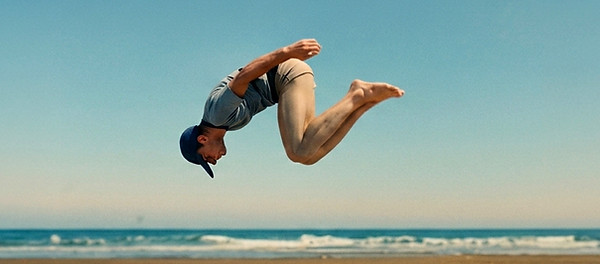
A call for a cultural revolution, for a new revolutionary and avant-garde Jewish creation, and for the rebirth of a modern prophetic Israeli culture.
“Self-sown shoots of prophecy are springing up, the sons of the prophets are awakening, the spirit
of prophecy goes roaming through the land, seeking a refuge.”
- Rav Abraham Isaac Kook, Shemonah Kevatzim 4:17
What Is Pre-Prophetic Cinema?
Pre-Prophetic Cinema (Hebrew: קולנוע קדם נבואי, Kolno’a Kdam-Nevu’i) is an Israeli cultural movement founded in 2015 by the filmmaker and thinker Sasha Netzach Agarunov. It calls for the renewal of Hebrew creation, in cinema and across the arts, from its prophetic roots. It draws on the thought of Rav Abraham Isaac Kook, Rav Yehuda Léon Ashkenazi (Manitou) and Rav Oury Cherki.
Its aim is to grow a new and revolutionary Israeli art, to found a new Israeli wave, and to make Israel a world center of pioneering, avant-garde creation, on the way to the rebirth of a modern prophetic culture.
The name is a statement of humility. The movement does not claim to be prophecy. Prophecy, in the Hebrew sense, was a whole culture, which the sources hold ceased some 2,400 years ago and is destined to return. “Pre-prophetic” names the task of this generation: to prepare the vessels, within ourselves and within our culture, and to build in the language of cinema an idiom capable of carrying prophetic consciousness when it returns.
This is not religious cinema in the narrow sense. The movement opposes “enlisted art,” sectarian art, and religious art reduced to “Jewish folklore.” It seeks a creation that is Israeli yet universal, Jewish yet not sectarian, drawing on the treasures of Judaism and refining them with the most contemporary tools.
A Word from the Founder
Ever since my days as a film student, a drive has burned in me to find a new artistic language: to make a revolutionary Israeli work unlike any other, to found an Israeli New Wave. That drive led me on a life’s journey along the edges.
For a long time I searched for an answer to one question: what is Jewish art?
Almost none of the answers answer it. Jewish art is not religious art. Of course it is not sectarian art, not right-wing art, and not national art either. Nor is it “spiritual” art.
The conclusion I reached, and somehow it satisfies me, is that a work that wants to call itself Jewish must spring from the root of the roots of Judaism: prophecy.
The nation of Israel is a prophetic nation; that is its essence. Hebrew is the language of prophecy; that is the meaning of the phrase lashon ha-kodesh, “the holy tongue.” The original Israeli genius is the prophetic genius, and the original Israeli culture is a prophetic culture.
That is to say: this is creation that flows out of revelation, even if it is inward, personal, at five in the afternoon at a bus stop.
There is a prophetic grammar. It is enslaved to no template, category, ideology, dogma, rule, logic or good manners. To no influence at all.
…
This is a point of absolute freedom.
A moment that strives toward eternity.
A form that strives toward the infinite.
And the reverse.
The greatest whole hidden in the smallest detail, and the reverse.
That which is nearest and, at the same moment, farthest, which is called depth.
That which is youngest because it is oldest.
That which is forever made new.
It sings, shouts, cries out, whispers, hums, and speaks in a thunderous silence.
That which reveals the most hidden secret in the plainest, most open meaning.
Time that has no time, place without place, the point from which the line of the unfolding worlds begins.
That which knows how to pass from realm to realm, from nothing to something, and from something to nothing.
At the bus stop in Be’er Sheva.
…
Pre-Prophetic Cinema was born out of this search of many years. It is an invitation to a journey, for every creator, woman or man, who feels the same thirst.
- Sasha Netzach Agarunov
Hebrew Prophetic Culture
In English, the word “prophecy” usually suggests prediction: foretelling events, or forecasting the end of days. Hebrew prophecy is something else. Its essence is not knowledge of the future but the very fact that God speaks to the human being: an encounter between two persons, the Divine and the human.
The revelation at Sinai opens with “I am the Lord your God.” The God of prophecy is not an abstract principle to be reasoned about, but an “I” who opens a direct and intimate dialogue. As Manitou taught, the philosopher looks at the world; the prophet listens to the word that brings the world into being.
A Whole Culture
In ancient Israel, prophecy was not the rare experience of isolated individuals. It was an organized culture. Schools for prophets operated throughout the land, and bands of the “sons of the prophets” trained in music, meditation, physical discipline and, above all, the cultivation of imagination. The Sages say that Israel had twice as many prophets as those who left Egypt: prophecy was a national gift, cultivated at the heart of society.
The Long Silence
Prophecy ceased some 2,400 years ago, with the destruction of the Temple and the exile from the Land. The whole prophetic personality broke apart: in the Sages’ words, prophecy was given to fools, to the wise and to children, which the movement reads as imagination, intellect and feeling, each now working alone. Rav Kook calls this long absence “a blemish and a sickness”: not the natural human condition, but an exile from it.
Renewal in Modern Garb
In Rav Kook’s thought, the Return to Zion is not a merely political process. At the heart of the national revival beats a deeper demand for total renewal, whose summit is the renewal of prophecy. The bond between prophecy and the Land of Israel runs in both directions: exile silenced it, and the return awakens it. Even the most secular and material sides of the revival, the working of the land and the building of the economy and the army, are seen as an outer garment: a national body being built for the renewed appearance of a prophetic soul.
The prophecy to come will not be an archaeological return to the ancient one, but a higher synthesis. It will join the analytic wisdom and precision gathered over thousands of years of exile with the rich, renewed imagination of the modern age.
Why Cinema
Modern culture is marked by an unprecedented rise of imagination, above all in cinema and visual media. Following Rav Kook, Rav Oury Cherki reads this not as decay but as “the husk that precedes the fruit”: a chaotic yet necessary preparation of the collective imagination for its future sanctification. Art, and cinema above all, is the spiritual laboratory in which the new synthesis can begin to take shape. This is where Pre-Prophetic Cinema stands.
Read more: Prophetic Culture, Gate Four of Pre-Prophetic Cinema (English edition) · the full essay in Hebrew
What Does “Prophecy” Mean for Us?
Prophecy is not foretelling the future but creating the future. In ancient Hebrew culture, prophecy was the supreme synthesis of all the human powers (intellect, feeling and imagination) working together in harmony to hold a living dialogue with the source of all life. It was the summit of creativity.
That connection was lost. We believe the time has come to renew it. We are the generation that builds the vessels for a new art: an art of revelation.
The Call to the Creating Will
The Jewish esoteric tradition, and above all the teaching of Rav Kook, distinguishes between two powers of consciousness:
-
The Depicting Intellect (sekhel metzayer): the power that observes, analyzes and reflects reality as it is.
-
The Creating Intellect (sekhel yotzer): the distinctive gift of prophetic consciousness, which does not only reflect reality but creates it, and places the artist as a partner in the Divine work of creation.
Israeli creation that rises to the roots of reality and to the source of life has the power to bring about a new reality and to create new worlds.
The world lies under the influence of Western culture, which sets itself to depict reality: to observe, to document, to reproduce. Hebrew culture, in its prophetic roots, aspires not to depict but to create, to generate, to bring into being a new reality. It places the human being in creative partnership with the Creator, as one able by force of will to create new worlds.
The power of the will to generate reality is the distinctive gift of Israeli creation in its originality. Rav Kook writes again and again of the liberation of the will, the freedom of the will, the redemption of the will, the resurgence of the will and the revival of the will, as the foundation of a future culture in which the human being becomes a creator.
Our aim is to move from an art that only describes the world to an art that creates new worlds.
Creation as a Synthesis of All Culture
This particular Hebrew path leads to a universal destination. Rav Kook distinguishes four kinds of existential song, which are in truth four levels of consciousness and of being:
-
The song of the soul: the personal, existential song of the individual soul, the simple, individual song.
-
The song of the nation: a “double” song, which goes out beyond the bounds of the private soul and widens to sing the song of the people.
-
The song of humanity: a “triple” song, which crosses the borders of the nation and spreads out to sing the song of the human being as such, the universal.
-
The song of the world: the “fourfold” song, the widest of all, which sings the song of all being, the song of the cosmos.
The tragedy begins when each song becomes a separate ideology and the songs begin to quarrel and collide. Individualism collides with nationalism; nationalism quarrels with universalism; and universalism collides with the cosmic vision of all being.
Therefore another song is needed: a fifth song, with no private content of its own, whose task is to unite and include all the other songs. This is the Song of Songs, the song in which the voices of all the songs are gathered together in harmony. It is a holy song, a song of God, the song of Israel.
This is the aspiration of a new, pre-prophetic creation: to sing the Song of Songs; to unite, to include, to give place to the song of the soul, the song of the nation, the song of humanity and the song of the world. It must be a synthesis of all human culture.
The Call
In these days, as the cultural boycott of Israel widens and lists are published of international artists and cultural institutions boycotting Israeli art, here is an opportunity for renewal and for a great cultural revolution.
This is a call for a new Jewish art — radical, prophetic, divine, daring, revolutionary — that shatters habitual patterns of thought and renews the paradigms of wisdom and consciousness: an art that will make Israel a center of pioneering, avant-garde culture, Jewish and Israeli and universally human.
To rebel is like kicking in a rotten door. A revolutionary Jewish culture must rebel against every founding convention of contemporary culture and bring forth a new, groundbreaking creation that shatters habitual patterns of thought and renews the paradigms of wisdom and consciousness. The time has come to establish illegal outposts in the field of creation and to pave new roads to the wondrous, to the sublime, to the roots of reality, to the root of roots, to the soul, to the soul of souls.
Awake, revolutionaries! Arise, mighty men of valor and women of valiant spirit, secular and religious, men and women, full of strength and holiness, whose hearts the poison of despair has not defiled — arise! A great revolution is calling us, for out of Zion shall go forth Torah, and the word of the Lord from Jerusalem.
The Manifesto
Pre-Prophetic Cinema is a movement whose aim is to grow a new and revolutionary Israeli creation nourished by the prophetic roots of Hebrew culture; to found a new Israeli wave; and to make Israel a world center of pioneering and avant-garde creation, on the way to the rebirth of a modern prophetic Israeli culture.
The initiative draws its inspiration from the vision of Rav Kook, who saw the national revival as a comprehensive spiritual and cultural movement leading to the rebirth of a prophetic Israeli culture in modern garb. Rav Kook saw the development of imagination in contemporary art as a process of preparing the vessels needed for the revival of Hebrew prophecy.
The idea was born of a thirst for unique sources of inspiration: a search for a new creation unlike any existing work, avant-garde and groundbreaking, Israeli yet universal, Jewish yet not sectarian, drawing on the treasures of Judaism and refining them with the most contemporary tools.
Prophecy is the very heart of Judaism. It ceased some 2,400 years ago. Yet it is destined to return close to the time of the return to political independence, and that return will be accompanied by a great cultural ascent.
Some 2,400 years ago a complete prophetic culture existed among the people of Israel. There were schools for prophets, a whole school of thought, an ordered teaching, and bands of the “sons of the prophets,” students of prophecy, roamed the land, studying, among other things, music, physical training, exercises of concentration and intention (kavanah), and the cultivation of imagination.
After the prophetic era came to an end, the remnants of Hebrew prophetic culture were preserved in the tradition, above all in the esoteric teaching, in Midrash and in Aggadah. This is a hidden treasure, one of a kind, from which the original Israeli genius can grow: the alternative imagination, new forms of expression, new artistic languages, a new Israeli wave with a message to bring to itself and to the whole world.
Pre-Prophetic Cinema opposes “enlisted art,” sectarian art, and religious art in the narrow, diminishing sense of “Jewish folklore.”
The Chimney Sweeps
The new creators will serve as chimney sweeps of the human imagination. Rav Oury Cherki, reading The Little Prince, says that the Jews are the chimney sweeps of humanity; in the same way, creators can clear the blockages in human consciousness, and so art can open anew the channel between God and the human being.
The Foundational Principles
-
The holy must spread into the realms of culture and art.
-
Engagement with imagination in culture and art brings nearer the renewal of modern Israeli prophecy.
-
Imagination is a double-edged sword: it can lift a person up, and it can bring a person down. When a person is captive to a corrupted imagination, it is not the intellect that will bring them out, but sacred imagination: an alternative imagination. The new Jewish creation can present sacred imagination, alternative imagination.
-
The new Jewish creation must break habitual patterns of thought and renew the paradigms of wisdom and consciousness.
-
The new Jewish creation must draw unique sources of inspiration from the esoteric teaching, from Aggadah and from Midrash, in which remnants of a Hebrew prophetic culture were preserved.
-
The new Jewish creation can be a channel for the new prophecy; it can open anew the channel between God and the human being.
Principles of Pre-Prophetic Creation
The movement’s doctrine of creation is drawn above all from the writings of Rav Kook. Its principles describe the inner work of the creator: how a work is prepared, where it springs from, what it demands, and what it serves.
Refinement Before Creation
Creators must precede every work with a thought of teshuvah (return), of tikkun (repair), of refinement. One must not dip the pen, or the camera, without purity of soul and holiness of idea.
“And literature shall be sanctified, and every writer shall begin to know the exaltation and the holiness in his work, and shall not dip his pen without purity of soul and holiness of idea. At the least, let the thought of teshuvah come first: deep reflections of teshuvah before every creation.”
- Rav Kook, Shemonah Kevatzim 4:64
Purity does not create the light; it only allows it to shine. It makes the soul a transparent vessel of glass, which lets its contents be seen, rather than an opaque vessel of clay that hides them. Against Romantic conceptions that separate free creation from a moral framework, Rav Kook holds that the moral framework is the very vessel that makes the highest creative freedom possible.
Inner Listening
Creation is not only an instrument of self-expression; it is first of all an occasion for an encounter with the self. It begins with inward attention to the soul’s own voice: the quieting of the ego’s background noise, so that what is always sounding within can be heard. The silence from which creation begins is not emptiness but a space of potential. One does not wait for the muse, for inspiration; it is always present. Rather, creators rise to the meeting with their soul:
“So long as a person must wait for the times when the spirit of creation will rest upon him, so that then he may innovate, contemplate, meditate and sing, this is a sign that the illumination of his soul has not yet appeared upon him. For the soul sings always; it is clothed in strength and joy; supernal delight surrounds it. And a person must rise up to the height of the meeting with his soul.”
- Rav Kook, Shemonah Kevatzim 7:221
This is the prophetic mode of knowing. Rav David Cohen, “the Nazir,” distinguished between the “observational logic” of Western philosophy, built on sight, analysis and mastery, and the “aural logic” of Hebrew prophecy, built on listening, reception, humility and patience. Yet the prophet does not only listen. As Rav Cherki notes, the Hebrew navi, “prophet,” is close to the root “to come”: the prophet listens to all that comes to him from reality. Navi is also linked to niv sefatayim, “the fruit of the lips”: the prophet speaks and creates. Prophecy, in its essence, is the meeting of listening and creating.
The Sages read Ezekiel’s chashmal as “at times silent, at times speaking”: silence and speech by turns. This is the pulse of the creative process. The creator listens, falls silent and receives; then gives form, speaks and expresses; and returns again to silence. Rav Kook’s Ladder of Creation ascends in the same order, from the refinement of the body through imagination, feeling and intellect, to supreme listening, in which the creator becomes a clear channel.
On set and in the editing room, this means a different stance. The director is not one who imposes his will on reality, but a channel through which what seeks to appear can come through. The editor does not force the footage into a pre-known script, but asks what hidden will lives in the shots, and what film is seeking to be born.
The Creating Soul
At the core of Rav Kook’s thought, and of the movement, stands the Creating Soul. Creation is not a side activity or an acquired talent, but a fundamental state of being: a direct expression of the soul’s Divine nature.
“One who has the soul of a creator must be a creator of ideas and thoughts; he cannot shut himself up within his surface study alone. For the flame of the soul rises of itself, and it cannot be held back from its course.”
- Rav Kook, Shemonah Kevatzim 7:190
The aim of pre-prophetic creation is to develop the power of the creating soul until it stands upon its own inner strength, draws from its own source, and reveals itself in constant renewal. Whoever lives the life of the soul dwells in a constant renewal of creation and song. Again and again Rav Kook writes that the creating soul must not be stopped or held back:
“The creating soul dwells within the source of the light of Torah. Its running, full of joy and holy gladness, must not be held back for any grievance or hindrance in the world. The whole world entire is not worth one moment of supreme creation from the source of holiness. This stream of exalted life, pouring itself out in a single soul, brings [light] to the whole world entire.”
- Rav Kook, Shemonah Kevatzim 4:29
The soul sings always. The soul acts out of inner abundance, like a spring that flows of itself and not like a pump that needs an outside force. Rav Oury Cherki illustrates this through the holy Ari, who, according to tradition, could not commit his teaching to writing, because new insight flowed from him faster than any hand could write.
The soul, not the ego. Rav Kook distinguishes between the acquired psychological “I,” built from experience, education and memory, and the soul’s deep selfhood, which is not built but revealed. Soulic creation is therefore not the self-expression of the ego but the self-revelation of the soul. It is not an invention out of nothing, but a manifestation (hofa’ah) of what has always existed in the depths.
The fountain and the lightning. The soul is a fountain that never stops flowing, yet inspiration is experienced as sudden flashes, “running and returning, as the appearance of a flash of lightning.” The contradiction lies not in the source but in its reception: the flow is constant, and finite consciousness receives it in flashes. The creator’s task is not to catch inspiration, but to widen and refine the vessels that receive it.
“One must not oppose the essential soul in its revelation. And its revelation is constant: even when thick clouds cover the brightness of its light, it shines in all its might, and it carries the world and the human being toward the goal of their happiness, which is higher than any name of a goal. The soul meditates without reasoning, acts without deeds; with it, only with it, do we ascend to those heights toward which the whole thrust of the life of reality, in the depths of its mysteries, drives us. Then you shall delight in the Lord. This is the secret of the thirst, and the mystery of its quenching.”
- Rav Kook, Shemonah Kevatzim 8:48
Effortless Creation
Creation is not to be thought of as toil and labor. In the true moment of creation the human being comes to resemble the Maker, who created His world without toil; the process is not one of forceful effort.
“It is impossible to halt creation in one whose soul, by its nature, creates always. Whenever spiritual weariness weighs heavy, it comes only because the creator thinks that creation is toil. And the deeper one goes into its secret, the more one comes to recognize that there is no toil or labor in it at all. And the human being comes to resemble his Maker, for not with toil and labor did the Holy One, blessed be He, create His world.”
- Rav Kook, Shemonah Kevatzim 4:72
Creative weariness is therefore not the soul’s natural state. A creative block is not an absence of ideas, but a blockage in the channel between the soul and consciousness.
Shattering Patterns and Renewal: Sacred Audacity
Creation must shatter fixed patterns of thought and renew the paradigms of wisdom and consciousness. This is the movement’s founding demand, and it runs as a refrain through the Call, the Manifesto and the foundational principles.
It is not destruction for its own sake. A fixed pattern of thought is a vessel grown too narrow, like the vessels that shatter in the Kabbalah because a higher light cannot be contained in them. Breaking it clears the space in which a truer form of knowing can appear. To rebel, as the Call puts it, is like kicking in a rotten door; to shatter a paradigm and renew it is the harder and truer task.
What this demands is sacred audacity, chutzpah de-kedushah: not insolence, but the daring to ask radical questions and to break through the boundaries of thought. Manitou distinguished between audacity of spirit, the active initiative essential to the repair of the world, and audacity of face, which exerts force in contempt of the other. Rav Kook reads the Talmudic sign that “in the footsteps of the Messiah, audacity will increase” as the necessary breaking of ossified forms: the accustomed values, in the outer shape they took after prophecy ceased, must be renewed, and from this a new light shines forth.
Absolute Freedom
“Spiritual creation is free. It takes no account of any external influence; it creates according to its own inner disposition. And the more its faith in itself grows strong within it, the higher it rises to the heights of truth.”
- Rav Kook, Shemonah Kevatzim 1:608
Creation comes from freedom of thought. It discloses the greatness of the “speculative worlds” (olamot ha-hash’ari’im): worlds revealed through the power of intuition, which rises above measured logic. The creator conjectures in heart and mind with full scope and breadth, in absolute freedom of thought:
“I see no possibility of conceiving freedom of thought, its ascent and its perfection, except when it is given the whole scope of its greatness: when its foundations are laid according to greatness of quantity and of quality, wherever it may cast the eyes of its spirit.”
- Rav Kook, Shemonah Kevatzim 7:180
Rav Kook states the principle uncompromisingly: falsehood enters creation only through an external influence imposed upon it, commanding it to utter by force what is not its own spirit. For the movement, this is the ground of absolute creative liberty. It is not license, but the refusal to let any external command usurp the spirit’s own truth.
The Anguish of Creation
Pure creation involves anguish, akin to the anguish of the prophet. It is a pain born of the powerful meeting between two currents: “the revelations of being rise from the depths… from the misty life within the flesh,” while against them “revelations of life descend from the highest sphere of the soul.” This collision between the earthly and the heavenly, between matter and spirit, carries with it the suffering of an inner “destruction of worlds,” which makes room for a new creation to appear. Shallow creators shrink from this anguish, but the true creator knows that the crown of spiritual kingship lies hidden within it.
Rav Kook reads this through the Kabbalistic drama of the shattering of the vessels: existing structures break because a higher light cannot be contained in them. The pain is not a sign of failure, but evidence of the greatness of the encounter.
Against the Romantic view, spiritual creation is not born of lightness and calm. Yet according to the esoteric teaching, the greatest delight is not a prize waiting at the end of the road; it is hidden within the anguish itself. The pre-prophetic creator learns not to flee the anguish, trusting that in its depths lies the greatest and truest delight.
The Awe of Chaos
This is the first and critical stage of the process of creation, when a new idea rises into the creator’s consciousness. A moment before the idea crystallizes and takes form, the creator may be seized by the “awe of tohu” (tohu being the formless void before creation): a deep dread before the infinite, raw potential of the new thought. This fear can paralyze, leaving the creator with nothing but “the raw thought,” and making the work “defective” and narrow.
According to Rav Kook, this awe is sometimes bound up with the creator’s inner state, or with the state of the whole generation. To overcome it is an act of “redemption”: the creator ransoms “the captives of his thoughts,” gives them form and sets them free. This is the redemption of soulic creation.
The Call to the Secret
True creation cannot be content with what is revealed and familiar. The modern soul, and above all the soul of the creator, demands “the secrets of the world, the secrets of Torah, the secret of God” to quench its thirst. To insist on finding all spiritual satisfaction in the revealed side of reality alone drains one’s strength and ends in bitter disappointment.
Pre-prophetic creation calls on us to liberate speech, le-hadrir et ha-dibbur: to grant dror, freedom, to the hidden, secret speech, and to give voice to the concealed, inner dimension of being. In cinema, this is the layer the movement calls Sod, the secret: not a message to be decoded, but a direct experience that can only be hinted at, image by image.
Prophecy
Revelation and creation are two faces of one process: revelation is the inner reception of the soul’s light, and creation gives it outward form. Prophecy is the ripest and most explicit form of the creative power latent in every soul, and soulic creation trains the vessels it requires, above all a refined and powerful imagination. The return of prophecy, on this view, is not a mystical miracle but a cultural and educational project.
Prophecy is the chief distinctive gift (segulah) of the nation of Israel. As creators, we can prepare the vessels for the renewal of the prophecy of Israel: to widen the borders of imagination, to break fixed patterns of thought, to renew the paradigms of wisdom and consciousness, to awaken a discourse of souls, to join truth with beauty, to raise up the world, and to lead a spiritual and cultural revolution in the Land and in the world.
Three Wellsprings
The movement gathers its vocabulary from three teachers of rooted Hebrew thought, and translates their teaching into the language of a new art.
Rav Abraham Isaac Kook (1865–1935)
The first Ashkenazi Chief Rabbi of the Land of Israel, and a mystical thinker of national and spiritual revival. Kook read the national revival as a total spiritual and cultural process leading to the rebirth of a prophetic culture, and saw the rise of imagination in modern art as a preparation of the vessels for prophecy. From him the movement takes its psychology of creation: the Creating Soul that “sings always,” the distinction between the Creating and the Depicting Intellect, and the dialectic of the anguish and the delight of creation.
Rav Yehuda Léon Ashkenazi, Manitou (1922–1996)
A teacher of Jewish thought in France and Israel, and the founder’s teacher. Manitou described the complete prophetic culture of ancient Israel, with its schools for prophets whose training joined music, movement, concentration and the cultivation of imagination. He framed prophecy as the lost heart of Judaism, preserved after its cessation as a “hidden treasure” in Kabbalah and destined to return.
Rav Oury Cherki (also spelled Uri Sherki)
A Jerusalem teacher who carries the thought of Rav Kook and Manitou forward today. Rav Cherki frames the historical task of this generation as the renewal of prophetic culture, after the long age of philosophy and wisdom that followed the end of prophecy. He took part in the movement’s first gathering in 2018.
A New Cinematic Language
The movement’s distinctive contribution is a concrete vocabulary for the filmmaker’s craft, built from Hebrew and Kabbalistic sources. Its aim is not “religious cinema” but a cinematic language capable of expressing prophetic consciousness.
ASHAN: World, Year, Soul
The Sefer Yetzirah teaches that all created reality unfolds along three axes: Olam (world, space), Shanah (year, time) and Nefesh (soul, person). Cinema works natively in all three at once. Olam is the mise-en-scène, Shanah is the editing, Nefesh is the character. Every decision a filmmaker makes belongs to one of the three.
Soul Montage: Sefirotic Editing
Eisenstein’s montage produced an intellectual idea from the collision of two shots. Soul Montage seeks a whole spiritual experience, built on the structure of the Sefirot. A cut of Chesed expands and flows: a dissolve, a wide shot opening into a wider one. A cut of Gevurah contracts and tightens: a jump cut, a close-up into an extreme close-up. A join of Tiferet unites both poles in a moment of beauty: not an intellectual synthesis but an aesthetic revelation.
The Cut as Mo’ed: Hebrew Time in the Editing Room
Hebrew thought offers three concepts of time. Et is the “now” of the single shot. Olam is eternity: the whole idea and structure of the film. Mo’ed is the appointed meeting where eternity meets the passing moment. The cut is the Mo’ed. Hebrew time is not a closed circle but a spiral, and editing is free to leap through it, joining memory with prophecy and documentary with dream.
Film as PaRDeS
The film is built in four layers of meaning, like the Torah itself. Peshat is the visible plot. Remez is the web of recurring symbols through which the physical world begins to point beyond itself. Derash is the human and moral meaning born from the collision of elements. Sod, the secret, is not a message to be decoded but a direct experience, which can only be hinted at, image by image.
The Frame as Sacred Space
The frame is a sacred place where an encounter occurs: an inter-soul space in which the soul of the creator turns toward the soul of the viewer. The filmed land is not inert background but a living presence. The director, in the movement’s phrase, is an architect of souls.
The Redeemed Gaze
The deepest human need may be to be seen. The movement seeks a cinema that develops a double gaze: an elevated, all-embracing view that sees the whole person with love, and a near, intimate view through which we come to see ourselves.
Midrashic and Talmudic Cinema
Midrash is montage that preceded cinema by two thousand years: image pursuing image, meaning born from juxtaposition. Talmudic directing holds several voices and positions in productive tension rather than resolving them into a single line, the way a page of Talmud surrounds a central matter with argument.
Essays
The essays of Pre-Prophetic Cinema read Kabbalah, Midrash and the teaching of Rav Kook alongside the masters of film theory, looking for the place where the two traditions meet. Twenty-three of them appear in full in the English edition of Pre-Prophetic Cinema (Gate Five); the Hebrew originals are on the movement’s blog.
Prophetic Culture and the Return of Imagination
The Revival of Imagination and the Emergence of a New Culture. A century ago, Rav Kook identified the rise of imagination in culture and consciousness: artists take the lead from philosophers, and reality is judged less by rational truth than by its expression in imagination, a first forecast of the postmodern age. Kook calls this “God’s counsel from afar”: the preparation of the vessels for prophecy, which cannot exist without imagination. The prophecy to come will be a new synthesis of intellect, imagination and feeling, and contemporary art is, in this sense, pre-prophetic art.
From Zionism to the Era of Prophecy.
When prophecy ended, Israel passed into the era of wisdom, a bond with the holy through the intellect alone. The return to the Land awakens a longing for a renewed channel of revelation in which all the powers of soul and body take part. The essay follows Rav Kook’s passage from an exilic outlook to “the Torah of the Land of Israel”: the growth not only of a state, but of a new soul in which the prophetic roots come back to life.
The War of the Wild Ox and the Leviathan.
Rav Kook reads the mythic battle between the wild ox and the Leviathan as a drama of our own time: religious holiness, which rises above nature, against the immense holiness hidden within nature. The struggle between religious and secular is its modern form, and the true victors are those who see the common root of both. For cinema, this means that the filmed space, above all in the Land of Israel, is not a backdrop but a presence with a will of its own.
A Revolution of Creation That Is a Synthesis of All Culture. Rav Kook’s “Fourfold Song” distinguishes the songs of the soul, the nation, humanity and the world, which collide when each hardens into an ideology. The Song of Songs gathers them all in harmony. The essay proposes it as the measure of modern Israeli creation, and perhaps as a key to the political question itself.
The Last Beauty of Jerusalem: On the Exile and Redemption of Hebrew Aesthetics. The Talmud portrays Rabbi Yochanan, “the last of the beautiful ones of Jerusalem,” through a coded image: a new silver cup filled with pomegranate seeds, crowned with roses, placed between sun and shade. Reading it with Rav Cherki, the essay uncovers a Hebrew aesthetic in which truth, wisdom, kindness and beauty were one, and which went into exile with the nation. The Return to Zion calls for its return: not “beautiful, therefore true,” but an inner truth that seeks its beauty.
The Third Protagonist: Why Is Israeli Cinema Afraid of the Prophetic Creator? Méliès and Herzl, two men of imagination, were both drawn into political reality by the Dreyfus Affair. Israeli cinema remains caught between two flat images of the Jew, the victim and the conqueror, while the third protagonist, the prophetic creator modeled on the journey of Moses, is missing. The most personal story is the one that becomes universal, and for Israeli creation that inner essence is Hebrew prophecy.
The Return of the Serpent. Following Manitou, the serpent of Eden is the natural intellect: brilliant, but without a moral compass, and meant to be humanity’s most faithful messenger. The essay reads artificial intelligence, built on statistical prediction, as the serpent’s return, with one difference: the natural intellect now stands outside us, as a partner in conversation. The question is whether, this time, morality will stand above it.
Holiness, Space and the Frame
Cinema as a Temple Act. Can a film be holy? For Rav Kook, holiness is not withdrawal from reality but the concentration of life. The Kabbalists read the smoke (ashan) of Sinai as World, Year and Soul, holiness in space, time and the person, and these are also cinema’s three dimensions. Holy cinema is a cinema of encounter; even a single shot can be a moment of holiness.
A Directing Lesson: Holiness and Nature. What if the filmed space has a will of its own, a hidden voice that asks to be heard? The essay proposes direction not as control but as encounter. The director holds two roles at once, the educator who gives structure and the creator who brings the unexpected, and the frame becomes an inter-soul space.
The Frame as Sacred Space, the Film as Offering. Before the digital age, film stock was made of animal skin exposed to light: skin turned into light. Recalling the author’s aunt Maya, a photographer who sought the sparks of the hidden light, the essay asks whether a film can be a korban, an offering in the root sense of “bringing near.” The frame becomes a sanctuary in which two souls meet, like the two cherubim of the Holy of Holies.
World, Year, Soul: The Kabbalistic Map of Cinematic Creation. The three dimensions of the Sefer Yetzirah map exactly onto cinema: olam as mise-en-scène, shanah as rhythm and editing, nefesh as the consciousness of character and viewer. A moment of great cinema is born when the three meet in one point. The Sages’ “there is nothing that does not have its place, and no person who does not have his hour” becomes the most distilled directing instruction.
Time, Editing and Montage
Sculpting in Time, Creating a Mo’ed: On Film Editing and the Jewish Conception of Time. The Torah hardly uses a word for “time”; instead it offers et, olam and mo’ed. From them the essay builds an approach to editing: the shot as et, the whole film as olam, the cut as mo’ed. Jewish time is a spiral of change, and teshuvah and the Sabbath allow travel to the past and the future; the editor’s tools are openness, freedom and the boldness of holiness.
Soul Montage: Toward a Theory of Editing According to the Kabbalah. Eisenstein’s dialectical montage resembles Rav Kook’s unity of opposites, and both echo the Sefirot, where Chesed and Gevurah join in Tiferet. The essay sketches a Sefirotic editing: cuts of expansion, of contraction and of harmony, with Netzach and Hod as rhythm and Yesod as the hidden join of a scene. It recalls a conversation with Naum Kleiman, director of the Eisenstein Center in Moscow.
Eisenstein, Tarkovsky and the Prophet: Two Ways to Create, and One Encounter. Eisenstein and Tarkovsky both quoted the same haiku by Bashō and read it in opposite ways: for Eisenstein it was dialectical montage, creation as intervention; for Tarkovsky, pure contemplation, creation as listening. The prophetic answer takes neither side: the prophet is both the one who listens and the one who creates. Prophecy, in its essence, is encounter.
Language, Narrative and Meaning
Beyond Words: The Will, the Letter, and the New Alphabet of Cinema. When language hardens into a prison, the movement proposes a return to the moment before language: the will. At the Burning Bush, God answers not with a definition but with pure will, “I will be what I will be,” and the Hebrew ot, “letter,” is read with the root “to desire.” The essay calls for a soulic alphabet of images, and asks how filmmakers can reunite the prophet’s scattered powers: feeling, intellect and imagination.
“Crowns for the Letters”: On the Way to a New Revolutionary Language. In a 1905 open letter, Rav Kook called on young Torah scholars to take up the pen and found a literary current flowing from the secrets of the Torah; replace “literature” with “cinema,” and the call is more relevant than ever. In a related letter, Kook describes four stages by which an inner secret becomes art: the soul made fit to sense, creation as a force of life, the enrichment of speech, and the “crowns for the letters,” new meaning disclosed only through the artistic act itself.
Beyond the Text: On Midrashic and Talmudic Cinema. Midrash speaks in several languages at once and lays image upon image: a model for radical montage. The Oral Torah turns frozen text back into living speech, inviting open endings, improvisation and the happy accident on set. Talmudic directing blurs center and periphery, letting the camera linger on the “marginal” detail.
Film as PaRDeS: An Architecture of Meaning. The pre-prophetic film is built in four layers: peshat, the plot; remez, the web of symbols; derash, meaning born of collision; and sod, a direct experience that can only be hinted at. Following Rav Kook, secrets are explained only by secrets, and in the end the sod is revealed as the true peshat.
The New Poetics: Between Aristotle and the High Priest. Western drama rests on Aristotle: conflict leading to catharsis. The Hebrew prophetic tradition offers another poetics, modeled on the High Priest entering the Holy of Holies on Yom Kippur, whose aim is not the purging of emotion but an all-embracing encounter between the Creator and the created. Greek theater plays out revelation in masks; Israel experienced it at Sinai, and the new art is called to flow from revelation itself.
Chaplin on the Bible: The Redemption of the Gaze. “It is not good that the man should be alone”: the Talmud uses the word for “alone” (levad) for two boards joined together, and a midrash describes the first human as man and woman joined back to back, unable to see each other. Chaplin’s City Lights reads as a modern midrash on that image: the tramp whom no one truly sees, redeemed when the flower girl recognizes him by the touch of his hand.
The Artistic Act as Initiated Exile: On the Exile and Redemption of the “I.” Shklovsky’s ostranenie, defamiliarization, is closer to “estrangement,” almost “exile.” Judaism builds initiated exiles into life, the Sabbath and the Sabbatical year, to break habit and increase knowledge; a work of art is a swift exile from which we return changed. Ezekiel saw visions of God “among the exiles,” and Rav Cherki reads ani, “I,” as “my place”: the point of view from which I see.
Yuri Lotman: Semiotics of Cinema. An extended study of Yuri Lotman and the Tartu–Moscow school, read from a pre-prophetic perspective: the frame as a boundary that creates meaning, montage as juxtaposition, and the event as the crossing of a forbidden border. It also asks what becomes of Lotman’s theory when the image is no longer photographed but generated. (In Hebrew.)
The Creator’s Path
The Ladder of Creation: Five Stages on the Way to Revelation. Rav Kook sets out an exact order: purify and strengthen the body, then imagination, then feeling, then the clear intellect, and above them the light of supreme listening. It reverses the Western path, which begins from the idea and clothes it in matter. Prophecy, nevu’ah, joins two roots: listening to all that comes, and niv sefatayim, speech; creation is the passage from listening to speech, where soul meets body.
Not to Depict but to Create: The Will as the Engine of Pre-Prophetic Cinema. Rav Kook distinguishes the depicting intellect, which reflects what exists, from the creating intellect, which brings a new reality into being. Its engine is the will, which Kook calls the newest power to be revealed in the world. In the editing room, the depicting editor arranges footage to a known script; the creating editor listens for the will hidden in the shots.
The founding book of the movement, in its first English edition: free to read and download, in open access.
The complete vocabulary of the movement, from prophecy and the soul to a new cinematic language.
The Founder: Sasha Netzach Agarunov
Sasha Netzach Agarunov (born 1976 in Baku) is an Israeli actor, filmmaker and thinker, and the founder of the Pre-Prophetic Cinema movement. He grew up in a family of Mountain Jews in Baku and, at seventeen, immigrated to Israel alone through a program for immigrant youth, living at the Nitzana youth village. After his army service he began film studies at Ariel College; in his second year he was accepted to the Sam Spiegel Film and Television School in Jerusalem, where he completed the full track. During those years he also began a return to Jewish tradition.
While still a fourth-year student, he won the Ophir Award, the Israeli Academy Award, for Best Actor for his leading role in Renen Schorr’s The Loners (2009), a film inspired by the 1997 revolt in the IDF’s Prison Six. He plays Glory Campbell, a lone soldier and the mind behind the revolt. The critic Yair Raveh counted Glory, in Agronov’s “phenomenal” performance, among the most unforgettable characters he had seen on screen in recent years. He also received a special mention at the Jerusalem Film Festival, and the film screened at the Busan International Film Festival. He has since written and directed several short films, among them Ad Lo Yada, which screened in the official competition of the Haifa International Film Festival.
He has appeared in films by Yossi Madmoni (A Place in Heaven), Gur Bentwich, Tamar Yarom, Idan Hubel, Arnon Zadok, Yotam Kislev and Eyal Tzadik, and Eran Kolirin, and in the series Shtisel and Srugim. He taught Bible and Jewish thought in Nativ, a government program run with the Israel Defense Forces for soldiers who choose to convert to Judaism, and taught film at the Ma’aleh Film School in Jerusalem, where his courses included “Montage Theory: Between Rav Kook and Eisenstein” and “Midrash and Cinema.”
In 2026 he published, in Hebrew, Pre-Prophetic Cinema and the prose book The Electric Prophet.
A note on names. In film credits and in the press he appears as Sasha Agronov. Other recorded forms of his name include Sasha Agrounov, Sasha Agarunov, Sasha Avshalom Agronov (also spelled Agrounov or Agarounov) and Sasha Israel Agronov. Hebrew: סשה נצח אגרונוב; Russian: Саша Агарунов.
Press on The Loners: The Jerusalem Post review · “The Raging Bull,” ynet (Hebrew, June 2009) · Maarav (Hebrew, November 2009, archived) · Yair Raveh, Cinemascope (Hebrew, January 2010) · “IDF against IDF,” ynet review (Hebrew, January 2010) · Haaretz (Hebrew, January 2010) · The Loners on Wikipedia and Hebrew Wikipedia
Profiles: Jerusalem Cinematheque film archive · Sam Spiegel Film School graduate profile · Ma’aleh Film School faculty profile · Yehee journal author page · IMDb
Interviews: “Interview with film actor Sasha Agronov,” Kavkaz portal (Hebrew, archived) · Interview on Juhuro, the Mountain Jews portal (Russian, archived) · Kino-Teatr.ru profile (Russian)

Sasha Netzach Agarunov, photo by Roman Avraham
The Movement in Time
2015. Pre-Prophetic Cinema is founded as an online community on Facebook.
2018. First gathering in Jerusalem, with Rav Oury Cherki and some thirty filmmakers, followed by further meetings in the format of a house of study (beit midrash).
June 2021. The first published formulation of the movement’s principles, “Ten Principles: A Sketch for Prophetic Creation according to the Teaching of Rav Kook,” appears in the poetic-political journal Yehee.
2025. The movement’s website, prophetic-culture.com, is launched.
May 2025. “Pre-Prophetic Cinema – Take #2,” a video work, is published in Yehee.
June 2026. The first open-access deposits on Zenodo: the doctrine, a first version of the glossary and the collected essays.
July 2026. The Complete Glossary (Hebrew and English) and Writings: Twenty-Three Essays are published in open access on Zenodo.
August 2026. The two founding books appear in Hebrew (e-vrit): Pre-Prophetic Cinema and The Electric Prophet.
October 2026. The first English edition of Pre-Prophetic Cinema is published in open access on Zenodo and Knowledge Commons, alongside an open-access edition of the Hebrew book.
Books and Publications
Pre-Prophetic Cinema and the Complete Glossary are released under the Creative Commons Attribution 4.0 International License (CC BY 4.0): free to share and adapt for any purpose, with appropriate credit.
Pre-Prophetic Cinema: A Jewish Doctrine of Prophetic and Avant-Garde Creation
The founding book of the movement, at once a manifesto, a doctrine and a laboratory for a new Hebrew creation: the vision and manifesto, the doctrine of pre-prophetic creation, the Creating Soul, prophetic culture, twenty-three essays, and the Complete Glossary.
-
Hebrew edition: קולנוע קדם נבואי: תורת יצירה יהודית נבואית ואוונגרדית, e-book, 245 pages, August 2026 · e-vrit · open access on Zenodo and Knowledge Commons, October 2026: 10.5281/zenodo.23288624
-
First English edition, October 2026. Open access on Zenodo and Knowledge Commons: 10.5281/zenodo.23283192
The Electric Prophet
A book of prose in which post-Soviet Caucasian-Israeli magical realism meets cyber-Kabbalah and theological cyberpunk. It is a mosaic of fragments of life, memories and myths of a family of Mountain Jews, moving between Baku and Jerusalem, between a Soviet scrapyard and the Holy of Holies, between a film set and the upper worlds. An electric grandmother reads the Zohar; an uncle vanishes near a flying object and returns two months later speaking as a prophet. In this world, wonder is not the exception; it is the weather. Hebrew e-book, 200 pages, August 2026 · e-vrit
Pre-Prophetic Cinema: The Complete Glossary
The official key to the movement’s language and ideas, in eight thematic parts, from prophecy and the soul to the new cinematic language. Each entry gives the Hebrew term, a definition, its philosophical context and its sources. The full glossary is published on the movement’s website, in English and in Hebrew, and deposited in open access on Zenodo and Knowledge Commons.
-
English: full text on the website · Zenodo and Knowledge Commons, DOI 10.5281/zenodo.21228203
-
Hebrew: full text on the website · Zenodo and Knowledge Commons, DOI 10.5281/zenodo.21228059
-
Wikisource: the Complete Glossary in Hebrew
Further Open-Access Publications
The movement’s writings are deposited in open access on Zenodo, each with a permanent DOI. Besides the books and the glossary above:
-
קולנוע קדם נבואי | Pre-Prophetic Cinema, a book chapter, September 2026: 10.5281/zenodo.22723925
-
Pre-Prophetic Cinema - Writings: Twenty-Three Essays on Cinema, Prophecy, and the Sacred, July 2026: 10.5281/zenodo.21380350
-
Pre-Prophetic Cinema: Collected Essays on Modern, Prophetic, and Avant-Garde Jewish Art, June 2026: 10.5281/zenodo.20958420
-
קולנוע קדם נבואי: משנה ליצירה יהודית נבואית מודרנית (Pre-Prophetic Cinema: A Doctrine of Modern Jewish Prophetic Creation), Hebrew, June 2026: book · article version
-
מילון מושגים של קולנוע קדם נבואי / Pre-Prophetic Cinema Glossary, first version, June 2026: 10.5281/zenodo.20775780
In Journals
-
“Ten Principles: A Sketch for Prophetic Creation according to the Teaching of Rav Kook” (Hebrew), Yehee — Political Poetic Journal, June 2021. The first published formulation of the movement’s principles: refinement before creation, the creating soul, silence and listening, effortless creation, the language of secrets, freedom of thought, and the renewal of prophecy. Read in Yehee
-
“Pre-Prophetic Cinema – Take #2”, a video work, Yehee, May 2025. Watch in Yehee
-
“The Days of Awe: One Winter Day in Ashkelon, 2023” (Hebrew short story), Safa Hadasha, issue 1, October 2024. Read in Safa Hadasha
Watch
Pre-Prophetic Visions of Deborah the Prophetess
A film by the movement.
Ad Lo Yada
A short film written and directed by Sasha Netzach Agarunov, screened in the official competition of the Haifa International Film Festival. Watch on YouTube
The YouTube Channel
Experimental films and video art from the movement: youtube.com/@Prophetic-Culture
Frequently Asked Questions
What is Pre-Prophetic Cinema? An Israeli cultural movement, founded in 2015 by Sasha Netzach Agarunov, that calls for the renewal of Hebrew art and cinema from its prophetic roots. It draws on the thought of Rav Abraham Isaac Kook, Rav Yehuda Léon Ashkenazi (Manitou) and Rav Oury Cherki.
Does the movement claim to be prophecy? No. The name is a statement of humility. The movement seeks to prepare the vessels for a renewed prophetic culture, not to claim prophecy for itself.
What does “prophecy” mean here? Not foretelling the future but creating it. In ancient Hebrew culture, prophecy was the harmony of intellect, feeling and imagination in a living dialogue with the source of all life: the summit of creativity.
Is this religious cinema? Not in the narrow sense. The movement opposes enlisted art, sectarian art, and religious art reduced to “Jewish folklore.” It calls on secular and religious creators alike.
Is it only for Jewish or Israeli artists? Its roots are Hebrew and its sources are Jewish, but its destination is universal: an art that sings the song of the soul, the nation, humanity and the world together. The founding book is addressed to every creator, woman or man, who feels the same thirst.
What makes it a cinematic movement and not only a philosophy? A concrete vocabulary for the craft of film: editing built on the Sefirot, the cut as a Mo’ed, the frame as sacred space, and the film as a four-layered structure on the model of PaRDeS.
Where can I read more in English? The Complete Glossary is published in full on the movement’s website, in English and Hebrew, and in open access on Zenodo; and the founding book is available in a first English edition, in open access on Zenodo (2026).
How do I cite the movement’s writings? See “Identifiers and Citation” below.
Identifiers and Citation
How to cite
Agarunov, Sasha Netzach. Pre-Prophetic Cinema: The Complete Glossary. Zenodo, 2026. https://doi.org/10.5281/zenodo.21228203
Agarunov, Sasha Netzach. Pre-Prophetic Cinema: A Jewish Doctrine of Prophetic and Avant-Garde Creation. First English edition. Zenodo, 2026. https://doi.org/10.5281/zenodo.23283192
Persistent identifiers
-
The movement on Wikidata: Q140189818
-
The founder on Wikidata: Q16132655
-
ORCID: 0009-0001-2357-4184
-
IMDb (as Sasha Agronov): nm3498742
-
National Library of Israel: 987008144788205171
-
ISNI: 0000 0005 0112 1303
-
Library of Congress: no2019188360
-
VIAF: 6157769919648660233
-
EDb, the Israeli film database (as Sasha Agronov): n0011332
-
TMDB: 1198770
-
Ishim, a project documenting Israeli creative artists (as Sasha Avshalom Agronov): archived profile
-
Wikipedia (Hebrew): סשה אגרונוב
-
Zenodo: all deposits · Knowledge Commons: all deposits
-
Pre-Prophetic Cinema (Hebrew e-book) on e-vrit: קולנוע קדם נבואי
-
The Electric Prophet (Hebrew e-book) on e-vrit: הנביא החשמלי
-
Author page on e-vrit: סשה נצח אגרונוב
Contact
For screenings, festivals, collaborations, research and translation: pre.prophetic.cinema@gmail.com
The Hebrew site: prophetic-culture.com (in Hebrew)